

Hide a Garter Under a Mermaid Dress: Brides, Place It Below the Flare
Yes, a garter can be worn under a mermaid dress without ruining the line of the gown provided it sits below the flare and is cut from a low-profile material. If your gown is very smooth satin or heavily beaded, the safer tactic is placing the garter well below the flare or saving a decorative one purely for photos and the toss. The sections below walk through exact placement, fabric choices, fit measurements, and day-of tactics.
TL;DR:
- A garter can stay hidden under a mermaid dress if placed just below the flare or at the narrowest thigh point, tested in full light and movement.
- Low-profile materials like stretch lace or satin-lined elastic are best to prevent visible ridges or bunching under smooth or beaded fabrics.
- Measure your thigh snugly at the widest point and consider custom sizing to ensure the garter stays in place and avoids marks or slipping.
- Decorative garters with thick embellishments are more likely to show through thin fabrics and should be rotated to less visible areas for a flatter appearance.
- Wearing a slim, comfortable garter all day and reserving decorative pieces for photos or the toss is recommended to maintain a smooth silhouette.
Table of Contents
- Garter for mermaid dress: where to place it so it stays hidden
- Which garter styles and materials disappear under fitted fabric?
- How do you measure your thigh for the right garter fit?
- Wearing tactics for the ceremony, photos, and the toss
- Why The Wedding Garter recommends these choices
- What the guides get wrong about mermaid garters
- Garters and accessories from The Wedding Garter suited to mermaid gowns
- Sources
- FAQ
Garter for mermaid dress: where to place it so it stays hidden
The mermaid silhouette is unforgiving. It clings from hip to knee before flaring out, which means anything worn underneath has to sit somewhere the fabric isn’t already stretched taut. Mermaid gowns are form-fitting by design, so a garter placed at the wrong height will show as a ridge the second you stand under reception lighting.
Find where your dress starts to flare out from the leg, usually somewhere between mid-thigh and just above the knee. That flare point is your reference line.
- Locate the narrowest part of your thigh, generally a few centimetres above the flare start.
- Slide the garter to sit just below the flare or at that narrowest point, whichever gives a flatter line on your specific gown.
- Test standing, front-on, in full light, and check for any visible ridge through the fabric.
- Test seated, since sitting pushes fabric differently than standing does.
- Walk a few steps in the dress to confirm the garter doesn’t ride up or slip down during movement.
Vendors who specialise in bridal foundations back this same placement logic, describing the narrowest point of the thigh or just below the flare as the standard fix for fitted mermaid silhouettes. If your dress flares low, close to the knee, there may not be enough smooth thigh left to hide anything comfortably. In that case, wear the garter lower than usual, or skip wearing it during the ceremony altogether and slip it on right before photos.
Pro Tip: Do your standing and seated test in the exact underwear and shapewear you’ll wear on the day. A garter that disappears over bare skin can suddenly show once Spanx or a slip is layered underneath it.
Which garter styles and materials disappear under fitted fabric?
Not every garter is built to hide. Decorative garters with thick rosettes, layered tulle, or dense beading are made to be seen, which is exactly the problem under a smooth mermaid skirt. A low-profile garter, by contrast, is designed to sit flat and stretch with your leg rather than fight it.
- Soft stretch lace moves with the body and rarely leaves a visible edge.
- Satin-lined elastic bands are thin, slippery against skin, and less likely to bunch.
- Slim satin bands with minimal trim work well under jersey, crepe, and other soft fabrics.
- Avoid thick rosettes, bows, or dense front beading if the gown fabric is thin or has any stretch to it.
Embellishment placement matters as much as the material itself. If you love a garter with crystals or lace appliqués, rotate it so the decoration sits toward the inner thigh or the back of the leg rather than dead centre-front. This keeps the pretty detail for you (and your partner) while presenting a flatter surface to the camera and to anyone standing in front of you.
Non-slip features are worth checking too. A silicone trim or an inner elastic weave stops the garter creeping down through the day, which matters more in a mermaid dress because there’s less loose fabric to disguise slippage. Our non-slip wedding garter guide covers which grip styles suit delicate satin without leaving marks. Vendor roundups of garters marketed specifically for mermaid gowns tend to favour exactly this combination, narrow bands in satin or fine lace, which is a useful sanity check when you’re comparing options.
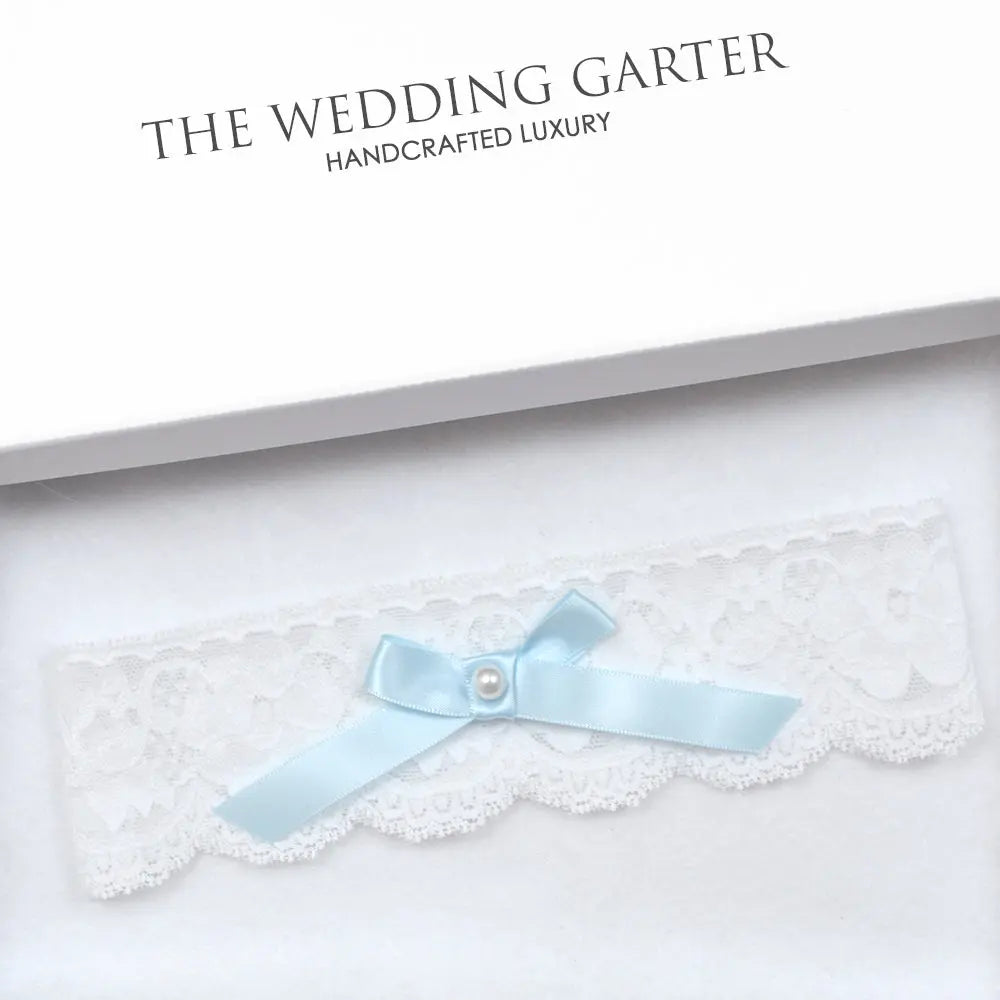
Pro Tip: Press a candidate garter flat between two fingers. If you can feel a ridge or seam through the fabric at rest, it will almost certainly show once stretched over your thigh under a bias-cut skirt.
How do you measure your thigh for the right garter fit?
A garter that’s too loose rides down during the ceremony; one that’s too tight pinches and leaves a mark you’ll feel all day. Getting the measurement right matters more under a mermaid dress, where there’s no extra fabric to camouflage either mistake.
- Stand naturally with your weight evenly balanced, rather than measuring while seated.
- Wrap a soft tape measure around the widest part of your upper thigh, where you plan to position the garter.
- Keep the tape level and snug against skin without pulling it tight.
- Note the measurement, then check it against the brand’s size chart rather than guessing.
- Allow for slight give: the garter should feel secure but not indent the skin when you sit down.
If the number sits between two sizes, size up rather than down. A garter that’s slightly loose can be tightened with a fold-back or a discreet stitch; one that’s too tight has no easy fix on the day. Our full garter measuring guide walks through posture, tape placement, and common sizing mistakes in more detail.
For brides between standard sizes, plus-size brides, or anyone worried about riding, custom or made-to-order sizing is worth the extra step. It removes the guesswork entirely and means the garter is built for your actual measurement rather than the nearest size band.
Wearing tactics for the ceremony, photos, and the toss
Once the garter fits and sits in the right spot, the remaining work is logistics: keeping it invisible when you want it hidden and easy to access when you don’t.
- Rotate any beading, bows, or lace motifs to the inner thigh before you dress, so the front-facing view stays smooth.
- If the garter is purely decorative, consider a wear-for-photos or put-on-before-toss approach: a plain, slim band stays on all day for comfort, while the pretty one goes on briefly for portraits or the reception toss.
- Ask your photographer for a few frames from a slight angle rather than dead centre-front. It hides faint lines without anyone noticing you asked.
- Stitch down any loose beads or sequins the morning of the wedding, and pack a spare garter plus a couple of safety pins in your emergency kit.
This wear-for-photos habit isn’t a compromise, it’s standard practice among brides in fitted gowns who want the tradition without the visible line.
Pro Tip: Do a five-minute rehearsal with your photographer while wearing the actual garter, checking which angles hide any faint lines before the ceremony, not during it.
Why The Wedding Garter recommends these choices
The Wedding Garter is based on the Gold Coast and specialises in handmade bridal garters, bridal lingerie, and matching accessories designed around real fit problems, not just aesthetics. The placement and fabric advice above reflects the same fitting logic we apply across the collection.
- Our measurement guide walks through the exact tape placement and posture steps referenced above.
- Our garter materials guide breaks down which fabrics behave best under fitted, structured, or bias-cut gowns.
- Our non-slip garter guide covers grip options that won’t mark delicate satin.
If you’re unsure how a particular style will sit under your gown, contact product support for custom fit advice or to talk through a sample before you commit to an order.
What the guides get wrong about mermaid garters
Most guides treat garter placement as a footnote, a quick line buried under veil advice or bouquet tips. That’s backwards. For a mermaid silhouette, placement is the entire decision. Get it right and almost any reasonably slim garter works; get it wrong and even the most expensive lace piece will show through as a ridge.
The other thing conventional advice underplays is that you don’t have to choose between tradition and a smooth silhouette. Wearing a slim, comfortable band all day while saving a decorative piece for photos or the toss isn’t a workaround, it’s simply the more practical version of the tradition for a fitted gown.
Prioritise the placement test over the shopping decision. Try the standing, seated, and walking checks in the actual dress before you fall in love with a specific design. A garter that photographs beautifully on a hanger can still ruin a hip-to-knee silhouette if it sits in the wrong spot.
— The Wedding Garter
Garters and accessories from The Wedding Garter suited to mermaid gowns
The Wedding Garter is the place to shop once you know what you’re looking for, rather than guessing from a generic size chart. Every style below suits a different gown texture, so match the piece to your fabric rather than picking on looks alone.
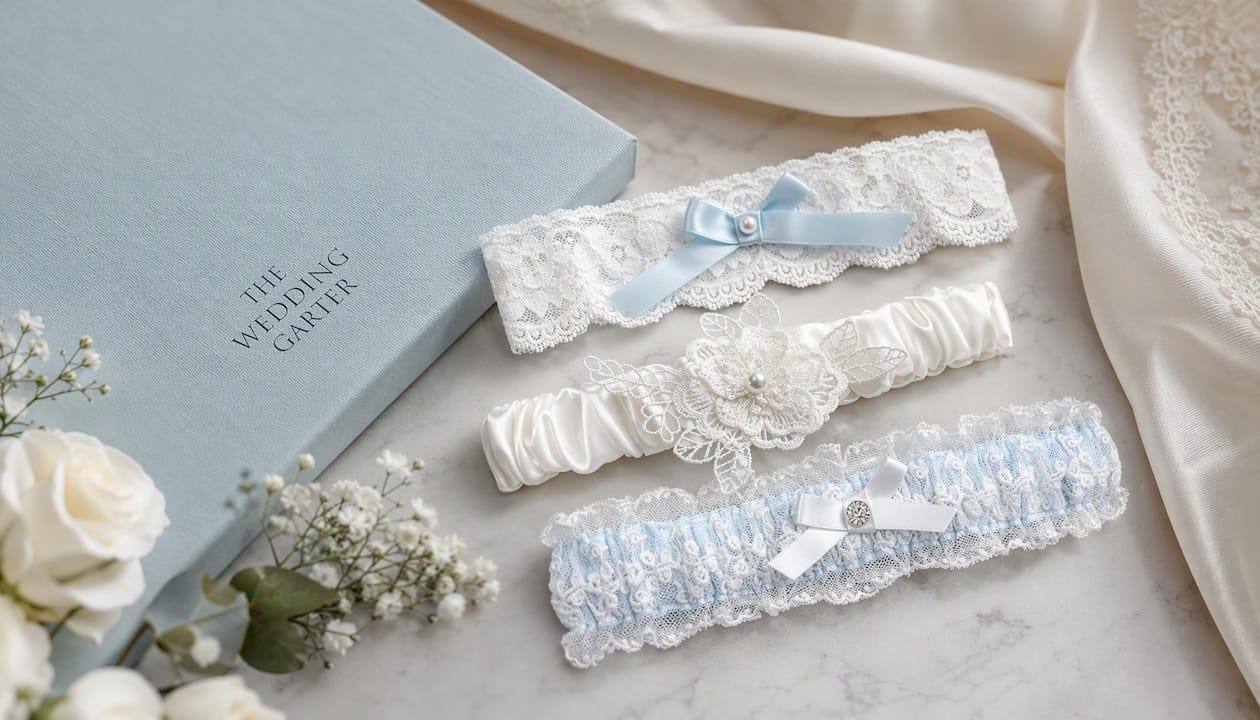
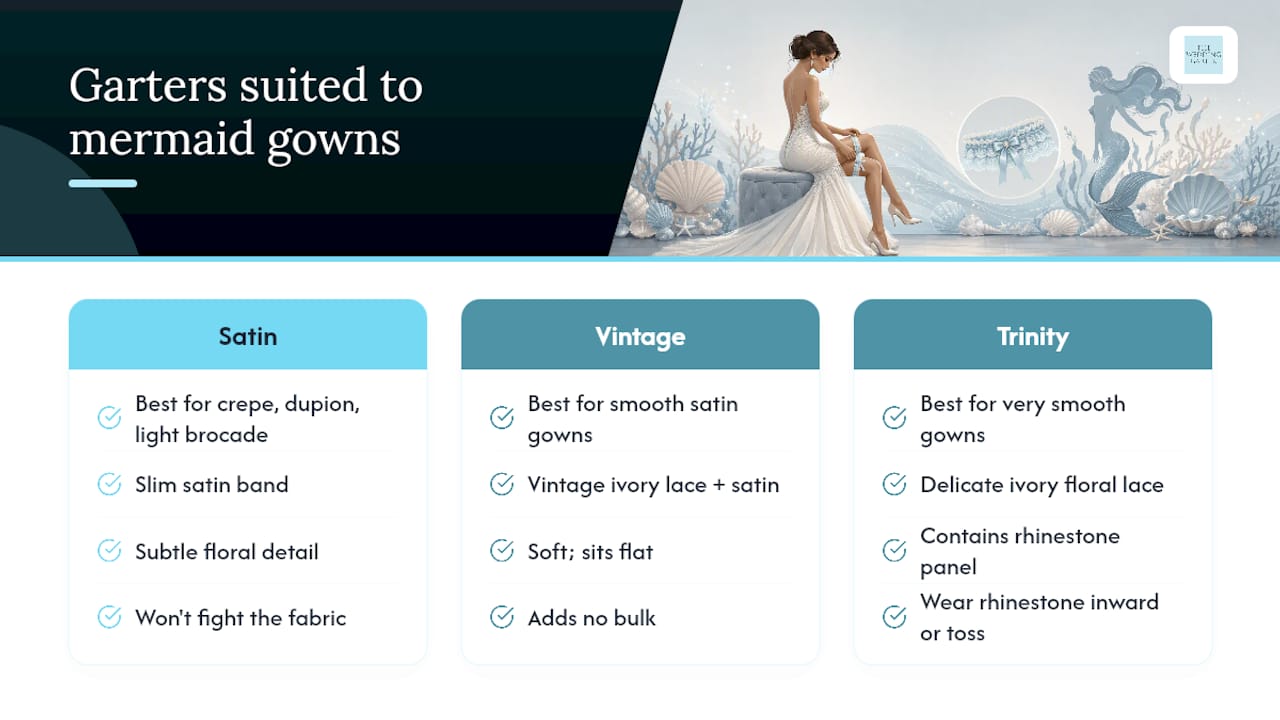
The Satin Bridal Garter With Floral Design suits gowns with a little texture of their own, crepe, dupion, or light brocade, where a slim satin band with a subtle floral detail won’t fight the fabric. For classic silhouettes in smooth satin, the Vintage Ivory Lace & Satin Bridal Garter offers enough softness to sit flat without adding bulk. If you want a delicate rhinestone detail but your gown is very smooth, the Trinity Delicate Ivory Floral Lace & Rhinestone Bridal Garter works best worn with the rhinestone panel rotated inward, or kept purely for the toss.
Brides wanting a coordinated look under their gown can pair a garter with the White Lace Bridal Lingerie Bra & Garterbelt Set, while those after a finishing touch for jewellery might look at the Sterling Silver Cubic Zirconia Pendant Bridal Jewellery Set or the Delicate Crystal Luxury Bridal Bracelet.
Before ordering, measure your thigh using the method above, decide where any embellishment should sit, and consider custom sizing if your measurement falls between standard bands. Browse the full range on The Wedding Garter and get in touch if you’d like guidance on a specific gown style.
Sources
- Mermaid wedding dresses: what lies beneath? | ShunBridal
- (Closed) Wearing a garter with a mermaid gown… Questions? | WeddingBee boards
FAQ
Can you wear a garter under a mermaid wedding dress?
Yes, provided it’s placed below the flare or at the narrowest part of the thigh and made from a low-profile material like stretch lace or satin-lined elastic.
Who gives the bride a garter?
There’s no strict rule; it’s often a gift from a bridal party member, a mother, or purchased by the bride herself as part of her bridal accessories.
What body type looks good in a mermaid dress?
Mermaid gowns suit a range of body types, but they’re most flattering on brides who want to highlight a defined waist and hip line, since the fitted cut through the hip and thigh does the shaping work.
What is the best veil to wear with a mermaid dress?
A longer, softer veil, such as a chapel or cathedral length, tends to balance a mermaid gown’s dramatic flare without competing with the fitted bodice.
Is it hard to walk in a mermaid wedding dress?
It can restrict stride length slightly because the fabric hugs the leg through the knee, which is exactly why anything worn underneath, including a garter, needs to be low-profile and stretch with your movement rather than against it.


