

Garter Toss Etiquette: Consent First, Keep It 5–10 Minutes
The garter toss is optional, and it only works when it’s done right. Include it if both partners are genuinely comfortable with the tone, the guest list won’t include people who’ll feel awkward or excluded, and the whole thing wraps up in a few respectful minutes. This guide covers timing, removal, alternatives and preparation, so you can make the call with confidence either way.
TL;DR:
- If both partners are comfortable and the guest list includes children or conservative guests, a traditional garter toss can be appropriate.
- Schedule the toss after the main meal and before dancing, using a brief and well-coordinated announcement to keep the moment lively and quick.
- Use a dedicated tossing garter with flat seams and non-slip backing to prevent discomfort or damage during the reveal and toss.
- Consider alternatives like co-ed tosses, themed prizes, or skipping the ritual altogether to avoid potential awkwardness.
- Guests should be encouraged to cheer or opt out politely, with the bride and groom ensuring clear communication and respecting personal boundaries throughout.
Table of Contents
- Garter toss etiquette: is the tradition right for your wedding?
- When and where to schedule the garter toss
- How to remove and toss the garter with dignity
- Alternatives that keep the fun without the awkwardness
- Choosing and preparing your garter for the big moment
- Coordinating with your MC, photographer and venue
- Expert tips from The Wedding Garter
- Guest etiquette during the garter toss
- Checking comfort levels before you commit to the toss
- Avoiding discomfort and offence during the moment
- Why we think modern couples are right to rework this one
- How The Wedding Garter can help you get it right
- Sources
- FAQ
Garter toss etiquette: is the tradition right for your wedding?
Attitudes towards the garter toss have shifted a lot in recent years. Many modern couples now choose to skip it entirely, viewing it as outdated or overly gendered for a contemporary crowd. Others still love the ritual, treating it as a light-hearted, high-energy moment rather than anything with deeper meaning.
Before deciding, think honestly about who’s in the room. A reception full of young kids, older relatives or guests from more conservative backgrounds usually calls for a toned-down version, or none at all. Venue formality matters too. A relaxed barn wedding gives you more room to play than a black-tie affair in a heritage ballroom.
Consent is non-negotiable. Both partners need to agree on the tone, how visible the moment will be, and whether they’re comfortable with the physical mechanics of it. One partner enthusiastic and the other reluctant is a recipe for an awkward reception photo nobody wants framed.
Run through this quick checklist before committing:
- Are both partners comfortable with the physical act and the audience watching it?
- Does the guest list include children, elders or guests likely to feel uneasy?
- Does the venue and overall wedding tone suit a playful, semi-public moment like this?
If you answer yes to the first and can comfortably manage the second and third, the garter toss etiquette question largely answers itself.
When and where to schedule the garter toss
Timing makes or breaks this moment. The best placement sits after the bouquet toss and after the main meal, giving guests something to look forward to once the formal dining is done, but well before the dance floor fills up with late-night energy. A well-run garter toss takes about 5 to 10 minutes from announcement to photograph, so it never drags.
Practical setup matters just as much as timing:
- Brief the DJ or MC in advance so the announcement lands with the right tone, not an awkward ad-lib.
- Confirm with your photographer exactly which shots they’ll take and where they’ll stand.
- Choose a clearly lit, open dance floor spot everyone can see without crowding.
- Keep young children and any guest who’d rather not participate at a comfortable distance.
- Use a quick musical cue, something upbeat but brief, to signal the moment is starting and ending.
How to remove and toss the garter with dignity
Consent comes first, every time. Before the reception, agree privately on exactly how the removal will happen, who’s comfortable with what, and how far the moment goes. This isn’t something to improvise in front of eighty guests.
Hands are the etiquette-approved method. Bridal guides consistently favour a brief, discreet lift and hand removal over anything more theatrical, and teeth-only removal should stay off the table unless both partners have explicitly agreed to it beforehand. Quick and tasteful beats elaborate and awkward, every single time.
Here’s a clean sequence that keeps things respectful and fast:
- The bride sits on a chair positioned centrally so guests can see without crowding in.
- She lifts the hem of her dress just enough to reveal the garter, keeping the motion brief.
- The groom removes the garter using his hands, without lingering or making a production of it.
- He slides it down and off in one smooth motion.
- He either hands it off for a keepsake or tosses it to the gathered group, depending on what’s been agreed.
Modesty matters throughout. Keep the skirt lift minimal, keep the pace brisk, and have a backup plan if a guest reacts unexpectedly, whether that’s over-enthusiasm or discomfort. A quick nod from the MC to move the crowd’s attention elsewhere usually resolves it fast.
Pro Tip: Rehearse the whole sequence privately once, the night before or the morning of. Thirty seconds of practice saves you from fumbling in front of a room full of phones and cameras.
Alternatives that keep the fun without the awkwardness
You don’t need the traditional toss to get a fun reception moment. Plenty of modern couples swap in alternatives that deliver the same energy without any of the potential discomfort.
Consider these options:
- A co-ed toss, where any single guest (not just men) can join the group waiting to catch it.
- A themed toss using a soft toy, a bag of sweets, or a small prize instead of the garter itself.
- A raffle-style draw where guests pull numbers for a small keepsake gift.
- Skipping the toss altogether and simply gifting the garter to a close friend or family member as a memento.
Whatever you choose, announce it clearly. A quick line from the MC, something like “Instead of the traditional toss, we’re doing X,” sets expectations instantly and avoids confused looks. For mixed-age guest lists, a soft toy or lolly toss tends to land best. It’s playful without anyone having to think about who’s touching what.
Choosing and preparing your garter for the big moment
Most couples end up buying two garters, not one. A dedicated tossing garter takes the physical wear and tear, while a more elaborate keepsake piece stays untouched and pristine for the memory box.
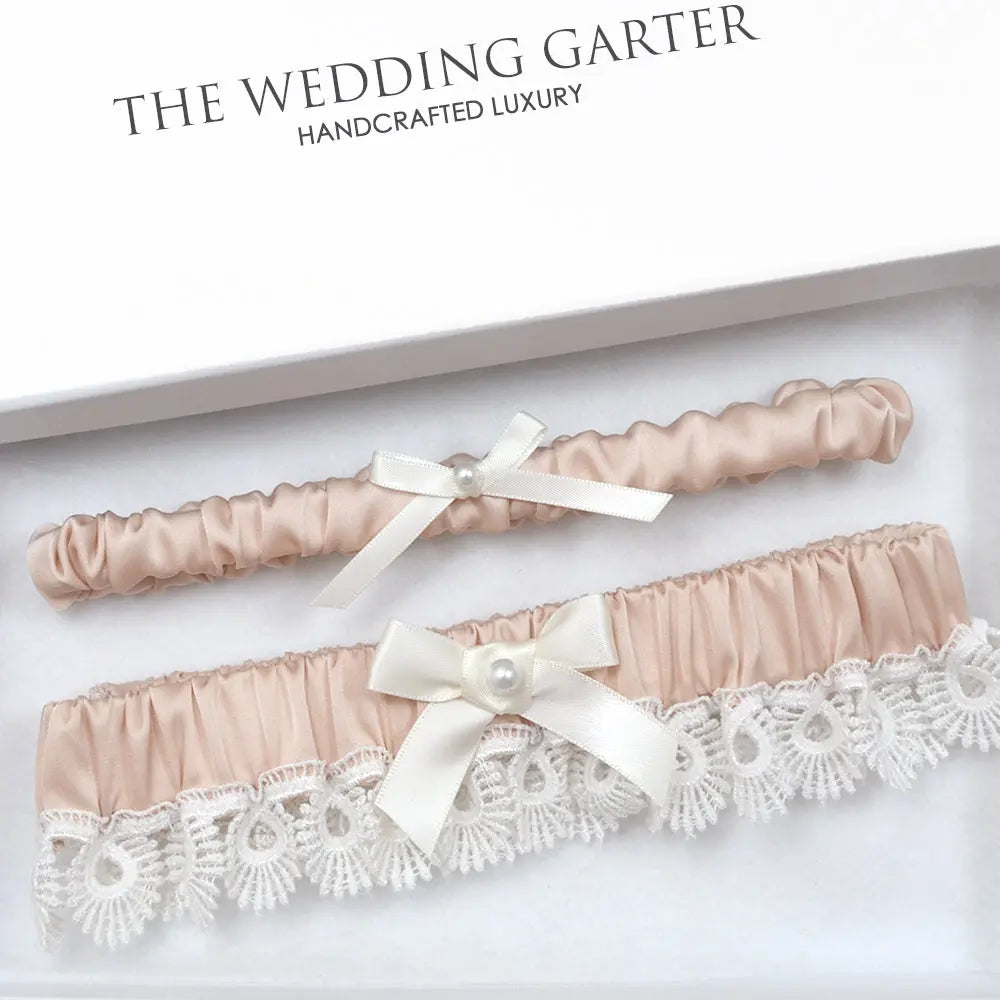
For the piece you’ll wear all day, comfort and grip matter more than embellishment. Look for flat seams and a non-slip silicone or lace backing that won’t dig in or slide down as the day goes on. Stretch fabric with a bit of give sits far more comfortably under a fitted dress than anything rigid.
A few practical pointers:
- Position the garter mid-thigh, high enough to stay put but low enough to remove without a struggle.
- Choose stretch lace or satin with elastic backing for all-day wearability.
- Store your keepsake garter flat, away from direct sunlight, to protect delicate lace or beading long-term.
- If sentimental, consider framing or preserving the keepsake garter alongside other wedding mementos.
Coordinating with your MC, photographer and venue
A smooth garter toss depends on a few quiet logistics decisions made well before the reception starts. Lock the moment into your run sheet with a specific time slot, not a vague “sometime after dinner.”
Cover these bases in advance:
- Confirm the exact timing slot with your MC or DJ so it doesn’t clash with speeches or other reception segments.
- Tell your photographer which shots you want (staged removal, candid toss, or both) and flag any modesty preferences.
- Ask your venue whether there are restrictions on floor space, noise or “spectacle” moments during the reception.
- Assign one or two bridal party members to gather willing participants and form the catching circle quickly.
Getting these details sorted early means the moment runs itself on the day, rather than becoming a scramble.
Expert tips from The Wedding Garter
Buying a dedicated tossing garter and keeping a separate keepsake is the single most useful piece of practical advice in this whole guide. It protects sentimental pieces, particularly anything with hand-finished lace or crystal detailing, from getting lost, stretched or damaged in a crowd of guests scrambling for a catch.
When choosing either style, check for a few finishing details before you buy:
- Flat, comfortable seams that won’t irritate skin under a fitted gown.
- Genuine stretch, not just decorative elastic, for a secure all-day fit.
- A non-slip backing strip so the garter doesn’t creep down through dancing and photos.
- Colour and design that coordinates with your dress fabric and other bridal accessories.
A well-planned handover matters: aim for that same tight 5 to 10 minute window etiquette guides recommend for the whole segment, announcement to photo, so the moment stays memorable rather than dragging. The Wedding Garter’s buying guide breaks down which styles suit a toss and which are better suited to staying in the memory box for good.
Guest etiquette during the garter toss
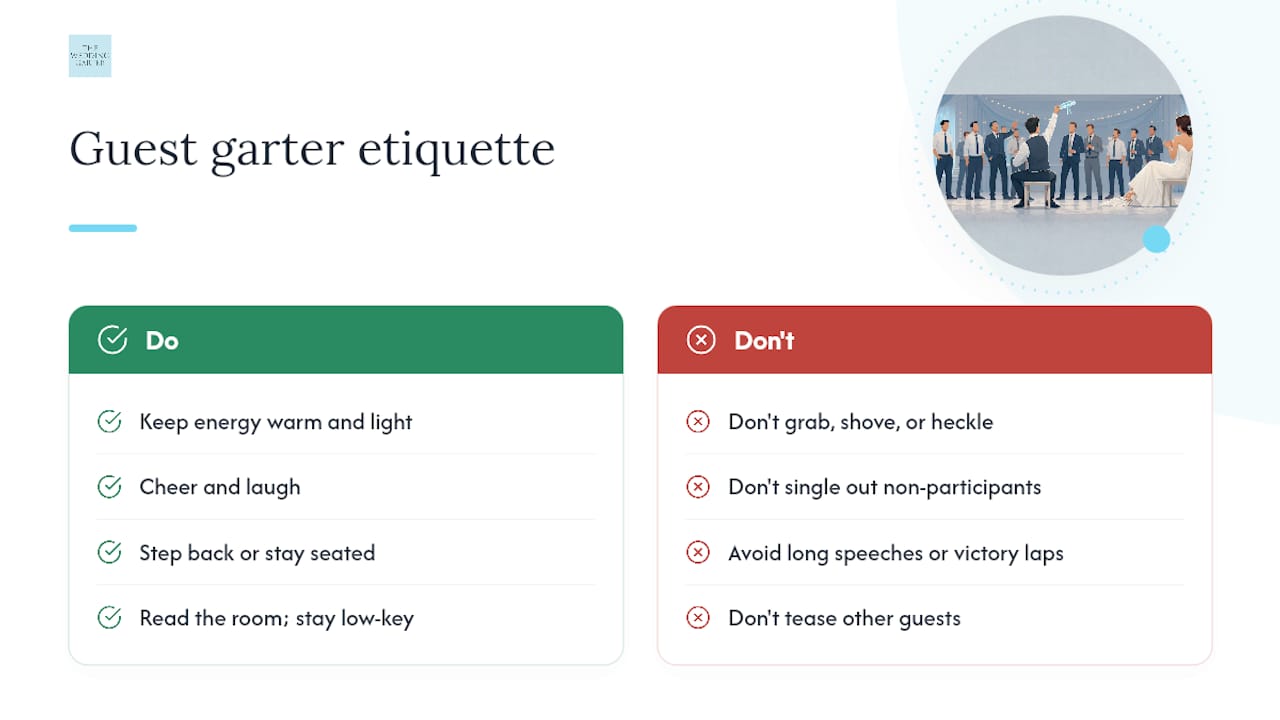
Guests have a role to play too, and good garter toss etiquette runs both ways. If you’re gathered on the dance floor waiting to catch, keep the energy warm and light. Cheering and laughing is expected; grabbing, shoving or heckling isn’t.
If you’d rather not participate, simply step back or stay seated. Nobody needs an excuse to opt out of a reception game, and a good MC will never single someone out for not joining in. Watching from the sidelines with a drink in hand is a completely normal way to enjoy the moment.
For older relatives or guests who find the ritual a bit much, a polite smile and a step to the side works fine. Couples who’ve briefed their MC properly will usually have already flagged that participation is optional, which takes the pressure off everyone in the room.
If you catch the garter, a bit of good-natured fanfare is part of the fun, but keep it brief. Long speeches, elaborate victory laps or teasing the next single guest at the wedding tends to overstay its welcome fast. Hand it back to the wedding party or set it aside once the moment’s had its laugh, and let the reception move on to whatever’s next on the run sheet.
Above all, read the room the same way the couple should have. If the mood in the room feels flat or unsure, a low-key reaction from guests helps the moment pass smoothly rather than dragging out an awkward beat.
Checking comfort levels before you commit to the toss
The most overlooked step in garter toss etiquette happens well before the wedding day: actually asking the people involved how they feel about it. That starts between partners. One quiet conversation about tone, visibility and comfort avoids a mismatched moment where one person is grinning and the other is visibly uneasy in every photo.
It’s worth extending that same courtesy to the wedding party, particularly if you’re planning any staged or theatrical version of the removal. A best man or maid of honour roped into gathering a catching circle should know what to expect, rather than being surprised mid-reception.
Gauging the broader guest list is trickier, but not impossible. Think about who’s actually attending. A guest list heavy with children, elderly relatives or people from more conservative backgrounds is a strong signal to keep things brief and tasteful, or lean towards one of the alternatives covered earlier. If you’re unsure, ask a few trusted family members or bridal party members for an honest read on how the wider group might react.
There’s no obligation to poll every guest individually. The point is simply to avoid assuming a good time for the couple automatically means a good time for everyone watching. A quick gut check with people who know your crowd well beats guessing on the day and hoping it lands.
Avoiding discomfort and offence during the moment
Physical boundaries deserve real attention here, not an afterthought. The groom should never reach further up the leg than necessary, and any touching beyond the garter removal itself, of the bride or of guests during the toss, sits well outside reasonable etiquette. Keep contact minimal, quick and purposeful.
Alcohol is worth factoring into your timing decision. Scheduling the toss earlier in the reception, before the open bar has had hours to loosen inhibitions, keeps the moment calmer and reduces the odds of an overenthusiastic guest making things awkward for everyone else. A rowdy, half-cut crowd rarely improves a moment that’s meant to be light and brief.
Give guests a genuine, comfortable way to step back. Nobody should feel cornered into joining a catching circle, and the MC’s phrasing matters here: an invitation, not a command, keeps the tone right. Watch, too, for any guest who seems visibly uneasy once the toss begins. A quick pivot from the MC to redirect attention can defuse an awkward moment before it becomes a memorable one for the wrong reasons.
Finally, keep the whole segment short. Etiquette advisers consistently recommend a brief, rehearsed sequence over a long, improvised one, because momentum stalls and discomfort creeps in the longer it drags on. A tight few minutes, done with care, beats a drawn-out performance every time.
Why we think modern couples are right to rework this one
Historians increasingly trace the modern garter toss to mid-20th-century entertainment culture rather than any authentic medieval custom, which reframes the whole debate. It’s not a sacred tradition you’re breaking by adapting it. It’s a piece of reception theatre, and theatre can be rewritten to suit the audience in the room.
That’s the lens worth applying here. Keep it if it genuinely reflects your relationship and your guest list will enjoy it. Swap it for a co-ed toss, a lolly scramble or a quiet keepsake handover if that fits better. Skip it entirely if it doesn’t sit right with either of you.
If you’re on the fence, try one of the low-risk alternatives covered earlier before ruling the whole idea out. You might find a version of it you actually enjoy.
— The Wedding Garter
How The Wedding Garter can help you get it right
Getting the garter toss right often comes down to having the right piece for the job, and that’s exactly where a dedicated bridal accessories range earns its keep. A toss-friendly style, like the Satin Bridal Garter With Floral Design in eighteen colourways, gives you something durable and pretty enough for photos, without the worry of losing a sentimental heirloom in the crowd.

If you’d rather keep your garter entirely off the dance floor, a keepsake piece like the Vintage Ivory Lace & Satin Bridal Garter or the Trinity Delicate Ivory Floral Lace & Rhinestone Bridal Garter makes a beautiful keepsake to store away long after the reception ends. Many brides buy both, one to throw, one to treasure, which our keepsake and alternative ideas guide walks through in more detail.
Handmade with comfort in mind, garters with flat seams and non-slip backing hold up through dancing, photos and every moment in between. Browse the full garter range and get in touch if you need help matching a style to your dress or working out sizing before the big day.
Sources
- Wedding garter toss tradition, history and significance
- How to plan garter toss
- The garter toss’ actual, untold history | Vogue
- Here’s the origin of the wedding garter tradition
- What is a garter? Everything to know about this bridal accessory
FAQ
Can the bride opt out of the garter toss?
Yes. The garter toss is entirely optional, and plenty of brides skip it in favour of an alternative or no toss at all, with no etiquette obligation to include it.
Why does the groom take the garter off?
Tradition assigns the groom the removal as part of the ritual’s original meaning, but modern etiquette prioritises consent and comfort over sticking rigidly to that role.
Who keeps the garter after the toss?
Whoever catches it typically keeps it as a memento if a toss version is used, while many couples separately preserve a second, more elaborate garter as their own personal keepsake.
Do people still do garter toss at weddings?
Some couples still include it, though the ritual has become far less universal as more couples opt for alternatives or skip it entirely to suit their guest list and personal comfort.


