

Buy With Confidence: Nickel Free Bridal Jewelry With 30 Day Returns
For a wedding day free of itchy earlobes and swollen ring fingers, choose titanium, platinum, niobium or high-karat gold with a confirmed nickel-free alloy. Rhodium-plated silver can work short term, but the plating wears. Always check the composition on the listing, and test-wear any new piece for 24 to 48 hours before your wedding. The Wedding Garter Australia stocks bridal-safe pieces built with this in mind.
TL;DR:
- Titanium and niobium are completely nickel-free and highly resistant to causing reactions, making them ideal for constant contact on wedding day.
- High-karat gold (14K or 18K) is safe only if the remaining alloy is confirmed nickel-free, so always verify alloy details before purchase.
- Rhodium-plated silver can be temporary, but the plating wears off with time and friction, revealing potentially nickel-containing alloys underneath.
- Testing new jewellery pieces for 24 to 48 hours before the wedding helps identify any sensitivity, especially during warm weather or physical activity.
- Solid, carefully verified nickel-free metals cost more, but plated and costume jewellery carry higher risks of irritation and should be avoided for prolonged wear.
Table of Contents
- Which metals are genuinely nickel free bridal jewellery options?
- How to choose nickel free bridal jewellery for your wedding day
- Recommended bridal options and pieces to consider
- Caring for nickel free bridal jewellery through a long day
- Where to buy trustworthy nickel free bridal jewellery
- What does nickel free bridal jewellery cost?
- How long does nickel free bridal jewellery take to arrive?
- Can you customise nickel free bridal jewellery safely?
- Are there certifications for nickel-free jewellery claims?
- What to do if a reaction happens anyway
- Our take: what most bridal guides get wrong about nickel allergies
- Shop nickel-friendly bridal pieces that won’t ruin your photos
- Sources
- FAQ
Which metals are genuinely nickel free bridal jewellery options?
Nickel allergy is the most common metal sensitivity around, with jewellery guides commonly citing a figure of roughly 15% of the population affected. Reactions happen because nickel ions leach out of an alloy when they meet skin, sweat and warmth, which is exactly the environment a wedding day creates: hours of wear, dancing, nerves, and a hot reception venue.
Four materials are reliably safe:
- Titanium is completely nickel-free, lightweight, and highly resistant to triggering reactions, which makes it a strong pick for earring posts.
- Platinum, at high purity, is the most hypoallergenic precious metal available and the standard recommendation for wedding bands.
- Niobium findings and ear wires are marketed specifically for sensitive skin and turn up in a wide range of bridal designs.
- High-karat gold (18K or 14K) can be hypoallergenic, but only when the remaining alloy mix is nickel-free. Karat alone tells you purity, not safety.
Rhodium plating deserves a mention because so much bridal silver relies on it. It creates a genuine barrier over base alloys, but that barrier wears away with friction and time, eventually exposing whatever nickel-containing alloy sits underneath. Brass, cheap base-metal alloys, and bargain plated costume jewellery are the ones to avoid for anything worn a full day. They’re fine for a five-minute photo, risky for an eight-hour reception.
How to choose nickel free bridal jewellery for your wedding day
Work through this before you swipe your card:
- Confirm the metal composition. “Hypoallergenic” on its own means nothing without a named material behind it.
- Ask for alloy details or a nickel-free declaration, especially on gold pieces where the alloy, not the karat, decides safety.
- Test-wear new pieces for 24 to 48 hours well before the wedding, ideally during a warm day or a workout, since sweat is what triggers reactions.
- Check the return window and shipping lead time, so a bad reaction doesn’t leave you scrambling the week of the wedding.
Solid metals matter most where contact is constant. Rings sit against skin all day, and earring posts sit inside a pierced hole for hours, so prioritise titanium, platinum, niobium or verified nickel-free gold there. Plated decorative pieces, like a hair clip or a brooch, carry far less risk because they touch hair or fabric rather than skin.
Red flags worth walking away from: a listing that says “hypoallergenic” with no material named, no close-up photo of the post or clasp, and vague answers when you ask the seller directly what the base metal is.
Recommended bridal options and pieces to consider
Pairing style with material is where most brides get stuck, so here’s a simple way to think about it. A classic pearl necklace works beautifully with nickel-free findings at the clasp. Titanium studs suit sensitive ears that react to almost everything else. Platinum or high-karat nickel-free gold are the two options worth considering for the ring itself.
Each metal trades off differently:
- Titanium is the lightest and most scratch-resistant, but it comes in a narrower range of finishes than gold.
- Platinum is dense, holds its colour permanently, and costs more than gold for the same design.
- High-karat gold offers the warmest, most traditional look, provided the alloy is confirmed nickel-free.
This collection includes several pieces built around this logic. The Delicate Crystal Luxury Bridal Hair Clip sits in hair rather than against skin, so it’s a low-risk way to add sparkle without worrying about metal contact at all. The Long Dropper Statement Bridal Earrings suit brides who want a bold look but need to check the post material closely, since dropper styles put real weight on that single contact point. The Delicate Long Floral Crystal Wedding Earrings work well for a lighter, all-day option where comfort matters as much as style.
Pro Tip: Always ask specifically about the post or back of an earring, not just the front design. The visible crystal or pearl is rarely what causes a reaction. The tiny metal pin behind your ear is.
Caring for nickel free bridal jewellery through a long day
Run a quick pre-wear routine before the big day: clean each piece, wear it for a short trial, and inspect earring posts and the inside of rings for any sign of plating wear or discolouration.
- Clean pieces with a soft cloth, not harsh chemicals, which can accelerate plating wear.
- Watch for a dulled or scratched patch on plated jewellery. That’s the point solid alloy starts to matter more than finish.
- Switch to solid nickel-free metal for anything worn continuously for more than a few hours, like rings or stud earrings.
- Pack a small emergency kit: hypoallergenic barrier tape, a spare pair of titanium or niobium studs, and antihistamine cream.
- If irritation starts, remove the piece immediately and let the skin breathe. Don’t wait to see if it settles on its own.
Where to buy trustworthy nickel free bridal jewellery
Marketplaces such as Etsy list plenty of hypoallergenic-labelled bridal pieces, but labelling standards vary wildly between individual sellers, so due diligence sits entirely with the buyer. A specialist bridal retailer tends to be a lower-risk route because composition details, return policies and styling support are built into the service rather than left to chance.
Run through this before buying:
- Look for clear, specific composition wording, not just the word “hypoallergenic.”
- Check the return period against your wedding date, with buffer for a test-wear period.
- Look for close-up photos of posts, backs and clasps, plus genuine customer reviews.
Browse The Wedding Garter Australia’s bridal jewellery collection for pieces built with these checks in mind, and see our guide to finding wedding jewellery online for more buying tips.
What does nickel free bridal jewellery cost?
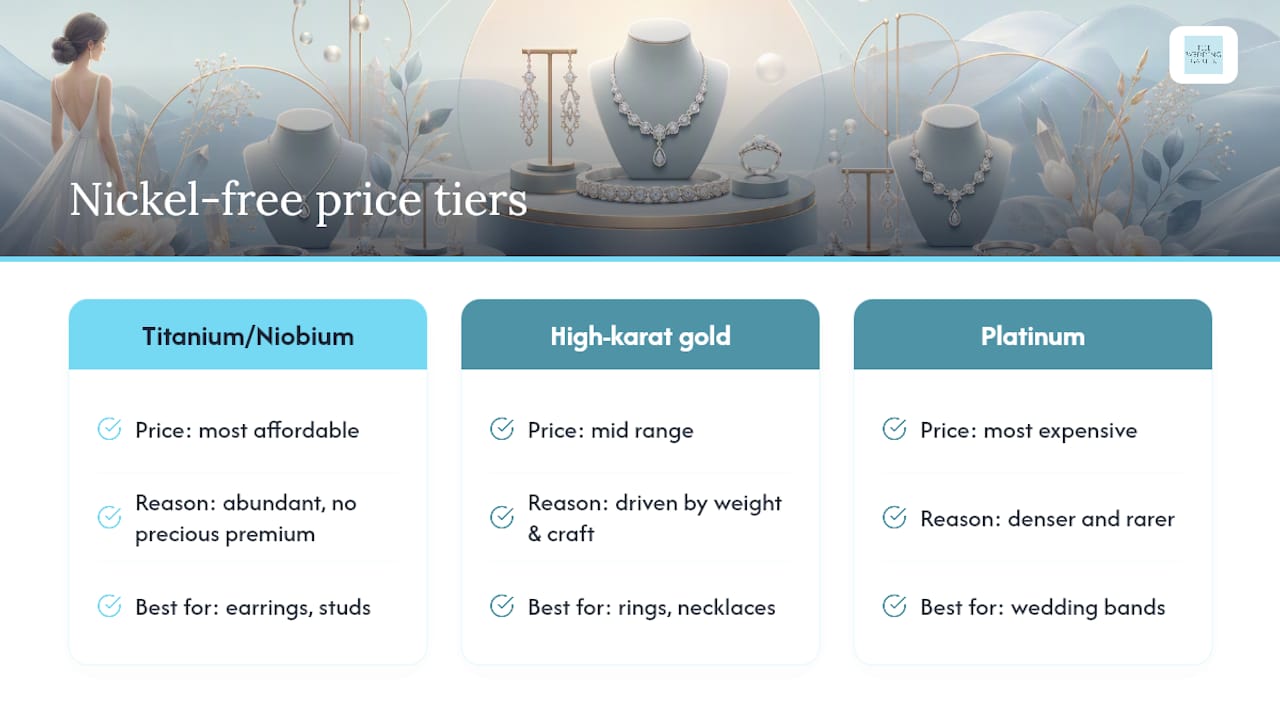
Price tracks metal choice closely, and that’s the first thing to budget around. Titanium and niobium earrings sit at the more affordable end of the hypoallergenic range, since both metals are relatively abundant and don’t carry a precious-metal premium. Platinum sits at the top of the range for wedding bands, priced above gold for an equivalent design because it’s denser and rarer. High-karat nickel-free gold lands somewhere in between, with cost driven mainly by gold weight and craftsmanship rather than the nickel-free alloy itself.
Crystal and pearl bridal pieces with nickel-free findings, like hair clips and statement earrings, are usually the most affordable category because the decorative elements (crystal, glass pearl, cubic zirconia) cost far less than the metal in a ring or solid-gold necklace. That’s good news if you want several coordinated pieces for the day rather than one expensive item.
A sensible budget approach: spend where contact is constant (the ring, stud earrings) and save where it isn’t (hair accessories, brooches, hair clips). A bride can build a full nickel-safe look, hair clip, earrings and necklace, without any single piece carrying the cost of the ring. Watch for unusually cheap “nickel-free” listings with no alloy detail. That price gap usually means an unverified claim, not a genuine bargain.
How long does nickel free bridal jewellery take to arrive?
Work backwards from your wedding date. Standard bridal jewellery orders typically ship within a few business days of purchase, but custom or made-to-order pieces, particularly rings resized for a specific finger or pieces requiring a specific alloy substitution, take longer to produce before they even ship.
Order any piece requiring alteration or customisation at least six to eight weeks out. That leaves room for production time, shipping, and the 24 to 48 hour test-wear period you should build in regardless of how confident you feel about the material. Off-the-shelf pieces, like a ready-made hair clip or a pair of stud earrings in standard finishes, can be ordered much closer to the date since there’s no production lag.
Always check the seller’s stated lead time against your wedding date before checkout, not after. A retailer that states shipping timeframes clearly on the product page, rather than burying them in a shipping policy, is generally the safer bet for a fixed deadline like a wedding.
Can you customise nickel free bridal jewellery safely?
Customisation is where allergy risk quietly creeps back in if you’re not careful. Resizing a ring, swapping a stone, or requesting engraving doesn’t usually touch the alloy, so these changes are generally safe. The risk appears when a customisation request changes the metal itself, such as asking for a gold-plated finish over a base-metal setting to save cost, or accepting a jeweller’s substitute alloy without checking what’s in it.
The safest approach: confirm the base metal stays nickel-free before and after any custom work, in writing if possible. Ask directly whether resizing, engraving or plating touches the parts that contact skin, meaning the ring’s interior or an earring’s post. A jeweller confident in their materials will answer this without hesitation.
Custom colour matching (rose gold tones, white gold versus platinum finish) can usually be achieved with nickel-free alloys, so you don’t need to sacrifice safety for a specific look. The exception is bargain-tier plating over an unverified base metal, which reintroduces exactly the risk you’re trying to avoid.
Are there certifications for nickel-free jewellery claims?
There’s no single global certification mark that automatically guarantees a piece is nickel-free, which is why label wording matters so much. Reputable sellers usually state the specific alloy (titanium, platinum, niobium, or a named nickel-free gold alloy) rather than relying on the word “hypoallergenic” alone, since that word carries no legal definition in most markets.
The most trustworthy signal isn’t a certificate. It’s specificity. A listing that names the exact metal, states the alloy composition, and shows a close-up of the post or clasp is doing the verification work for you. A listing that says only “hypoallergenic, nickel-free” with no further detail is asking you to take it on faith.
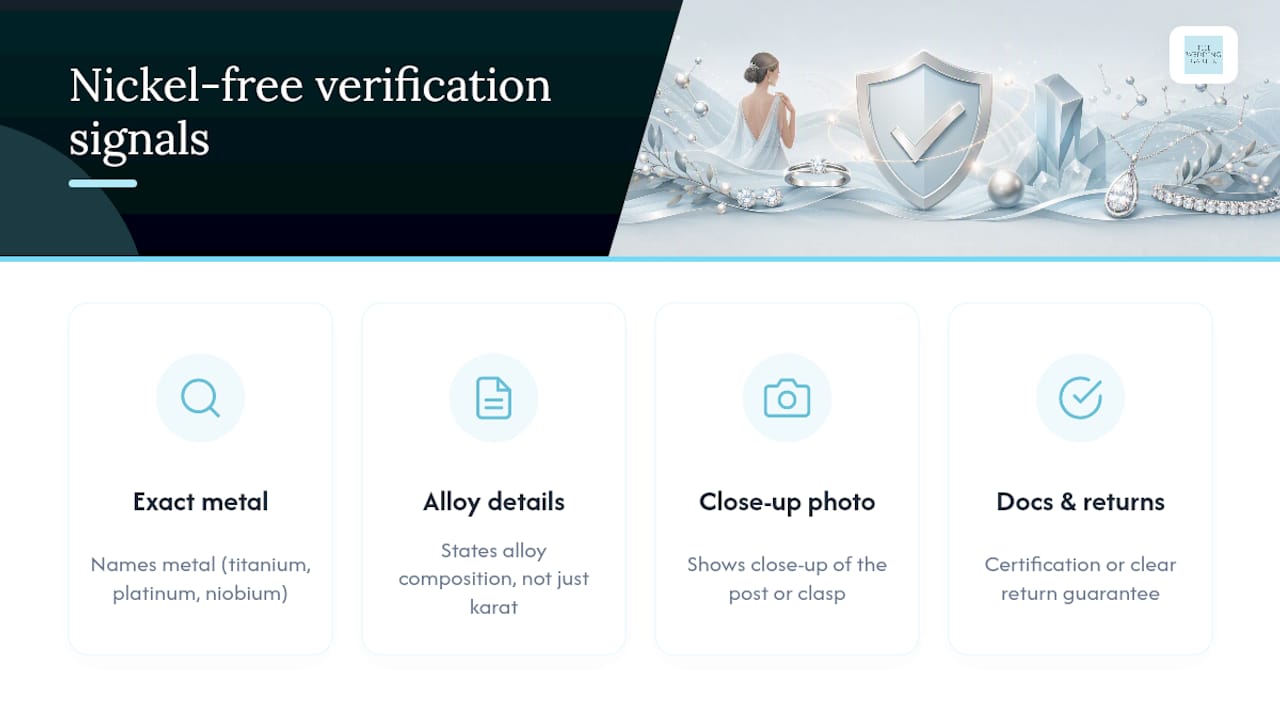
Ask the seller directly if certification or alloy documentation exists, particularly for gold pieces where alloy composition, not karat, decides the outcome. A retailer with clear return policies backs that claim with an actual guarantee: if the metal reacts, you can send it back. That’s a stronger assurance than a label with no material named behind it.
What to do if a reaction happens anyway
Even nickel-free metals can occasionally cause irritation in people with broader metal sensitivities, or if a piece was mislabelled. Remove the item straight away and let the skin breathe. Wash the area gently with mild soap and water to clear any residue, then apply a hypoallergenic barrier cream or antihistamine cream if swelling or itching persists.
For a wedding day specifically, this is exactly why an emergency kit matters: a spare pair of titanium or niobium studs, barrier tape, and antihistamine cream take up almost no space in a bridal party bag. If a reaction is severe (significant swelling, blistering, or spreading redness), seek medical attention rather than waiting it out through the reception.
Afterwards, go back to the seller with the specific reaction details. A reputable retailer will want to know, and a clear return or exchange policy means you’re not stuck wearing a piece that’s actively hurting you for the rest of your photos.
Our take: what most bridal guides get wrong about nickel allergies
Most advice on this topic treats “hypoallergenic” as a fixed category, when it’s really a spectrum that depends on the exact alloy, the specific contact point, and how long you’re wearing the piece. A titanium stud and a rhodium-plated stud can sit side by side in a catalogue looking identical, yet behave completely differently after six hours on a dance floor.
The Wedding Garter Australia has spent years dressing brides from the Sunny Gold Coast, and the same worry comes up constantly: a bride who’s never had a reaction before, suddenly nervous about wearing jewellery for a full 12-hour day rather than a normal outing. The fix is rarely complicated. Confirm the metal, test-wear it, and keep a backup pair of solid nickel-free studs in the bridal bag.
— The Wedding Garter
Shop nickel-friendly bridal pieces that won’t ruin your photos
This store offers an alternative to guessing your way through a generic jewellery marketplace: every bridal piece here is chosen with sensitive skin in mind, with clear photos of posts and clasps so you’re never buying blind.
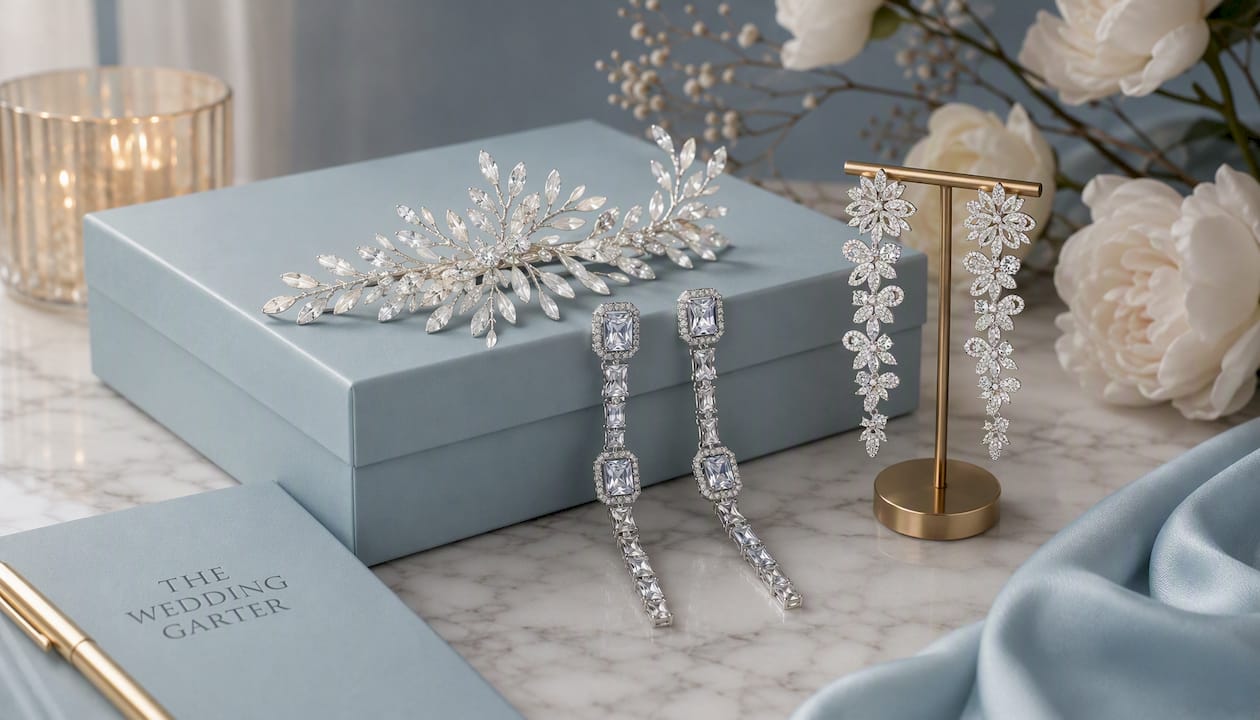
The Delicate Crystal Luxury Bridal Hair Clip sits in hair rather than skin, making it a safe sparkle option for any bride worried about reactions. The Long Dropper Statement Bridal Earrings and Delicate Long Floral Crystal Wedding Earrings both suit brides after a statement look without the guesswork of an unverified alloy. Browse the full bridal jewellery collection to coordinate pieces for hair, ears and neckline in one order, and check out our Custom Handmade Bridal Garters and accessories to finish the look. Orders over $100 ship free, and returns are accepted hassle-free within 30 days, so test-wearing before the big day is genuinely low risk.
Sources
- Best hypoallergenic jewelry metals for sensitive skin | Brilliant Earth
- LVC Purete Wedding Band with Milgrain Design in Platinum – Love & Co.
- Gold pearl drop earrings, Hypoallergenic pure niobium jewelry – For rebel skin
FAQ
Which jewellery brands are nickel free?
There’s no single brand that’s universally nickel-free, since safety depends on the specific alloy in each piece rather than the brand name alone. Look for retailers, including The Wedding Garter Australia, that name the exact metal (titanium, platinum, niobium, or a stated nickel-free gold alloy) rather than relying on the word “hypoallergenic” by itself.
What jewellery does not have nickel?
Titanium, platinum and niobium contain no nickel at all, making them the safest metals for sensitive skin. High-karat gold can also be nickel-free, but only when the remaining alloy is specifically formulated without nickel, so always check the alloy detail rather than assuming karat alone guarantees safety.
What jewellery is best for nickel allergy?
Solid titanium or niobium earrings and a platinum or verified nickel-free gold ring are the most reliable choices for anyone with a confirmed nickel allergy. Avoid rhodium-plated silver for long, continuous wear, since the plating wears down over time and can expose a nickel-containing alloy underneath.
What metal is 100% nickel free?
Pure titanium, pure platinum and pure niobium all contain no nickel whatsoever, unlike many gold and silver alloys where nickel can be added for strength or cost reasons. That’s why these three metals turn up repeatedly across bridal jewellery guides as the safest baseline for sensitive skin.


Leave a comment