

Six Items for a Reception Accessory Switch from The Wedding Garter
A reception accessory switch is the planned swap of a few bridal accessories, not a full outfit change, made between ceremony and reception to keep the bride comfortable and photo-ready. The core rule is simple: build your look around one focal piece, make small, deliberate edits rather than a wardrobe overhaul, and prioritise comfort for the hours of dancing ahead. A bridal accessories catalogue is a useful starting point for sourcing the pieces you will actually swap.
TL;DR:
- Choosing one hero accessory, such as a veil or statement earring, helps keep your look polished and easily adaptable for the reception.
- Swaps like removing the veil, switching to lightweight earrings, and changing into comfortable shoes are simple, intentional edits, not a full outfit overhaul.
- Testing your full accessory and shoe setup at home weeks ahead, during sitting, hugging, and dancing, prevents discomfort on the wedding day.
- Order custom accessories and shoes early to allow for proper fitting and breaking-in time before the wedding, avoiding last-minute stress.
- Matching jewelry tone and metal family to your gown ensures a cohesive look without risking an overdressed or cluttered appearance.
Table of Contents
- Why the one focal-piece rule matters for your reception switch
- How should you match jewellery to your neckline?
- When should you buy and test your accessories?
- What goes into a reception-ready accessory kit?
- A styling perspective from a bridal accessories retailer
- Shop the pieces that make your switch easy
- Where to read more on wedding accessory styling
- Sources
- FAQ
Why the one focal-piece rule matters for your reception switch
Most stylists agree on this: pick one hero accessory and let everything else sit quietly in the background. It might be your veil, a bold headpiece, or a pair of statement earrings, but it should not be all three at once. This is the “one focal point” rule that professional stylists lean on to keep a bridal look polished rather than cluttered, and it applies just as much to your reception switch as it does to your ceremony look.
The mistake many brides make is trying to match every piece exactly. A better approach is matching tone and metal family rather than forcing identical pieces. Gold-toned earrings can sit comfortably alongside a silver clutch if the overall palette feels cohesive rather than stiff and overly matched.
Here is what an actual reception switch usually involves:
- Removing the veil once ceremony photos are done, so hair and headpiece take centre stage on the dance floor.
- Swapping heavy statement earrings for a lighter pair before the reception, especially if you plan to dance for hours.
- Changing from ceremony heels into low-heel shoes or flats for comfort during the reception.
- Loosening or removing a structured belt if the gown allows it, for easier movement.
None of these swaps require a second outfit. They are small, considered edits that protect comfort without losing the polished look you spent months planning.
Pro Tip: Do a full trial run of your reception switch at home, veil off, earrings changed, shoes swapped, at least a few weeks before the wedding. It is the easiest way to catch a piece that looks great in theory but fights you in practice.
If you are still deciding on your hero piece, our guides on bridal hair accessories and earring styles by neckline are worth reading before you buy anything.
How should you match jewellery to your neckline?
Your gown’s neckline and embellishment level decide most of your jewellery choices before you even open a catalogue. Heavily embellished bodices pair best with simple accessories, while a minimalist gown gives you licence to go bolder with a statement piece. Getting this wrong is the fastest way to end up looking overdressed in every photo.
Follow these rules when you are choosing:
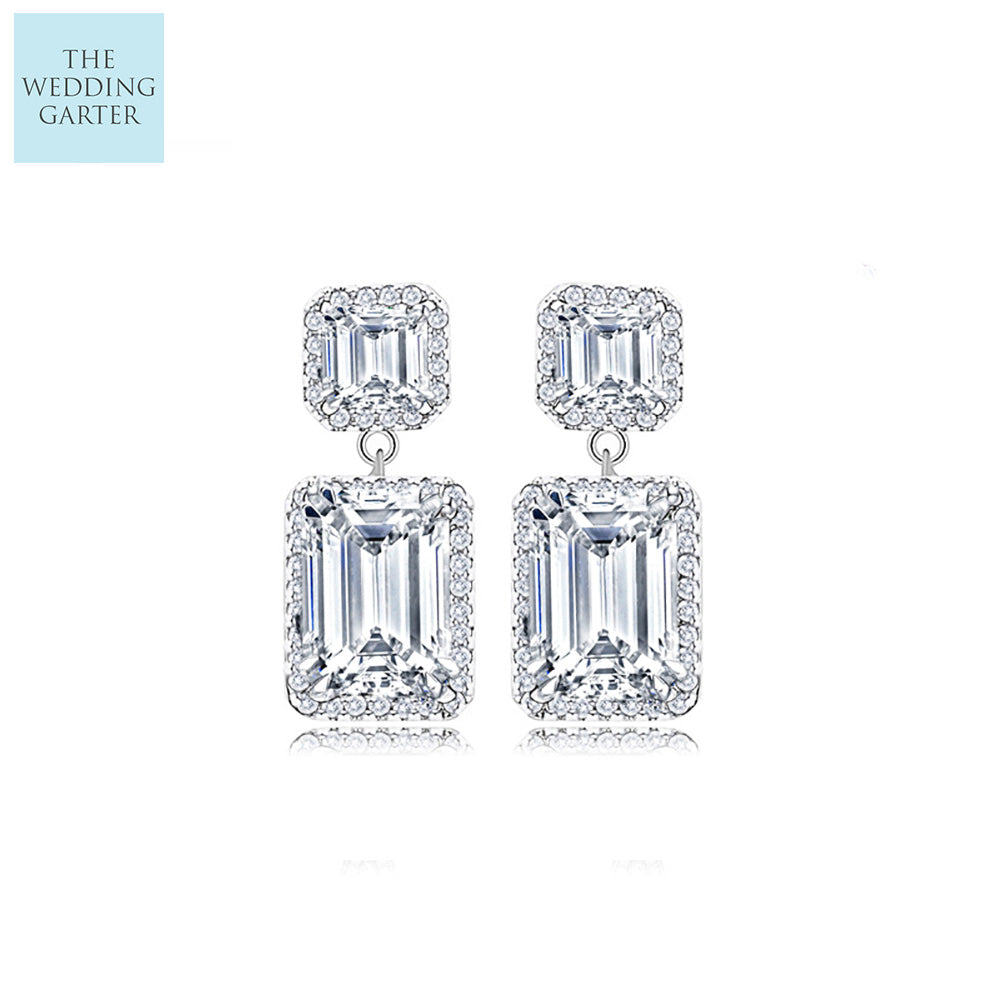
- High necklines usually work best with no necklace at all, letting statement earrings do the talking instead.
- V-necks and sweetheart necklines suit a delicate pendant that follows the same line as the neckline.
- Strapless gowns can carry either a statement necklace or nothing, depending on how detailed the bodice already is.
- Heavily beaded or lace bodices need restraint elsewhere. Let the dress be the statement and keep jewellery minimal.
Lighting and venue matter too. A reception lit by fairy lights or candles will make reflective crystal and diamante pieces sparkle far more than they will under harsh daylight, so consider where you will be standing when the photos are taken.
The most practical time to lock in these decisions is during your dress fittings, not the week before the wedding. Bring your chosen jewellery to the fitting so you can see the whole picture together, rather than guessing at home under different lighting. Our high-neck jewellery guide walks through this in more detail if your gown falls into that category.
When should you buy and test your accessories?
Timing catches out more brides than style choices ever do. Custom pieces, particularly bespoke garters, need considerably more lead time than off-the-rack accessories, so order those first if you want anything personalised. Shoes deserve the same early attention: buy them well ahead of the wedding so you have time to break them in before you are standing in them for eight to twelve hours.
Comfort matters just as much as style over a long day, and a restrictive or heavy piece will show on your face by the time the speeches start. A structured trial run is the best way to test that before it becomes a problem. Wear the full look for a few hours at home, exactly as you plan to wear it on the day, and watch for pulling, slipping, or discomfort.
Build a small day-of kit before the wedding, and hand it to your maid of honour or dresser:
- Spare bobby pins and a small sewing kit for quick fixes.
- A backup pair of earrings in case one goes missing.
- Fabric plasters for new shoes and blister-prone spots.
- Safety pins for a hem, strap, or garter that shifts unexpectedly.
Three simple tests during your trial, sitting, hugging, and dancing, will surface most problems before the wedding day does it for you.
What goes into a reception-ready accessory kit?
A workable kit covers every moment from the ceremony aisle to the last dance, without turning into a suitcase of options you will never touch. Think in terms of six items, each doing one job well.
- A ceremonial headpiece or veil as your hero piece, like the large garden design ivory and silver bridal headpiece, which is dramatic enough for ceremony photos and removable in seconds for the reception.
- Two earring options, one statement, one lighter, so you can swap without disrupting your overall look. A set like the Vintage Art Deco style bridal jewellery set works as a full ceremony look that edits down easily.
- A delicate bracelet or pendant for the reception, such as the delicate crystal luxury bridal bracelet or the sterling silver cubic zirconia pendant bridal jewellery set, both light enough not to catch on fabric during dancing.
- A garter, whether traditional or a personal keepsake, like the vintage ivory lace and satin bridal garter or the Trinity delicate ivory floral lace and rhinestone bridal garter.
- A clutch sized for phone, lipstick, and tissues, kept close for the reception rather than the ceremony.
- Comfortable reception shoes, chosen and broken in weeks ahead of the day.
Fastenings matter more than most brides expect. Choose hair combs with a secure grip, veils with discreet clips, and bracelets with clasps that open with one hand, since your bridal party will be helping you swap pieces quickly between the ceremony and the reception. If a full change feels like too much, a minimal switch, just the veil off and shoes changed, still delivers most of the comfort benefit.
A styling perspective from a bridal accessories retailer
Accessories should feel like an extension of the bride wearing them, not a costume borrowed for the day. Our catalogue leans into that idea deliberately, from crystal and freshwater pearl headpieces through to garters that double as keepsakes, because the pieces that end up in your photos are the ones you will keep long after the wedding.
Our advice, drawn from years of watching what actually works on the day rather than what looks good in a catalogue photo, is simple: trial your full look before the wedding, and choose at least one small heirloom piece with genuine sentimental weight. It is the detail that turns an accessory into a memory. For more on our approach, our styling blog covers this in more depth.
Shop the pieces that make your switch easy
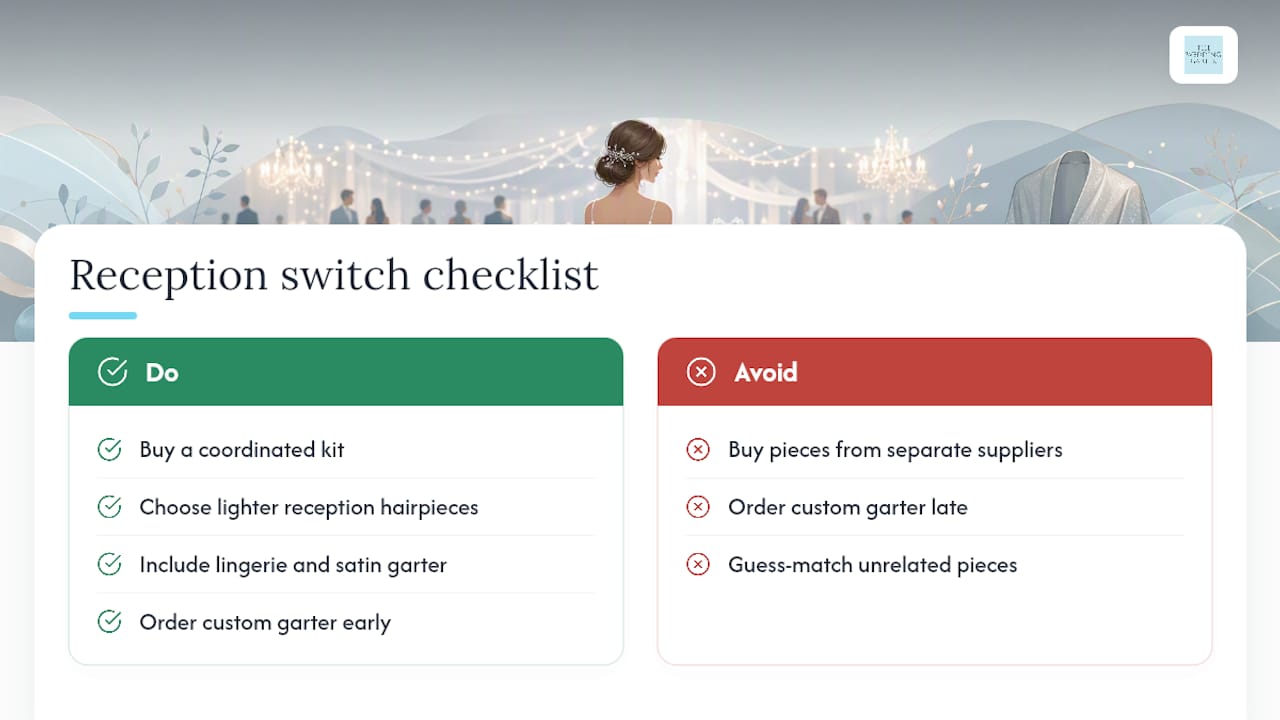
Once you know your hero piece and your swap plan, the next step is sourcing accessories built to move with you between ceremony and reception, without the guesswork of piecing together separate suppliers. A catalogue arranged so a headpiece, jewellery set, and garter can be bought together as a coordinated kit rather than three unrelated purchases is helpful.
The classic vintage crystal wedding hair accessories and delicate crystal luxury bridal hair clip both work well as lighter reception options once a heavier ceremony headpiece comes off. For your reception night, the luxury white lace lingerie chemise for brides and satin bridal garter with floral design round out the kit for the parts of the day that happen after the photographs.
Custom and handmade garters generally need more lead time than off-the-rack jewellery, so order those first if your wedding is within a few months. Browse the full accessory range to plan your reception switch now, and reach out if you would like styling advice matched to your gown.
Where to read more on wedding accessory styling
The stylist rules and timeline advice in this piece draw on the Ivory Tribe bridal style edit, the Real Wedding accessories guide, and the Azazie wedding dress accessories guide. For neckline-specific guidance, see our summer accessories picks for warm-weather receptions.
Sources
- How to choose the right wedding accessories | Real Wedding
- Wedding dress accessories guide | Azazie blog
FAQ
What is a reception accessory switch?
It is a planned swap of a few bridal accessories, such as removing a veil or changing shoes, between the ceremony and reception rather than a full outfit change.
How many accessories should I wear at once?
Stick to one focal piece, whether that is a veil, headpiece, or statement earrings, and keep everything else understated to avoid an over-accessorised look.
When should I buy custom wedding accessories?
Order custom pieces like bespoke garters as early as possible, since they need more lead time than off-the-rack jewellery, and buy shoes early enough to break them in.
How do I test accessories for comfort before the wedding?
Wear your full accessory look, including shoes and jewellery, for a few hours at home, and test it by sitting, hugging, and moving as you would while dancing.
Should my jewellery match my gown exactly?
No. Match the tone or metal family of your accessories to your gown rather than forcing an exact match, which tends to look stiff rather than considered.


Leave a comment