

Best ring pillow fabric for your wedding: a practical guide
Satin and linen are the two safest, most versatile choices for a wedding ring pillow. Satin photographs beautifully under ceremony lighting, handles well in small hands, and is easy to source across Australia. Linen reads as an heirloom piece and suits rustic, garden, and coastal weddings. Velvet is a strong third pick for winter or formal indoor ceremonies. As Sew4Home notes, the ring bearer pillow remains a traditional and widely used ceremonial accessory for formal weddings.
Top fabric picks at a glance:
- Satin — photographs well, beginner-friendly, widely available
- Linen — heirloom quality, breathable, suits outdoor ceremonies
- Velvet — luxurious texture, ideal for formal or winter weddings
- Lace overlay — decorative layer, pairs with satin or cotton base
- Cotton — budget-friendly, easy to embroider, beginner-safe
For a ready-made option, The Wedding Garter Australia stocks a curated range of satin ring pillows and lace-trimmed cushions available to Australian buyers with local shipping.
Key takeaways
Satin is the single most reliable ring pillow fabric for Australian weddings: it photographs well, sews cleanly, and is available at every major fabric retailer across the country.
| Point | Details |
|---|---|
| Best all-round fabric | Satin suits most ceremonies; linen is the better pick for outdoor or rustic venues. |
| Yardage needed | One fat quarter (approximately 50 cm × 55 cm) covers a standard 20 cm × 20 cm pillow. |
| Fill density matters | Pack fibrefill firmly into corners first; a firm pillow looks professional and keeps rings secure. |
| Use interfacing | Fuse medium-weight interfacing behind lightweight fabrics like cotton, organza, or lace. |
| Ready-made option | The Wedding Garter Australia stocks satin and lace ring pillows with Australian shipping. |
Table of Contents
- Which ring pillow fabric suits your style and skill level?
- How much fabric and what supplies do you need?
- How do you sew a simple ring pillow step by step?
- What embellishments work best, and how do they affect the fabric?
- Where can Australian buyers find ring pillows or fabric kits?
- Expert tips for a keepsake-quality finish
- Why satin and firm fill work best for most Australian ceremonies
- Ring pillows and bridal accessories from The Wedding Garter Australia
- Sources
- FAQ
Which ring pillow fabric suits your style and skill level?
Every fabric behaves differently once stuffed, embellished, and handed to a five-year-old ring bearer. Here is how the main options compare.
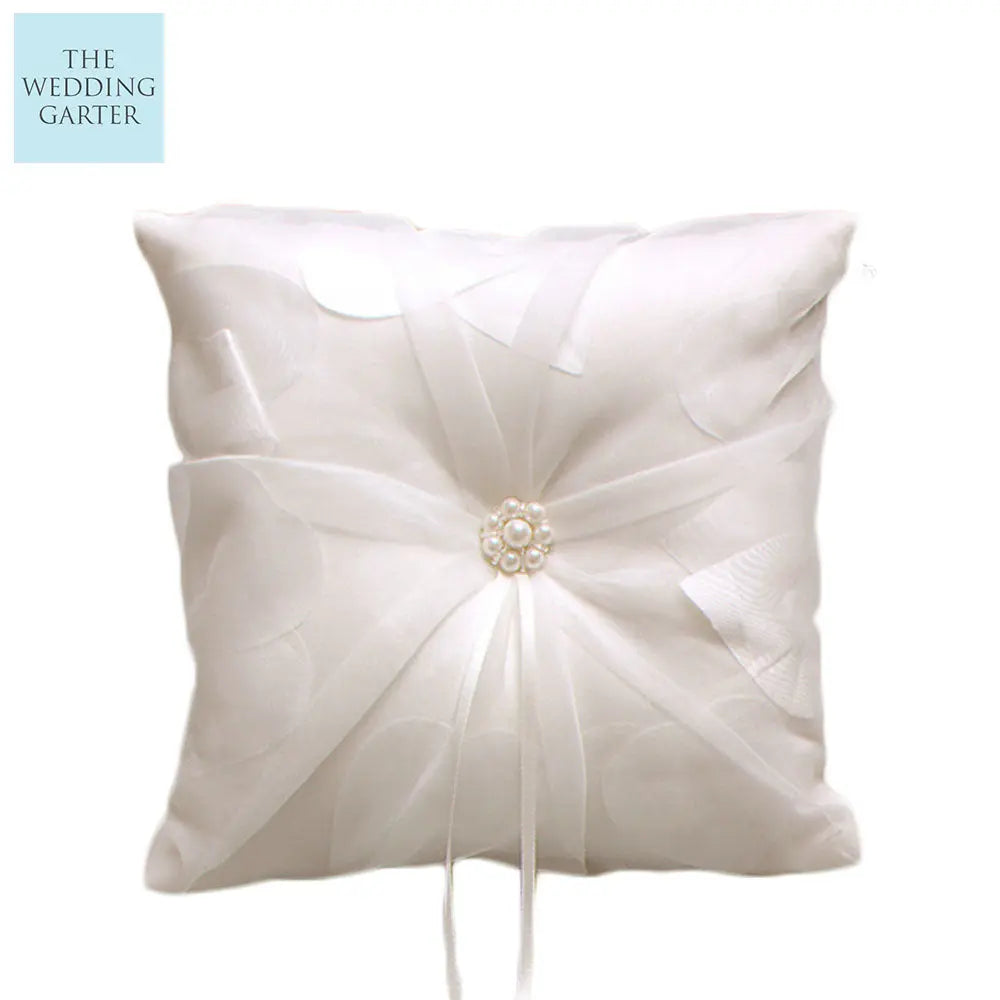
Satin is the most popular choice for good reason. It reflects light evenly in photos, comes in white, ivory, and blush, and sews cleanly on a standard machine. The downside: it frays quickly, so finish all raw edges with a serger or zigzag stitch. Beginner-friendly.
Silk shares satin’s sheen but is thinner, slippier, and more expensive. It rewards careful pressing and sewing clips over pins. Best reserved for formal ceremonies where the pillow is a keepsake rather than a prop. Advanced.
Velvet is having a strong moment in contemporary bridal styling. Something Turquoise reports that jewel-toned velvets are a popular modern choice and that firm stuffing produces a full, professional appearance. Cut all pieces with the nap running the same direction. Intermediate.
Linen is naturally textured, breathable, and ages gracefully. It suits rustic barns, garden ceremonies, and coastal venues. Linen takes embroidery and monogramming well, making it a favourite for keepsake pillows. Wash and pre-shrink before cutting. Beginner to intermediate.
Cotton is the most affordable option and the easiest to sew. Plain cotton lacks the visual weight of satin or velvet, but printed or textured cotton can look charming for informal ceremonies. It takes embroidery thread beautifully. Beginner.
Lace works best as an overlay on a sturdier base fabric rather than as the sole material. A lace ring pillow built on a satin or cotton backing combines delicacy with structure. Lace alone tends to stretch and distort when stuffed. Intermediate.
Organza and brocade add texture and visual interest. Organza is sheer and light, so it needs a lining. Brocade is heavier and more structured, suits formal ceremonies, and holds embellishments without backing. Intermediate to advanced.
| Fabric | Best for | Ease to sew | Durability and stuffing | Care | Australian availability |
|---|---|---|---|---|---|
| Satin | Formal, photography | Beginner | Holds shape well; frays at edges | Spot clean; store flat | Widely available in fabric stores and online |
| Silk | Formal keepsake | Advanced | Delicate; needs careful handling | Dry clean only | Specialty fabric stores and online |
| Velvet | Formal, winter | Intermediate | Firm stuffing essential for shape | Spot clean; store away from light | Fabric stores; online |
| Linen | Rustic, garden, coastal | Beginner–intermediate | Durable; pre-shrink before use | Machine wash cold | Widely available |
| Cotton | Informal, budget | Beginner | Lightweight; best with interfacing | Machine wash | Widely available |
| Lace overlay | Decorative layer | Intermediate | Needs base fabric for structure | Gentle hand wash | Online; specialty stores |
| Organza/Brocade | Formal, structured | Intermediate–advanced | Organza needs lining; brocade is sturdy | Dry clean or spot clean | Specialty stores and online |
How much fabric and what supplies do you need?
A standard ring pillow is typically about 20 cm square. WeddingBee confirms that a single pillow requires less than a quarter of a metre of fabric. That makes the material cost minimal and the project approachable for first-time sewers.
Supplies checklist:
- Fabric: one fat quarter (approximately 50 cm × 55 cm) for the front and back panels
- Thread: matching polyester thread
- Interfacing: medium-weight fusible interfacing for lightweight fabrics (cotton, organza, lace)
- Fill: polyester fibrefill or a small piece of batting; reclaimed fabric scraps also work
- Ribbon: 60–90 cm of 1 cm wide satin ribbon for ring ties; We Like Sewing specifies 3/8-inch double-face satin ribbon for ribbon-weave designs
- Needle: universal needle for satin and cotton; ballpoint for velvet and knits
- Pins or sewing clips: clips for velvet and silk to avoid pin marks
- Scissors or rotary cutter and mat
- Optional: lace trim, embroidery thread, small brooches or buttons for embellishment
For fill, polyester fibrefill from Spotlight or Lincraft is the most practical choice in Australia. Batting offcuts from quilting projects work well for a flatter, firmer look. If budget is tight, WeAllSew demonstrates that reclaimed satin or lace from an old gown makes an attractive and low-cost alternative.
How do you sew a simple ring pillow step by step?
A basic square pillow is the fastest and most reliable construction method, even for beginners. Cut, sew, turn, stuff, and close — five steps, no pattern required.
- Cut two squares of fabric, each 22 cm × 22 cm (this gives a finished 20 cm pillow with a 1 cm seam allowance on all sides).
- Mark the ribbon position on the right side of the front panel: find the centre and mark two small dots 3–4 cm apart where the ribbon will be attached.
- Pin or clip the ribbon at the marked points, looping it so the ends face inward (they will be caught in the seam).
- Place right sides together, aligning all edges. Pin or clip around the perimeter.
- Sew around three sides and part of the fourth, leaving a 7–8 cm gap for turning and stuffing. Use a 1 cm seam allowance throughout.
- Clip the corners at a 45-degree angle, close to but not through the stitching, to reduce bulk.
- Turn right side out through the gap. Use a blunt tool (a chopstick works well) to push the corners out fully.
- Stuff firmly with polyester fibrefill. Pack more than you think you need — a firmly stuffed pillow looks professional; an under-stuffed one looks limp.
- Close the gap with a ladder stitch (hand sewn, invisible) or fold the raw edges in and topstitch close to the edge.
- Tie the ribbon in a loose bow to confirm placement, then secure rings on the day with a simple double knot or a slip-knot that the celebrant can release easily.
Diagram suggestion: a simple flat-lay sketch showing the two fabric squares, ribbon placement at centre, and the gap left for turning would help visual learners at step 4.
Ring security tip: stitch a small fabric loop or bartack at the ribbon’s base so the bow cannot slide. A ribbon knot is the most common method; a stitched loop is more secure for an active ring bearer.
What embellishments work best, and how do they affect the fabric?
Embellishments transform a plain pillow into a decorative ring pillow that matches the wedding aesthetic. The key is matching the weight of the decoration to the weight of the base fabric.
- Satin ribbon sashes and bows — light, easy to attach, suit any fabric; the most common choice for a clean, classic look
- Lace overlays — cut a slightly smaller lace panel and baste it to the front before construction; adds texture without bulk on satin or cotton bases
- Embroidered initials or dates — best on linen or cotton; use a stabiliser behind the fabric to prevent puckering; monogramming is a popular keepsake feature
- Ribbon-weave tops — a decorative technique where ribbons are woven across the pillow face and secured at the edges; We Like Sewing’s pattern shows how woven ribbons also create multiple anchor points for tying rings securely
- Small brooches or buttons — add visual interest but increase weight; use a sturdier base fabric such as brocade or medium-weight linen
- Beadwork or crystal trim — beautiful but heavy; always back the fabric with interfacing and consider whether the pillow will be stored as a keepsake or discarded after the ceremony
Pro Tip: Stitch ribbon ties at least 2 cm from the pillow’s centre so the bow sits flat and the rings rest securely without rolling. A ribbon that is too close to the edge allows rings to shift during the walk down the aisle.
For inspiration on how the pillow fabric coordinates with jewellery and overall décor, this guide on ring and décor coordination is worth a look before finalising your fabric choice.
Heavy embellishments affect cleaning. Beaded or brooch-trimmed pillows cannot be machine washed. If the pillow is a keepsake, store it in an acid-free box away from direct light to prevent discolouration of satin and lace.
Where can Australian buyers find ring pillows or fabric kits?
Ready-made pillows and fabric kits suit buyers who want a polished result without the sewing. Several options are available to Australian shoppers.
- Local bridal accessory retailers stock a small range of standard white or ivory pillows; selection is limited but shipping is fast
- Online Australian bridal stores offer more variety, including custom monogramming and lace-trimmed styles; check the listed fabric, pillow dimensions, ribbon length, and whether a removable insert is included before ordering
- Fabric kits (pre-cut panels and binding) are a middle-ground option for crafters who want simplified construction without sourcing individual pieces; note that most kits do not include pattern instructions
- Marketplace platforms such as Etsy Australia carry a wide range of ring-pillow-specific fabrics, lace trims, and vintage materials for DIYers seeking unusual textures
Before buying, check:
- Pillow dimensions (20 cm × 20 cm is standard; some decorative pillows are smaller)
- Ribbon length and whether it is pre-attached
- Whether a removable insert is included for cleaning
- Custom monogram availability and lead time
- Shipping timeframe — allow at least two weeks for custom orders in Australia
The Wedding Garter Australia offers a selection of ready-made options, including a classic satin ring pillow and a silky ivory satin and vintage lace cushion, both available with Australian shipping.
Expert tips for a keepsake-quality finish
The difference between a home project and a professional-looking pillow usually comes down to three things: interfacing, fill density, and finishing.
Interfacing is non-negotiable for lightweight fabrics. Fuse medium-weight interfacing to the wrong side of cotton, organza, or lace panels before cutting. This keeps the surface structured when stuffed and prevents the fabric from pulling or puckering around embellishments.
Fill density matters more than most sewers expect. As Something Turquoise’s designers note, firm, even stuffing is what makes velvet and satin look luxurious rather than homemade. Pack the fibrefill in small handfuls, pushing it into the corners first, then filling the centre. The pillow should feel firm when pressed lightly.
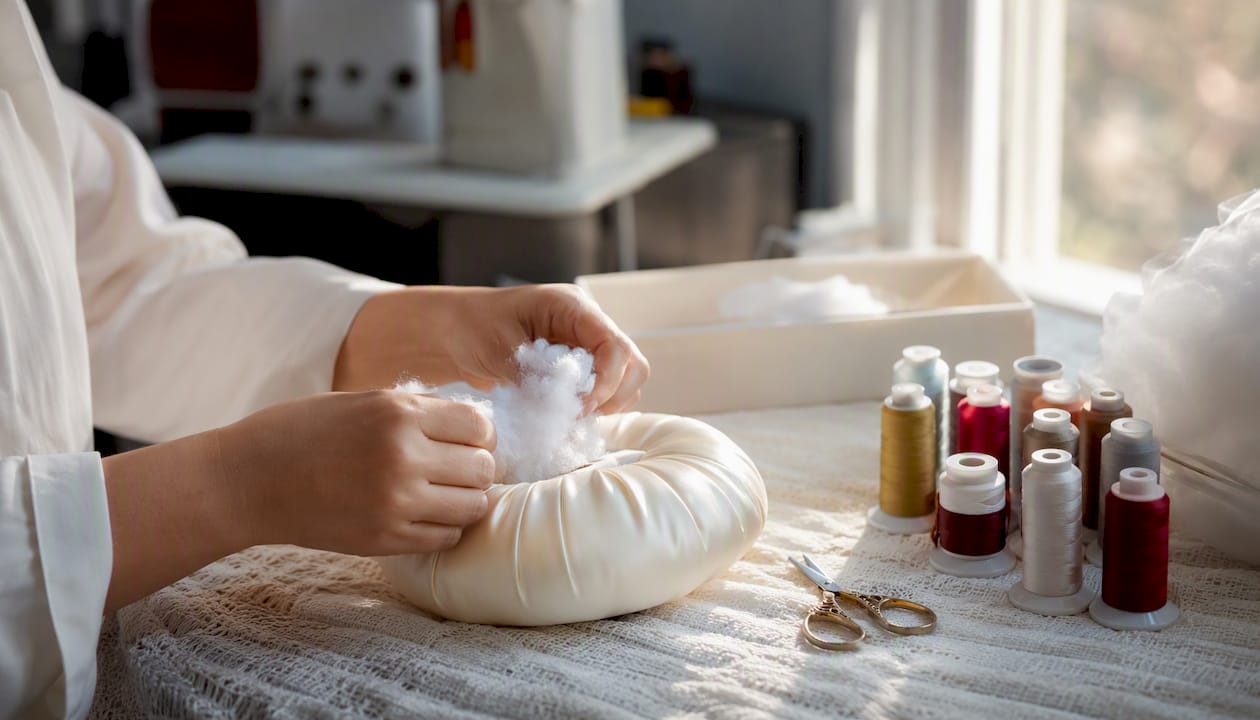
Pro Tip: An envelope back (two overlapping fabric panels instead of a sewn-closed back) allows you to remove and replace the insert for cleaning. Pair this construction with a slightly heavier face fabric — medium-weight linen or satin-backed crepe — for a pillow that feels substantial and stores well.
Care by fabric type:
- Satin: spot clean with a damp cloth; store flat in a breathable bag
- Silk: dry clean only; wrap in acid-free tissue for storage
- Linen: machine wash cold on a gentle cycle; air dry flat
- Velvet: spot clean; store away from direct light to prevent fading; never press directly with an iron
Why satin and firm fill work best for most Australian ceremonies
Satin with firm polyester fill is the recommendation for most Australian weddings, and the reasoning is practical. Satin reflects ceremony lighting cleanly in photographs, which matters when the rings are the centrepiece of the shot. A firmly stuffed pillow sits flat in a ring bearer’s hands and keeps the ribbon ties in place throughout the walk down the aisle. After the ceremony, a well-made satin pillow stores without creasing and works as a keepsake.
For outdoor summer ceremonies, linen is a better call. It breathes, does not wilt in humidity, and photographs with a soft, natural texture that suits garden and coastal venues. The chic ivory satin appliqué pillow from The Wedding Garter Australia is a good example of how appliqué detail on a satin base achieves both photographic impact and structural reliability.
Ring pillows and bridal accessories from The Wedding Garter Australia
The Wedding Garter Australia carries ring pillows alongside a full range of bridal accessories, all available with Australian shipping from the Gold Coast. The satin and lace options are ready to use straight from the box, with pre-attached ribbon ties and dimensions suited to standard ceremony use.
For brides building a complete accessory set, the range also includes a Vintage Art Deco Style Bridal Jewellery Set, a Delicate Crystal Luxury Bridal Bracelet, and a Sterling Silver Cubic Zirconia Pendant Bridal Jewellery Set. Bridal lingerie options include the Luxury White Lace Lingerie Chemise For Brides and the Sheer Mesh & Luxe Lace Bustier Lingerie. Garter styles include the Satin Bridal Garter With Floral Design and the Vintage Ivory Lace & Satin Bridal Garter. Visit Theweddinggarter to shop the full range or contact the team for custom monogramming and order enquiries.
Sources
- Ring bearers pillow with woven ribbons | Sew4Home
- Make your own ring pillow | WeddingBee
- DIY mini-velvet ring bearer pillows | Something Turquoise
- Romantic Ribbon Weaving Ring Bearer Pillow | We Like Sewing
- How to sew an upcycled ring bearer’s pillow | WeAllSew
FAQ
What fabric is best for making a ring pillow?
Satin is the most popular choice because it photographs well, sews cleanly, and is widely available in Australia. Linen is the preferred alternative for outdoor or rustic ceremonies.
What is a ring bearer pillow called?
It is commonly called a ring pillow or ring cushion. The formal term is ring bearer pillow, referring to its ceremonial role of carrying the wedding rings down the aisle.
What can you use instead of a ring pillow?
A small ring box, a floral holder, or a decorative basket are common alternatives. For formal weddings, the traditional pillow remains the standard choice, as noted by Sew4Home.
Do people still use ring bearer pillows?
Yes. Ring bearer pillows remain a popular accessory for formal and semi-formal weddings in Australia. Ready-made options from retailers like The Wedding Garter Australia make them easy to source without sewing.
How much fabric do you need for a ring pillow?
A single 20 cm × 20 cm pillow requires less than a quarter of a metre of fabric. One fat quarter (approximately 50 cm × 55 cm) is enough for both the front and back panels, with fabric to spare.
Recommended
- The Ultimate Ring Bearer Pillow Buying Guide: Find the Perfect One for – The Wedding Garter
- 15 ring bearer pillow ideas for your Australian wedding – The Wedding Garter
- Ring bearer pillow size: what couples need to know – The Wedding Garter
- The Ultimate Wedding Night Lingerie Guide: Choosing Your Perfect – The Wedding Garter


Leave a comment