

How to wash silk lingerie without ruining it
Hand wash silk lingerie in cool to lukewarm water with a pH-neutral, enzyme-free detergent, then air dry it flat away from heat. That single method protects fibre strength, colour and shape better than any other approach.
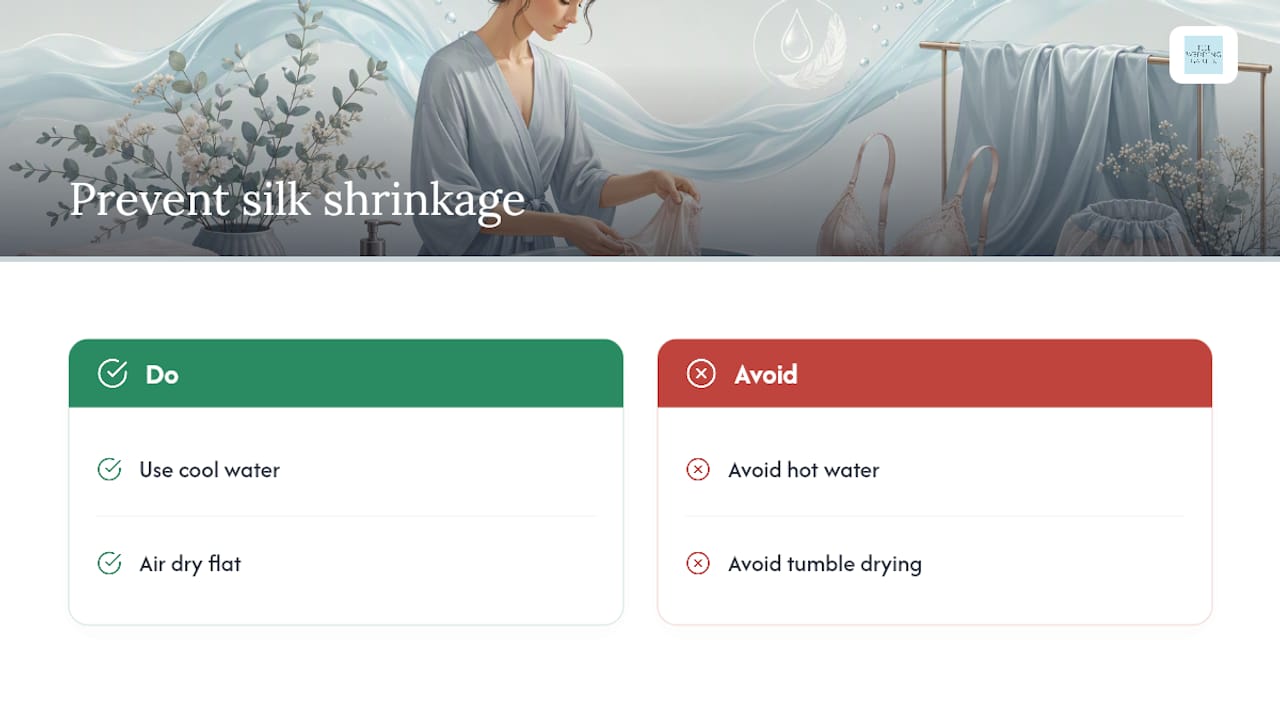
- Do use cool or lukewarm water, never hot.
- Do choose a silk-safe, enzyme-free detergent.
- Don’t wring, twist or tumble dry.
- Don’t iron directly on the fabric.
Pro Tip: Rinse sweat or perfume marks in cool water straight after wearing. Fresh residue lifts out far easier than a mark left to set overnight.
Key Takeaways
The safest way to wash silk lingerie is by hand, in cool water with an enzyme-free detergent, followed by flat air drying away from heat.
| Point | Details |
|---|---|
| Hand wash first | Use cool to lukewarm water and a pH-neutral, enzyme-free detergent for every silk piece. |
| Test before you wash | Check colourfastness on a hidden seam to avoid dye transfer or bleeding. |
| Never wring wet silk | Wet fibres lose tensile strength, so use a towel roll instead of twisting or spinning. |
| Machine wash only as last resort | Use a mesh bag, cold delicate cycle and no spin, and never for corsets or padded bras. |
| Store away from plastic | Breathable bags and tissue-lined drawers prevent moisture damage and yellowing. |
| Shop structured pieces with care in mind | The Wedding Garter Australia’s bridal lingerie and garters are designed to hold shape when this washing routine is followed. |
Table of Contents
- How to prepare silk lingerie before washing
- How do you spot-treat stains on silk before washing?
- How to hand wash silk lingerie step by step
- Can you machine wash silk lingerie?
- How to dry silk lingerie without damaging it
- Is it safe to iron silk lingerie?
- How should you store silk lingerie between wears?
- What to do if silk lingerie shrinks or feels stiff
- When should you send silk lingerie to a professional cleaner?
- Find bridal silk lingerie built to last beyond the wedding night
- Sources
- FAQ
How to prepare silk lingerie before washing
Check the care label first. Silk lingerie labels often carry a hand-wash symbol, a crossed-out iron with dots for temperature, or a “dry clean only” instruction for structured pieces, and that label overrides any general advice here.
- Sort by colour and structure. Keep reds, navy and black away from whites and ivory, and separate soft slips from underwired or padded bras.
- Remove hooks, detachable pads and any jewellery before washing, and pop delicate trims into a mesh bag if the piece is going anywhere near a machine.
- Test for colourfastness on a hidden seam: dab a damp cloth with a little detergent, press it against the fabric for 30 seconds, then check for colour transfer.
Pro Tip: Never assume a dark silk garment is colourfast just because it’s expensive. Cheaper dyes bleed just as readily as pricier ones, sometimes more so.
How do you spot-treat stains on silk before washing?
Blot, never rub. Rubbing pushes a stain deeper into silk fibres and can leave a visible ring once the fabric dries. Always test any treatment on an inside seam before touching the mark itself.
- Blood: flush immediately with cold water only, never warm.
- Sweat or deodorant marks: dab with a weak vinegar solution to lift residue and neutralise odour.
- Oil or make-up: press an absorbent powder like cornstarch onto the mark to draw out oil before washing.
Enzyme-based stain removers work by breaking down proteins, which is exactly why they’re risky on silk. Enzymes attack silk’s own fibroin protein, so save them for a genuine emergency stain rather than routine use.
How to hand wash silk lingerie step by step
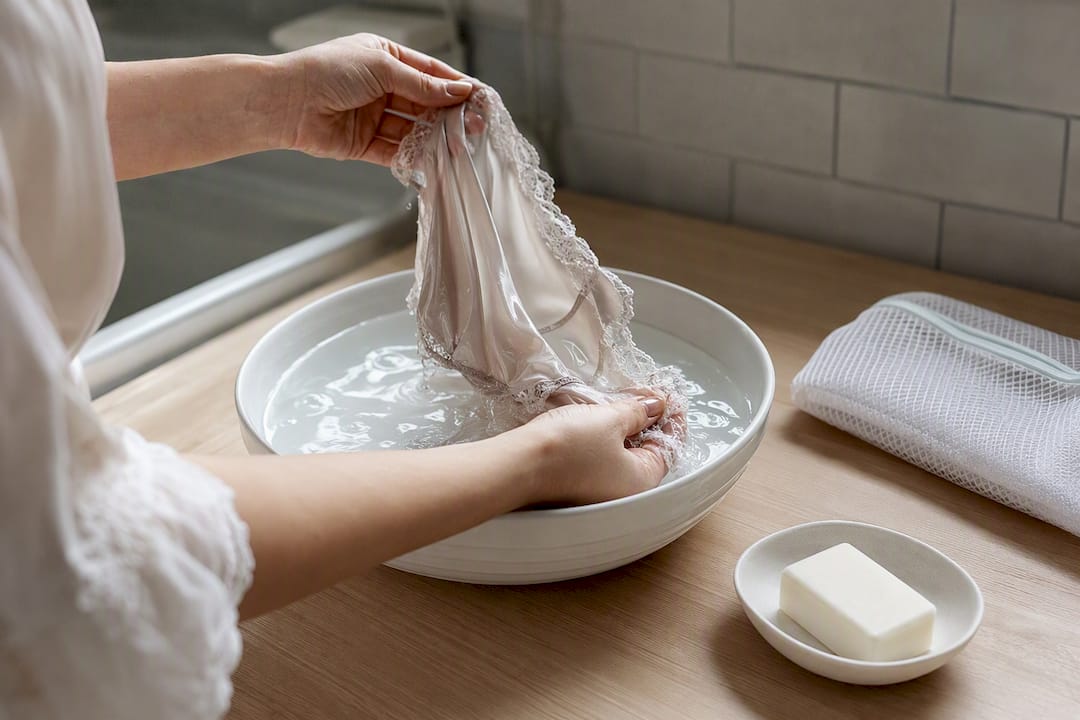
Hand washing is the safest method for almost every silk lingerie piece you own, and the process takes barely ten minutes once you know the steps.
- Fill a basin with cool to lukewarm water, roughly hand temperature.
- Add a small measure of pH-neutral, enzyme-free detergent and swirl it through the water before adding the garment.
- Submerge the piece and move it gently through the water with light surging motions, never scrubbing.
- Let it soak for no more than a few minutes; longer soaks do nothing extra and only stress the fibres.
- Rinse thoroughly in fresh cool water until no suds remain.
- Lay the garment flat on a clean towel, roll the towel up, and press gently to draw out water.
Keep these rules front of mind while you work:
- No scrubbing, no wringing, no twisting.
- Minimal agitation throughout, especially once the piece is wet.
- Wet silk loses significant tensile strength, so treat it as more fragile than it feels dry.
Structured pieces need a little extra thought. Support underwire cups with your palm while washing so they don’t fold or crease, and gently reshape moulded cups by hand while the fabric is still damp, before it sets in whatever shape it dries in.
Can you machine wash silk lingerie?
Machine washing works as a last resort for some flat, unstructured silk pieces, but it’s never the first choice. Use a fine mesh bag, a cold delicate or silk cycle, and an enzyme-free detergent every time.
- Equipment: a fine mesh laundry bag, cold water setting, lowest possible spin (or spin switched off entirely).
- Load: wash silk alone or with similarly delicate items only, never mixed with towels or denim.
- Detergent: a mild, silk-specific formula rather than a standard household powder.
Never machine wash corsets, padded or moulded bras, or anything with heavy beading or lace trims. Those pieces need hand washing or professional care, full stop.
Pro Tip: Pull silk out the moment the cycle ends. Leaving it damp in the drum for even twenty minutes sets creases that are far harder to steam out later.
How to dry silk lingerie without damaging it
Wet silk is genuinely weaker than dry silk, which is why wringing, twisting or a machine spin cycle can cause micro-tears you won’t notice until the fabric starts thinning. Remove water gently, and do it straight away.
- Lay the damp garment flat on a clean, dry towel.
- Roll the towel and garment together, pressing firmly to blot out water without twisting.
- Unroll and reshape the piece by hand, smoothing seams and cups back into place.
- Dry flat on a clean towel, or hang lightweight slips on a padded hanger with support straps to stop stretching at the shoulders.
Silk should never be wrung, twisted or spun aggressively while wet. The towel roll, sometimes called the Paris roll, does the same job without the risk.
Keep drying silk away from direct sunlight, radiators and tumble dryers. All three cause fading, brittleness or shrinkage that no amount of careful washing beforehand will save you from.
Is it safe to iron silk lingerie?
Steaming is generally safer than ironing for silk, since it removes creases without any direct heat contact on the fibres. If you do need to iron, use the lowest setting and always work through a press cloth.
- Turn the garment inside out before ironing.
- Place a clean cotton cloth between the iron and the silk.
- Keep a steamer nozzle 10 to 15 centimetres away from the fabric, never touching it.
- Skip heat entirely on pieces with fresh stains or heavy lace trims.
Pro Tip: A handheld steamer held at a distance often does more for a wrinkled silk slip than an iron ever will, and it carries almost none of the scorch risk.
How should you store silk lingerie between wears?
Store silk in breathable fabric bags or a drawer lined with acid-free tissue, never in sealed plastic. Plastic traps moisture against the fibres, and that trapped damp is exactly what invites yellowing and mildew over time.
- Pad or reshape underwire and moulded cups with tissue before folding, so they hold their shape in storage.
- Air a worn piece out for a few hours, or give it a light steam, rather than washing after every single wear.
- Avoid mothballs, unwashed packing materials and strong cedar oils, which can stain or discolour silk over months in a drawer.
If you’re storing bridal pieces alongside jewellery, keep the two apart; a delicate bridal bracelet or pendant set can snag fine silk fibres if they sit together in the same drawer.
What to do if silk lingerie shrinks or feels stiff
Shrinkage caused by heat, whether from hot water or a tumble dryer, is usually permanent. Stiffness and a dulled sheen, on the other hand, can often be improved with a careful rewash and a gentler drying routine.
- Rinse the piece in cold water first to stop any further damage.
- Add a small vinegar rinse to the final cold rinse to neutralise leftover detergent residue and help restore shine.
- Towel-roll to remove water, then air dry flat away from heat.
- A brief professional steam can help reshape a garment that’s gone stiff or slightly misshapen.
A cold vinegar rinse won’t undo heat shrinkage, but it can genuinely lift dullness caused by detergent buildup, which is often mistaken for fibre damage.
Seek professional help for structural damage, stains that have already set, or anything labelled dry-clean only, including most corsets and heavily boned bustiers.
When should you send silk lingerie to a professional cleaner?
Some pieces are better left to specialists, particularly anything structural or genuinely irreplaceable.
- Structured pieces like corsets, boned bustiers or heavily padded bras with underwire.
- Garments with mixed-colour trims at real risk of dye transfer, such as contrast lace against pale satin.
- Sentimental or valuable items with a stain that hasn’t shifted after one careful home wash.
Before you hand a piece over, ask the cleaner which solvent they use, whether they’ve handled lingerie with cups or beading before, and how they treat delicate trims. Always mention what caused the stain. That detail changes which treatment they’ll reach for, and it’s information they can’t guess at.
A note from The Wedding Garter
We treat silk as an investment, not just a fabric. A bridal chemise or bustier bought for a wedding night deserves the same care as any piece you’d pay to have altered. Get the wash routine right once, and it holds its shape for years, not just the honeymoon.
Find bridal silk lingerie built to last beyond the wedding night
Most silk lingerie guides stop at washing instructions and leave you to guess which pieces are actually worth that care in the first place. The Wedding Garter Australia takes the opposite approach: every bridal piece we stock, from the Luxury White Lace Lingerie Chemise to the Delicate Sheer Lace Bridal Bustier, is chosen with exactly this washing routine in mind, so what you buy for your wedding night still fits and shines on your first anniversary.

If you’re building a full bridal set, our Vintage Art Deco Style Bridal Jewellery Set and Sterling Silver Cubic Zirconia Pendant Bridal Jewellery Set pair naturally with structured lingerie pieces, and each one arrives ready to store separately, exactly as this guide recommends. For brides who want the finishing touch, pair a Vintage Ivory Lace & Satin Bridal Garter with your lingerie set, or add The Wedding Garter Gift Box if you’re gifting the set to a bride-to-be. Browse the current bridal lingerie range and pick the piece you’ll actually be able to care for long after the big day.
Sources
- How to Wash Your Silk Lingerie (Without Ruining It)! - Heritage Park Laundry Essentials
- What not to wash with - Mulberry Park Silks
- Ultimate Guide to Silk Underwear Care - UnderwearIQ
- How to wash silk underwear without ruining it — MioLook
FAQ
Can you put 100% silk in the washing machine?
Some flat, unstructured silk pieces can go in a machine on a cold delicate cycle inside a mesh bag, but corsets, padded bras and heavily trimmed pieces should always be hand washed or professionally cleaned instead.
Does silk shrink if you wash it?
Silk shrinks mainly from heat, whether hot water or a tumble dryer, not from washing itself. Cool water and air drying flat keep shrinkage risk very low.
How can I make silk soft again after washing it?
A gentle rewash with a pH-neutral detergent followed by a small vinegar rinse in the final cold rinse often restores softness and shine lost to detergent residue or hard water.
Is hand washing really necessary for silk lingerie, or is it just extra caution?
Hand washing genuinely protects silk better because it avoids the mechanical stress of a machine’s agitation and spin, both of which are riskier when the fibres are wet and weaker.
What detergent works best for silk lingerie?
A pH-neutral, enzyme-free detergent formulated for delicates or silk specifically works best, since standard enzyme-based detergents are designed to break down proteins and can degrade silk fibres over repeated washes.


