

Bralette for Your Wedding Day: How to Choose One That Works
A bralette can work well on your wedding day if your dress has its own support or a neckline that suits a soft, wire-free shape. The choice comes down to four things: how much support you need, what your neckline and back show, a colour and fabric that disappear under the gown, and a full-day test before the wedding. This guide covers each, with the points where a bralette is the right pick and where another style fits better. Our lingerie collection is a good place to start once you know what your dress needs.
Table of Contents
- What a bralette is, and why brides choose one
- When a bralette suits your dress
- Matching a bralette to your neckline, back and straps
- Colours, fabrics and details that hide best
- Bralette, strapless, plunge or adhesive: how to decide
- How to test your bralette with the dress
- Sizing and support
- Our view: comfort and coverage can sit together
- Shop the whole bridal set in one place
- A simple plan for the weeks before
- FAQ
- Sources
What a bralette is, and why brides choose one
A bralette is a soft bra without underwire. Most have little or no padding, and many are made from stretch lace, mesh or jersey. A traditional bra is built to lift and shape. A bralette is built for comfort first.
That comfort focus is what draws brides to them. Bra expert Jené Luciani told Real Simple that a bralette is for anyone looking for comfort. Lingerie industry figure Dora Lau told the same publication that bralettes became the fastest-growing segment of the bra industry in the early 2020s, as shoppers moved from conforming to comfort.
A wedding day is long. You may be dressed by mid-morning and still dancing late at night. That is the practical case for a bralette: no wire pressing on your ribs through the photos, the ceremony, the speeches and the dance floor.
When a bralette suits your dress
A bralette works best when the dress does some of the work. These are the situations where it tends to be the right call.
- The bodice is structured. Many wedding dresses have built-in cups, boning or internal corsetry. If the gown already holds you, a soft bralette adds comfort without fighting the structure.
- The neckline is a soft V, scoop or square. A bralette with a matching shape sits below the edge and stays hidden.
- The fabric is opaque and substantial. Crepe, satin and heavier lace overlays hide a thin lace bralette better than sheer tulle does.
- You want a second outfit. A bralette that suits the ceremony often suits the reception, the getaway outfit and the honeymoon too.
- You have a small to medium bust. Bralettes are usually the easiest to wear in this range, and a lined style adds smoothness.
If you have a fuller bust, you still have options. Luciani explains that bralettes over a C cup may feel less supportive, but a soft-cup style with a three-part cup and a wider band, or a sports-bra-like bralette with higher spandex content, can be very supportive. The words to look for on a product page are a wide band, a cup made from several panels and a stretch fabric with real hold.
Matching a bralette to your neckline, back and straps
The dress decides the shape. Start with the neckline and the back, then work down to the straps.
Plunge and deep V necklines
A standard bralette will show. Look for a plunge bralette with a low centre panel, or a style with a narrow centre gore. Hold it against the dress or in front of a mirror with the gown on. If any lace peeks above the neckline when you move, it is the wrong shape.
Scoop and square necklines
These are the easiest. A classic triangle or a softly curved lace bralette tucks away. Check the strap placement: straps that sit wide on the shoulder can show at a square neckline, while straps set closer together may sit under the dress’s own straps.
Halter and high necks
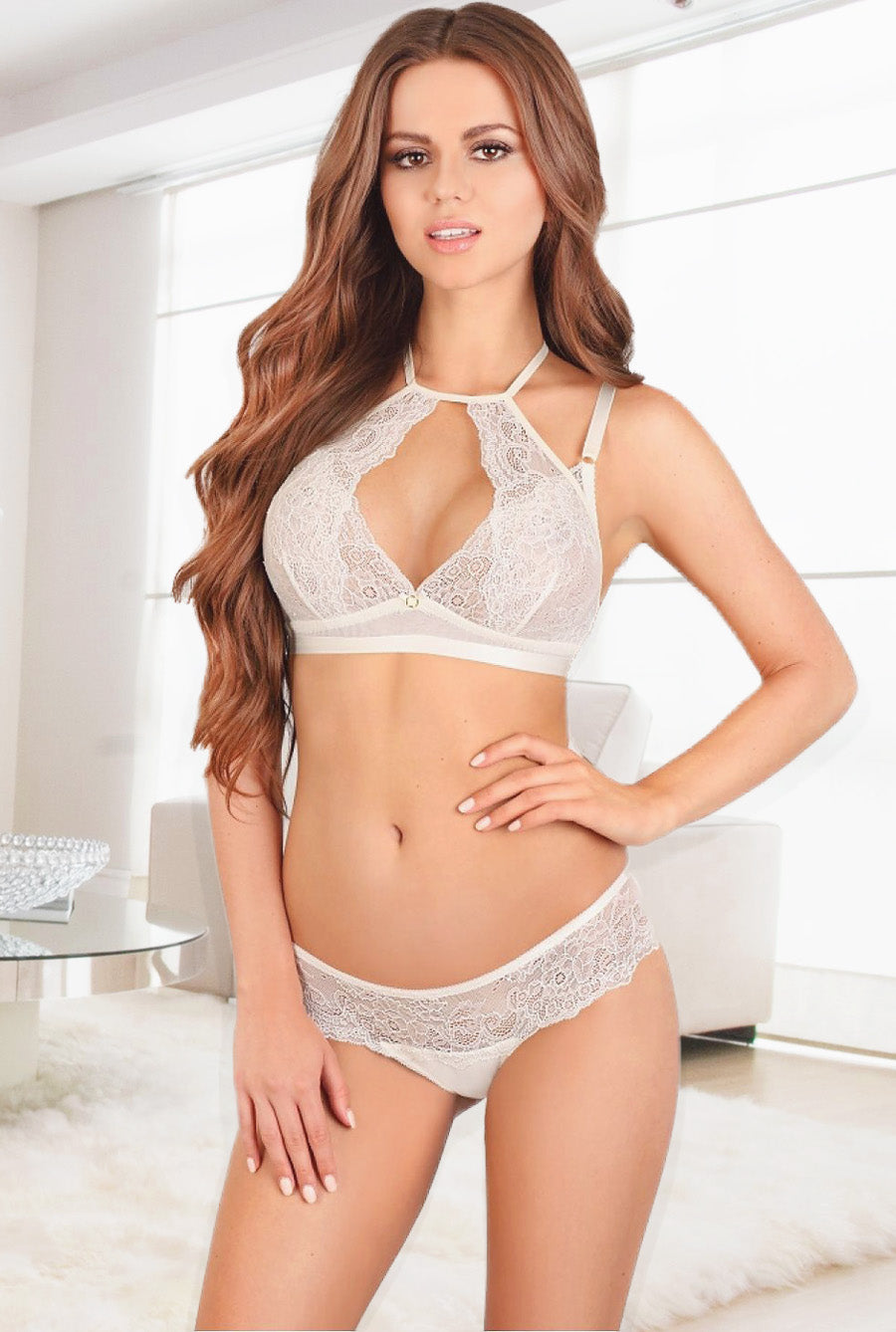
A halter dress pulls the straps inward. A bralette with straps set close to the neck, or a halter bralette of its own, keeps the line clean. Our Strappy Ivory Lace Halterneck Bra Set is one example of a halter-style set in ivory.
Off-the-shoulder and strapless dresses
A standard bralette will not stay hidden here, because the straps show and the band can ride up. Many brides with these gowns use a strapless style or rely on the dress’s own bodice. If you love the comfort of a bralette, look for one with removable or convertible straps, and test it for slipping before you commit.
Low and open backs
The band is the problem. A regular band shows across a low back. Options include a low-back extender, a bralette cut with a very low band, or going without. Our guide to plunge versus balconette bras shows how cut changes what appears under a neckline, which helps when you compare styles for a deep front or back.
Sheer and illusion backs
If the back or sleeves are sheer, the underwear is part of the look. Choose lace you are happy for people to see, or pick a shade that disappears into your skin. The next section covers colour.
Colours, fabrics and details that hide best
What looks pretty on a hanger may not disappear under a wedding dress. These rules of thumb help.
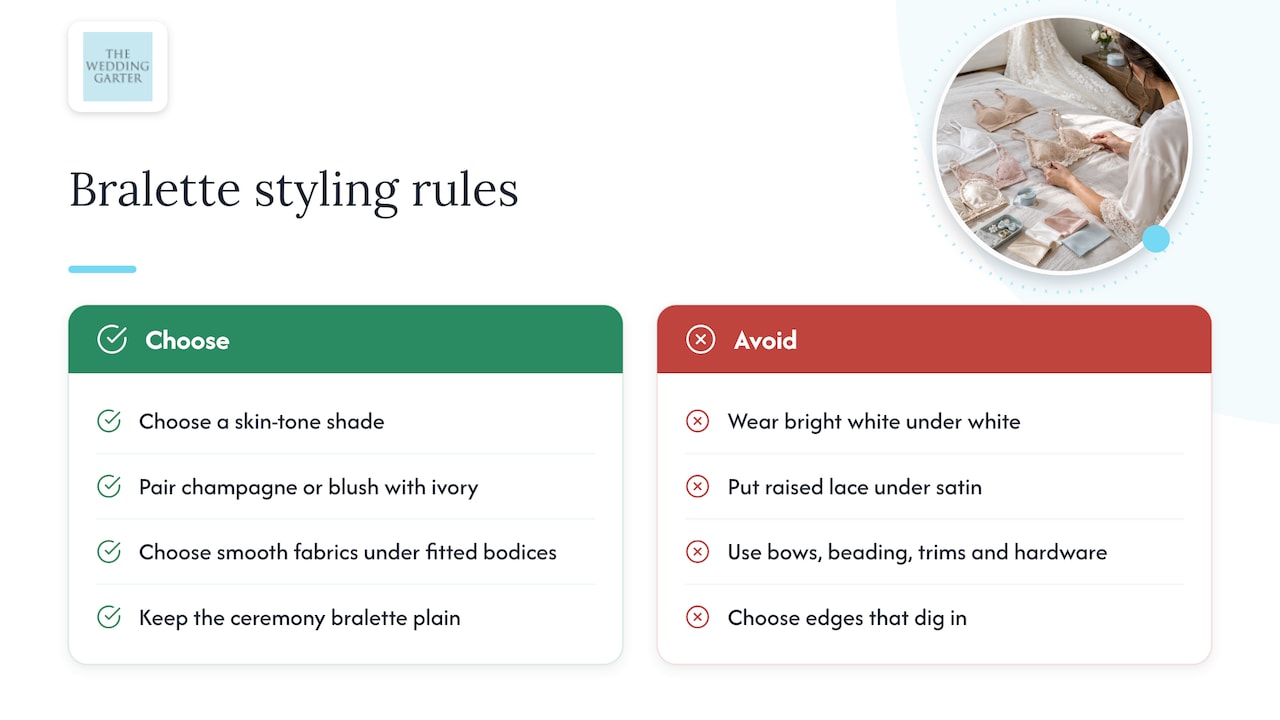
Colour. The old habit of wearing white under a white dress often shows through. A shade close to your skin tone usually vanishes better than bright white, and a soft champagne or blush can work under ivory fabric. Our post on underwear colour for a wedding dress goes through the options by dress shade, and includes how to judge it in daylight, since flash photography and bright sun reveal what indoor lighting hides.
Fabric. Smooth, flat fabrics sit best under fitted bodices. Fine stretch mesh and thin jersey tend to lie flat. Heavy, raised lace can make a bump under satin, so keep it for dresses with lace or layered fabric of their own.
Edges. Look for clean, flat or scalloped edges that do not dig in. A visible line at the band or strap is the most common giveaway in photos.
Details. Bows, beading, thick trims and hardware can print through a fitted gown. For the ceremony, keep the bralette plain. Save the detailed pieces for the wedding night.
Lining. If you want coverage and a smooth shape, choose a lined or double-layer front. If you want almost nothing, choose a very thin unlined style.
Anti-chafe. Long hours in a fitted dress can cause rubbing at the band and underarm. Our guide to anti-chafe wedding underwear covers what to look for in seams and fabric, which applies to bralettes as much as briefs.
Bralette, strapless, plunge or adhesive: how to decide
A bralette is one option among several. This table shows where each style tends to fit best.
| Style | Best for | Watch for |
|---|---|---|
| Bralette | Structured bodices, soft necklines, comfort all day | Straps and band showing at wide or low necklines |
| Plunge bra | Deep V fronts | Needs a close fit at the centre |
| Strapless bra | Strapless and off-the-shoulder gowns | Slipping if the band is loose |
| Adhesive cups | Open backs and very low cuts | Skin sensitivity, warmth over a long day |
| Slip or bodysuit | Smoothing under fitted or sheer fabric | Bathroom access, so plan it |
If the dress already has cups, boning or a waist stay, an extra bra can distort the bodice instead of improving it. In that case a bralette may be the lighter choice, or you may wear very little under it. Ask your dress maker or seamstress at the fitting whether the gown carries enough support alone. For a deeper comparison of smoothing layers, read our guide to a slip versus a bodysuit under a wedding dress.
How to test your bralette with the dress
A bralette that feels good in a bedroom can fail on the day. Test it with the dress on, not on its own.
- Wear the exact set to your final dress fitting. The final fitting is usually in the last weeks before the wedding. Bring the bralette, the briefs and any shoes, so your seamstress sees the real shape. Many brides buy underwear after the dress, so the cut matches. We suggest allowing about four to six weeks in our guide on when to buy bridal lingerie, which also leaves time for returns or exchanges.
- Check the lines. Look in a mirror from the front, side and back, and in natural light. Look for edges, straps, bumps and colour showing through.
- Move the way you will on the day. Sit upright and lean forward. Raise both arms. Walk up a few steps. Bend as if to adjust a shoe. Hug someone. Do a few dance steps.
- Do the jump test. A light hop on the spot should not make the bodice or the bralette shift.
- Stay in it. Wear the full outfit for at least twenty minutes, then a few hours at home if you can. If you keep adjusting it in that time, it will not improve over a long reception.
- Check heat and skin. Warm rooms, sun and dancing all add up. Make sure the band does not rub or mark.
If anything fails, change the style, not the plan. It is far easier to swap a bralette two weeks out than to fix one on the morning.
Sizing and support
Bralettes often come in small, medium and large, while bras use band and cup sizes. That makes the right fit less obvious. Measure when you shop, then compare against the size chart for that specific piece, because cuts differ from style to style.
A good fit has these signs:
- The band sits level around your ribs and does not roll or ride up.
- The cups hold your bust without gaping at the top or spilling at the sides.
- The straps stay on your shoulders without digging.
- You can raise your arms without the whole piece lifting.
Body changes before a wedding are common, so check the fit again close to the date. Our range includes plus-size options, and our store offers hassle-free 30-day returns, which gives you time to test a piece with the dress at home.
Our view: comfort and coverage can sit together
We started The Wedding Garter on the belief that every bride has her own style, and that her accessories should reflect it. Underwear is part of that.
A bralette is a good answer for a bride who wants to feel at ease from the first photo to the last dance. The point is to match it to the dress. Start with the neckline and the back, choose a colour that disappears, and try the whole outfit together before the day.
We also think of the bralette as one piece of a wider set. Many brides want a plain, discreet piece for the ceremony and something special for the wedding night. Planning both together means your lingerie works hard on the day and still feels like yours afterwards.
If your dress needs coverage, our guide to modest bridal lingerie shows how to get it without losing the elegance. If you want a second set for the evening, we have written about black wedding lingerie as well.
The Wedding Garter
Shop the whole bridal set in one place
Once you know the neckline and shape you need, you can choose your ceremony piece and your wedding night piece together. The Wedding Garter is an online store based on the Gold Coast, with a lingerie collection, honeymoon lingerie, bridal jewellery and custom handmade bridal garters. We offer plus-size options, worldwide shipping, free shipping over $100 and 30-day returns.

If you are also planning the finishing touches, our bridal accessories and bridal jewellery pages sit alongside the lingerie, so you can order for the whole day together. Looking for something to wear after the ceremony? Our pale blush pink underwire lace teddy is one option.
A simple plan for the weeks before
Here is a straightforward timeline that works for most weddings.
- Once the dress is chosen: note the neckline, back, fabric and whether it has built-in support.
- Two months out: shortlist two or three bralette shapes and a colour close to your skin tone.
- Four to six weeks out: order, so there is time to test and exchange.
- Final fitting: wear the exact set and ask your seamstress for a check.
- Week of the wedding: pack a spare set, plus anything you need for the second outfit or the wedding night.
The point of the plan is to remove surprises. A bralette is a small item, yet it affects how you stand, sit and move all day.
FAQ
Can I wear a bralette under a wedding dress?
Yes, if the dress suits it. Bralettes work best under gowns with their own structure and under soft necklines such as a V, scoop or square. They are less suited to strapless, off-the-shoulder or very low-back dresses, where straps and bands can show.
Will a bralette give enough support?
For a small to medium bust, usually yes. For a fuller bust, look for a soft-cup style with a wider band, a cup made from several panels, or a higher-stretch sports-style bralette, which can be very supportive. Your dress’s built-in bodice also adds support.
What colour bralette should I wear under a white or ivory dress?
Choose a shade close to your skin tone, as bright white often shows through. Check the colour in natural light with the dress on. Our guide to underwear colour for a wedding dress goes through it in more detail.
When should I buy my wedding bralette?
After the dress is chosen, and ideally four to six weeks before the wedding. That gives you time to wear it to the final fitting and to exchange it if the fit or the lines are wrong. See our guide on when to buy bridal lingerie.
Should I bring a second set on the day?
Many brides do. A spare set helps if you want to change for the evening or the getaway, and a different style suits the wedding night. Our post on bridal lingerie gift ideas may help if someone is buying for you.


Leave a comment