

Test Your Undertone: Curated Bridal Jewelry for Warm Skin
For warm undertones, yellow gold and rose gold win every time, echoing the golden or peachy cast in your skin. Pearls, morganite and citrine make strong supporting choices, and silver only earns a place if your test results come back neutral. Pick one hero piece, whether that’s statement earrings or a necklace, and let everything else stay quiet.
TL;DR:
- Yellow gold enhances warm undertones by blending with the skin’s golden base and should be the first choice for bridal jewelry.
- Rose gold offers a softer, romantic glow that flatters a wide range of complexions and is safer if you’re unsure about your undertone.
- The vein test and jewelry test (comparing gold and silver near the jawline) should be done early, as undertones do not change with tan or foundation.
- Warm gemstones like citrine, morganite, garnet, and amber complement warm undertones and create a harmonious glow in photos.
- A balanced bridal jewelry set follows the 2:1:1 rule, focusing on one hero piece, two supporting items, and one small accent for optimal style and budget.
Table of Contents
- How do I know if my undertone is warm for bridal jewellery?
- Which metals actually flatter warm skin tones?
- What gemstones and colours suit a warm complexion?
- How do I match jewellery to my wedding dress?
- What’s the styling rule for balancing bridal jewellery?
- How durable is bridal jewellery for all-day wear?
- How does The Wedding Garter Australia style these rules?
- Does your hair or eye colour change the jewellery rules?
- Should the season affect your jewellery choice?
- Do cultural or traditional styles suit warm undertones?
- Can you get warm-toned bridal jewellery on a budget?
- How should jewellery coordinate with bridal makeup?
- Where bridal styling advice gets warm undertones wrong
- Shop curated bridal jewellery for warm undertones
- Sources
- FAQ
How do I know if my undertone is warm for bridal jewellery?
Two quick checks will tell you almost everything you need before you shop for wedding jewellery.
The first is the wrist-vein test, done in natural daylight rather than under bathroom downlights, which distort colour. Look closely at the veins on the inside of your wrist. Greenish veins generally indicate a warm undertone, while bluish or purple veins point to cool. If you’re staring at a mix of both, you’re likely neutral, and that opens up more metal options than a strictly warm or cool undertone would.
The second is the jewellery test, and it’s the one that matters more on your wedding day because it’s about how metal actually reads against your skin in front of a camera. Hold a piece of yellow gold near your jawline, then swap to silver.
- Yellow gold brightens your skin and makes your eyes look clearer: warm undertone
- Silver looks crisper and cooler against your skin: cool undertone
- Both look fine, neither stands out as obviously better: neutral undertone
If you’re genuinely torn between the two metals, rose gold is the safer bet. Its pink-gold balance flatters a wider range of complexions than pure yellow gold does, which is why stylists reach for it when a bride isn’t sure which camp she falls into.
Pro Tip: Do both tests before you buy anything, not just before the wedding. Undertone doesn’t change with a tan or with foundation, so testing early means you won’t second-guess your jewellery order two weeks out.
Which metals actually flatter warm skin tones?
Yellow gold is the most reliable metal for warm undertones because it shares the same golden base note as your skin, so instead of contrasting against you, it blends and lifts. That’s the whole trick with warm-toned bridal jewellery: the metal shouldn’t fight your complexion, it should extend it.
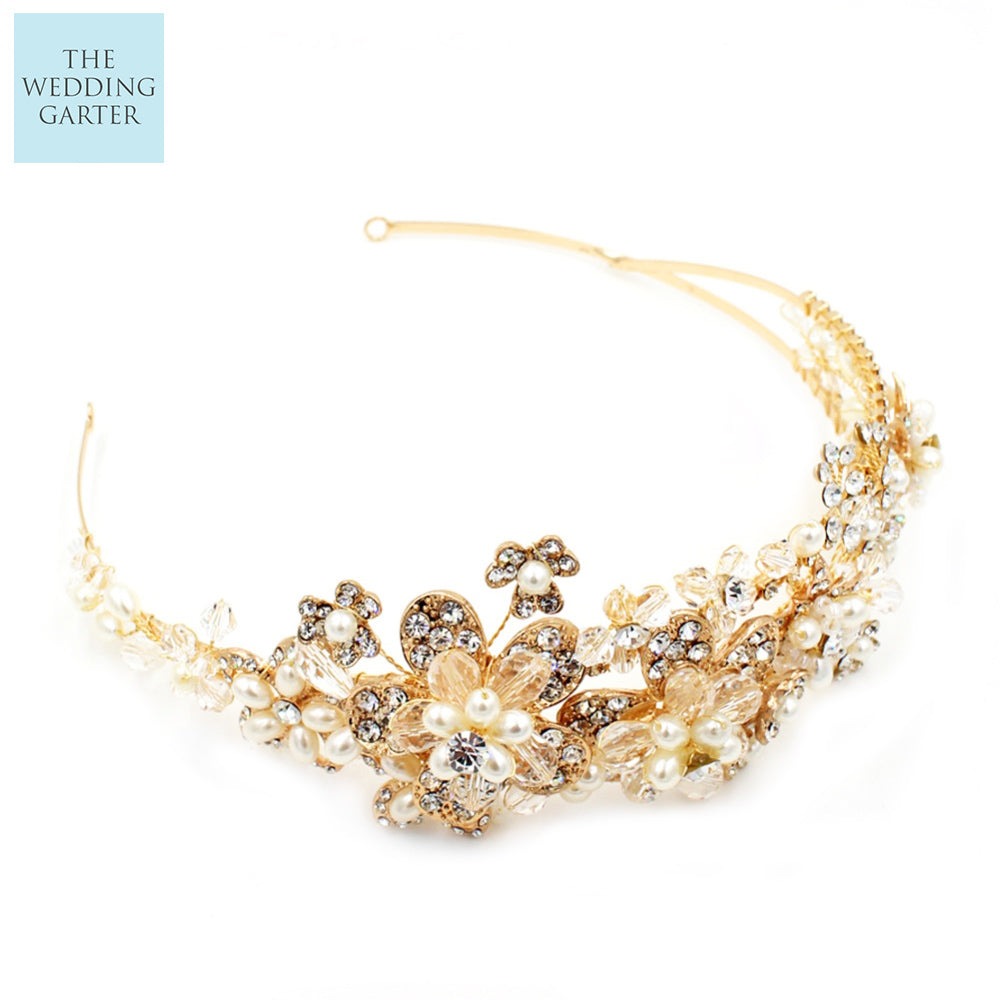
Rose gold does something slightly different. It reads as warm but softer, which makes it especially good for blush or champagne gowns and for brides who want a romantic, less formal glow. Rose gold’s pink-gold balance also makes it a safe experiment when your undertone reading is inconclusive, so it’s worth trying on even if yellow gold tests as your clearer match.
Karat matters more than most brides realise when they’re comparing options online. Here’s the trade-off in plain terms:
- 14K gold: harder, more scratch-resistant, better for pieces you’ll wear again after the wedding
- 18K gold: deeper, richer colour, better suited to statement pieces you’ll wear once at full intensity
- White gold: only reads “white” because of rhodium plating, which wears off over years and needs replating to stay bright
Guides and jewellers commonly recommend 14K gold as the sensible balance of durability and colour for pieces destined for repeat wear, while 18K suits a one-off bridal set where colour depth outweighs everyday practicality.
White metals aren’t off-limits entirely. A thin platinum halo around a warm gemstone, or a silver clasp hidden at the back of the neck, can work as a near-invisible accent. Just don’t let a white metal dominate the piece your face sits closest to, because white metals reflect light more intensely and can flare under flash or direct sun, while yellow and rose gold give softer, more flattering reflections in photos.
What gemstones and colours suit a warm complexion?
Warm undertones have an easy relationship with warm-hued stones, because the gemstone’s colour and your skin’s undertone are working in the same direction rather than against each other.
Consider these as your shortlist:
- Morganite: soft peachy pink, gentle enough for daytime ceremonies
- Citrine: golden yellow, a budget-friendly stand-in for yellow diamonds
- Warm topaz or warm-toned sapphires: orange-golden hues rather than icy blue
- Garnet: deep red-brown, striking against yellow gold for evening receptions
- Amber and coral: unconventional but effective for boho or vintage-styled weddings
Pearls deserve their own mention. Classic white or cream pearls set in yellow or rose gold remain one of the most timeless bridal combinations, and champagne or ivory-toned pearls specifically echo warm undertones better than stark white ones do.
The pairing between gemstone and metal changes how a colour reads on camera. A citrine set in yellow gold intensifies the gold tone around it, while the same stone in rose gold softens into more of a peach. Photographers often notice that warm stones against warm metals create a glow effect in portraits, where skin and jewellery seem to catch the same light rather than competing for it. That’s the effect you want walking down the aisle, and it’s worth testing under a phone flash before you commit, since venue lighting rarely matches daylight.
How do I match jewellery to my wedding dress?
Your gown’s neckline and colour do most of the deciding for you, so start there rather than picking jewellery first.
- High necklines and lace collars: skip the necklace entirely and let earrings carry the look, since a chain will only compete with existing detail at the throat.
- V-necks and sweethearts: a pendant that follows the same V-line elongates the neckline instead of interrupting it.
- Off-shoulder or strapless gowns: this is where a statement necklace earns its place, because there’s open skin to frame.
- True white gowns: platinum or silver tends to sit better against a stark white fabric, as shown by the elegant options available at White Elegance, than yellow gold, which can look slightly warm-toned by comparison.
- Ivory or champagne gowns: yellow gold matches the fabric’s own warmth and avoids any colour clash.
- Blush gowns: rose gold is the obvious pairing, since metal and fabric share the same pink base.
Texture matters as much as colour. Heavy lace, beading or vintage embellishment pairs naturally with filigree work or an art-deco style jewellery set, because both share that intricate, layered look. Minimalist, clean-lined gowns ask for the opposite: simple diamond studs or a single strand of pearls, nothing competing for attention. Heavily beaded gowns in particular pair better with simpler jewellery, both for the photos and to reduce the risk of a necklace catching on embroidery.
What’s the styling rule for balancing bridal jewellery?
Stylists lean on a simple ratio to stop bridal jewellery looking either bare or overdone: one hero piece, two supporting pieces, one small accent, often shorthanded as the 2:1:1 rule. The hero might be a statement pair of earrings or a bold necklace. The supporting pieces are usually a bracelet and a simpler complementary earring or ring. The accent is something small, a hairpin or a delicate anklet, that finishes the look without pulling focus.
Scale should follow your face shape and gown silhouette, not just trend photos from Pinterest. A narrow face can carry longer, drop-style earrings without looking swamped, while a fuller face often looks better with studs or shorter huggies that don’t add visual weight below the jaw. If you’re wearing a heavily structured ballgown, a delicate pendant can disappear against all that fabric, so consider a slightly bolder piece than you’d choose for a slim-fitting gown.
- Anchor a mixed-metal look in yellow gold, then add rose gold only as a small accent
- Avoid placing pure yellow and pure white metal side by side where they’ll show up together in close-up shots
- Match jewellery metal to your engagement ring where possible, since experts recommend matching to the ring for a cohesive look
Pro Tip: Try your full jewellery set on with your veil and hairstyle at the final fitting, not before. Earrings that look perfect against loose hair can vanish, or clash, once your hair’s pinned up for the day.
If a minimalist gown is on your rack, pairing statement earrings with clean silhouettes is one of the easiest ways to apply the hero-piece rule without overthinking it.
How durable is bridal jewellery for all-day wear?
A wedding day runs twelve hours or more once you count getting ready, photos, the ceremony and the reception, so durability isn’t a minor detail. It’s the difference between jewellery that survives the night and jewellery you’re fiddling with by the first dance.
- 14K gold resists scratches and knocks better than 18K, making it the smarter pick for anything you’ll wear again, like everyday earrings or a bracelet
- 18K gold carries richer colour but scratches more easily, so save it for a statement piece you’re not planning to wear daily
- Rhodium-plated white gold needs replating every one to two years as the coating wears thin and the yellow gold underneath starts to show through
- Rose gold ages gracefully and tends to deepen slightly over time rather than dulling, so it needs less maintenance than plated white gold
Comfort is just as much a durability issue as metal hardness. Choosing secure screw or locking backs for statement earrings means you’re not checking your earlobes every hour during a long reception. Low-profile settings also matter if you’re wearing a veil, since prongs and raised claws are exactly what catches on delicate lace.
How does The Wedding Garter Australia style these rules?
The Wedding Garter Australia’s collections are built around exactly this warm-metal, hero-piece logic, so you don’t need to reverse-engineer a stylist’s advice from scratch.
- The Vintage Art Deco Style Bridal Jewellery Set suits warm undertones through its warm-toned setting and filigree detail, ideal as a hero piece under lace or beaded gowns.
- The Delicate Crystal Luxury Bridal Bracelet works as a supporting piece in a 2:1:1 set, low-profile enough not to compete with a statement necklace.
- The Sterling Silver Cubic Zirconia Pendant Bridal Jewellery Set suits neutral-undertone brides or true white gowns where silver reads better than gold.
- The Large Garden Design Ivory & Silver Bridal Headpiece pairs well as an accent piece, keeping the hero role for your earrings or necklace.
| Piece | Best gown match | Role in the set |
|---|---|---|
| Vintage Art Deco Jewellery Set | Lace, beaded, vintage-styled gowns | Hero |
| Delicate Crystal Bridal Bracelet | Most gown styles | Supporting |
| Sterling Silver CZ Pendant Set | True white, minimalist gowns | Hero (neutral/cool) |
| Ivory & Silver Bridal Headpiece | Off-shoulder, updo hairstyles | Accent |
For more on pairing earrings to your neckline, The Wedding Garter’s neckline guide walks through each gown style in more depth.
Does your hair or eye colour change the jewellery rules?
Undertone sets the metal, but hair and eye colour decide how much contrast or harmony you want in the final look.
Warm-toned brunettes with brown or hazel eyes usually get the strongest effect from yellow gold, since it plays into the same warm spectrum as their hair and eyes, creating an intentional, unified palette rather than a clash. Warm-toned blondes, especially strawberry or golden blonde, often find rose gold sits more softly against lighter hair than yellow gold does, which can look slightly heavy or yellow-toned by comparison in bright light.
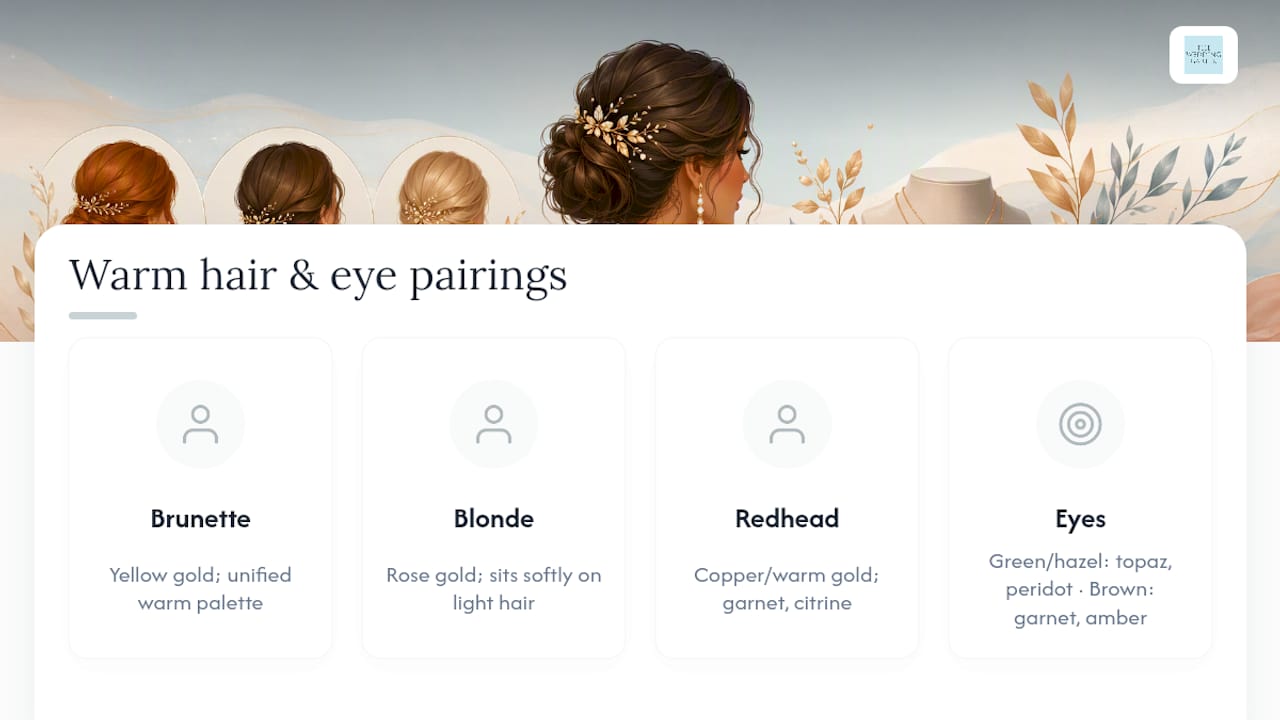
Redheads with warm undertones have arguably the easiest pairing of all: copper and warm gold tones amplify red hair rather than compete with it, and warm gemstones like garnet or citrine pick up the same undertones already present in the hair itself.
Eye colour plays a smaller but real role, mainly through gemstone choice rather than metal. Green or hazel eyes tend to look brighter next to warm topaz, citrine or peridot, because those stones sit close enough in hue to create a subtle echo effect. Brown eyes have more flexibility and generally handle deeper stones well, including garnet and amber, without the jewellery overpowering the eye colour.
If you’re unsure how a combination will read, test it under the same lighting you’ll actually be married in, not just under bathroom light. A pairing that looks perfect at 10am can shift entirely under warm evening reception lighting, particularly with metals that already lean gold.
Should the season affect your jewellery choice?
A spring or summer wedding with a warm undertone calls for lighter, brighter combinations: citrine, morganite or pearls set in yellow or rose gold read as fresh rather than heavy, which suits outdoor ceremonies and daylight photography. These lighter stones also photograph well against the harsher, more direct light typical of daytime outdoor weddings.
Autumn and winter weddings open the door to deeper, richer stones. Garnet, amber and deeper warm topaz suit the season’s natural colour palette of burgundy, rust and gold, and they hold their own against the heavier fabrics, like velvet wraps or long sleeves, common in cooler-weather bridal wear. Warmer venue lighting in winter, think candles and low golden bulbs, also flatters yellow gold more than it flatters silver, which can look flat or grey under warm artificial light.
There’s a practical side to this too. Winter weddings often mean jackets, wraps or long sleeves covering the wrists, which shifts more visual weight onto earrings and hair accessories rather than bracelets. Summer weddings, with bare arms and shoulders more common, tend to give bracelets and layered necklaces more room to actually be seen in photos.
None of this overrides your undertone result. Season shifts which specific stone or depth of colour works best, but yellow and rose gold remain the base recommendation for warm undertones regardless of what time of year you’re marrying.
Do cultural or traditional styles suit warm undertones?
Several traditional bridal jewellery styles line up naturally with warm-toned metal and gemstone advice, which makes them worth considering even outside a purely cultural wedding.
South Asian bridal sets, often built in 22K yellow gold with layered necklaces and matching earrings, are essentially warm-undertone jewellery taken to its fullest expression, heavy gold with warm stones like ruby or garnet. Mediterranean and Middle Eastern bridal traditions similarly favour warm gold tones, often paired with coral or amber, both of which suit warm skin particularly well.
Victorian and art-deco inspired sets, popular in Western vintage-style weddings, frequently use warm gold filigree work with citrine or topaz accents, which is part of why vintage-style sets tend to flatter warm undertones so consistently. The intricate metalwork itself, rather than just the colour, is what pairs so well with warm skin, since the detailed surface catches and softens light rather than reflecting it in one hard flash.
You don’t need a specific cultural background to borrow from these traditions. A single layered gold necklace inspired by South Asian bridal styling, or a citrine-accented vintage set drawing on art-deco design, both work within the warm-metal framework already covered without requiring a full traditional bridal look.
Can you get warm-toned bridal jewellery on a budget?
Warm-toned jewellery doesn’t require a large budget, since much of what flatters warm skin comes down to metal tone and gemstone colour rather than the price tag attached to the piece.
Citrine and morganite are naturally more affordable than diamonds or sapphires while delivering a similarly warm, golden effect, which makes them smart substitutes when you want colour without the cost. Cubic zirconia set in a warm gold or rose gold finish gives you sparkle and shine at a fraction of the price of diamonds, and unless someone’s inspecting the piece up close, the visual effect for warm-undertone brides is very similar.
Buying pieces you’ll genuinely wear again stretches the budget further than a one-off bridal-only set. A simple pendant or stud earrings in 14K gold work for the wedding and for years of everyday wear afterwards, unlike an elaborate tiara or full parure that’s realistically a single-use purchase.
- Choose cubic zirconia or moissanite over diamonds for sparkle without the diamond price
- Pick one statement piece and keep everything else simple, rather than buying a full matching set
- Favour 14K over 18K where budget is tight, since it’s both cheaper and more durable
- Shop pieces designed for re-wear, not just bridal-specific one-off items
The 2:1:1 rule discussed earlier doubles as a budget tool: spend more on the hero piece and less on supporting items, rather than spreading the budget evenly and ending up with a set where nothing stands out.
How should jewellery coordinate with bridal makeup?
Jewellery and makeup should be read as one combined look, not two separate decisions, because gold tones near the face directly influence how warm or cool your makeup appears in photos.
Yellow gold earrings and necklaces tend to intensify warm makeup tones, gold eyeshadow, bronze contour, warm-toned lip colours, so if you’re already leaning into a warm makeup palette, yellow gold reinforces it rather than fighting it. Rose gold does something slightly different, pulling makeup toward a softer, more rosy finish, which pairs naturally with a “bridal glow” look built around blush and soft pink lip tones.
This matters most around the eyes and lips, since jewellery sits close enough to both to visually interact with them in photos. Warm gemstones like citrine or warm topaz can pick up flecks of colour in hazel or green eyes when makeup includes a similar warm shadow, creating a coordinated effect without anyone consciously planning it that way.
If your makeup artist is leaning heavily into a bronzed, sun-kissed look, deeper gold jewellery with warm stones like garnet or amber tends to match that intensity better than something delicate and pale. Conversely, a soft, “no-makeup makeup” bridal look generally pairs better with simpler, lighter jewellery, since heavy statement pieces can visually overwhelm a subtle face.
Worth raising with your makeup artist before the day: bring your jewellery, or photos of it, to your trial. Metal tone and stone colour are easier to plan around in advance than to adjust on the morning of the wedding.
Where bridal styling advice gets warm undertones wrong
Most bridal jewellery advice treats undertone as a footnote, a quick aside before jumping straight into trends or price points. That’s backwards. Undertone is the one variable that decides whether a piece reads as flattering or slightly off in every photo you’ll look back on for decades, and it costs nothing to test properly before you buy.
The conventional wisdom oversells silver’s neutrality. Plenty of guides suggest silver or white gold as a “safe, goes-with-everything” default, but for a genuinely warm undertone, that advice can work against you, dulling skin rather than lifting it, especially under flash photography. Warm undertones aren’t a niche case requiring special accommodation. They’re common enough that the default recommendation should lean warm, not neutral.
If we had to prioritise one piece of advice from everything covered here, it’s this: test your undertone properly before you shop, then buy one hero piece in the right metal and build outward from there. Brides who reverse that order, buying pieces first and hoping they’ll suit their skin, are the ones who end up disappointed by their own wedding photos.
— The Wedding Garter
Shop curated bridal jewellery for warm undertones
The Wedding Garter Australia builds its bridal jewellery and accessory ranges around exactly the warm-metal, hero-piece principles covered above, so you’re not left translating stylist advice into an actual purchase on your own.
Start with the Vintage Art Deco Style Bridal Jewellery Set if you want a warm-toned hero piece with filigree detail for a lace or vintage-inspired gown. If you’re building a 2:1:1 set, the Delicate Crystal Luxury Bridal Bracelet works as a supporting piece that won’t compete with a statement necklace or earrings. For a headpiece that finishes the look without pulling focus from your jewellery, the Large Garden Design Ivory & Silver Bridal Headpiece pairs well as your accent piece. Every piece is chosen with warm and neutral undertones in mind, sold direct through The Wedding Garter Australia’s online store on the Gold Coast, with sizing and styling details listed on each product page. Browse the current range and pick your hero piece today.
Sources
- How to choose your wedding day jewellery — Brides
- Gold or silver jewellery by skin tone — JewelryShopping
FAQ
What jewellery looks best on warm skin tones?
Yellow gold and rose gold consistently look best on warm skin tones, along with warm gemstones like citrine, morganite and garnet, and pearls in champagne or ivory tones.
Which jewellery is best for a warm undertone: gold or silver?
Gold, specifically yellow or rose gold, generally suits warm undertones better than silver, since silver and white metals can look cooler and flatter warm skin less than gold does.
What is the 2:1:1 rule for bridal jewellery?
The 2:1:1 rule means choosing one hero piece, two supporting pieces, and one small accent, giving a bridal jewellery set balance without looking overdone.
Does silver or gold look better on warm skin?
Gold generally looks better on warm skin, since it echoes the skin’s own golden or peachy undertone, while silver tends to sit as a cooler, more contrasting metal against it.
How can I tell my undertone before buying bridal jewellery?
Check your wrist veins in natural daylight, since greenish veins point to a warm undertone while blue or purple veins point to cool, then confirm with the jewellery test by holding gold and silver near your face.


