

Ethically made bridal lingerie: what to look for before you buy
Yes, ethically made bridal lingerie is available, and finding it comes down to three checks: fabric origin, production transparency, and whether the piece earns its keep beyond the wedding night. Small-batch designers, GOTS-certified cottons, and reclaimed silk off-cuts have all moved into the bridal space over the past few years. Prioritise a maker who tells you exactly where the fabric came from and how the piece was constructed, and you’re most of the way there.
TL;DR:
- Small-batch, made-to-order lingerie using verified organic or reclaimed fabrics ensures better transparency and reduces waste compared to mass-produced options.
- Rewearable styles like bodysuits, robes, and chemises provide greater environmental value by functioning as everyday clothing after the wedding.
- Look for brands that clearly disclose fabric origin, production methods, and certifications such as GOTS, and be cautious of vague or unverified claims.
- Made-to-order bridal lingerie typically requires about three weeks for production, so it must be planned well in advance of the wedding date.
- Proper construction details, like French seams, supportive underwires, and removable straps, extend the longevity and reusability of bridal lingerie pieces.
Table of Contents
- What does “ethically made” actually mean for bridal lingerie?
- Which sustainable fabrics work best for bridal lingerie?
- Which bridal lingerie styles are worth buying for rewear?
- How do you choose and buy ethically made bridal lingerie?
- How do you care for bridal lingerie so it lasts?
- Why choose The Wedding Garter for ethically minded bridal pieces?
- A note from The Wedding Garter on considered bridal lingerie
- Shop ethically minded bridal lingerie and accessories
- Sources
- FAQ
What does “ethically made” actually mean for bridal lingerie?
“Ethically made” gets stamped on a lot of packaging that doesn’t earn it. For bridal lingerie specifically, the term should cover four things: where the fibre came from, who sewed the garment and under what conditions, how much of the fabric was wasted in cutting, and whether the brand will actually tell you any of this without being asked twice.
Genuine ethical production tends to favour small-batch or made-to-order runs over mass manufacturing. Slow, handcrafted production reduces offcuts and supports the kind of specialised sewing skill that bridal lingerie, with its boning, delicate seams, and structured cups, actually needs. It’s also slower by nature, which is exactly why lead times matter more here than they do with a rack-bought set from a department store.
Certifications help, but only if you know what they cover. The Global Organic Textile Standard governs the full lifecycle of organic textiles, from processing through to packaging and distribution, which makes it one of the more meaningful labels you’ll encounter on cotton or blended pieces. A “organic cotton with recognized certification” tag means something specific and checkable. “Eco-friendly materials” means nothing at all.
Here’s how to tell the difference at a glance:
- Verifiable claim: “Made from organic cotton with recognized certification, milled in [named country]”
- Vague claim: “Crafted with sustainable materials”
- Verifiable claim: “Handmade in small batches”
- Vague claim: “Ethically sourced” with no further detail
- Verifiable claim: “Silk off-cuts from our bridal gown line, repurposed into lingerie”
- Vague claim: “Eco-conscious design”
Pro Tip: If a brand can’t tell you the country the fabric was milled or woven in, treat every other claim on the label with the same scepticism.
Brands that publish fabric composition and production notes on their product pages make it far easier to verify what you’re actually buying, and the presence of that detail is often a better signal than any single certification logo.
Which sustainable fabrics work best for bridal lingerie?
Fabric choice is where your ethical priorities and your bridal aesthetic either align nicely or start pulling in different directions. Here’s how the main options stack up.
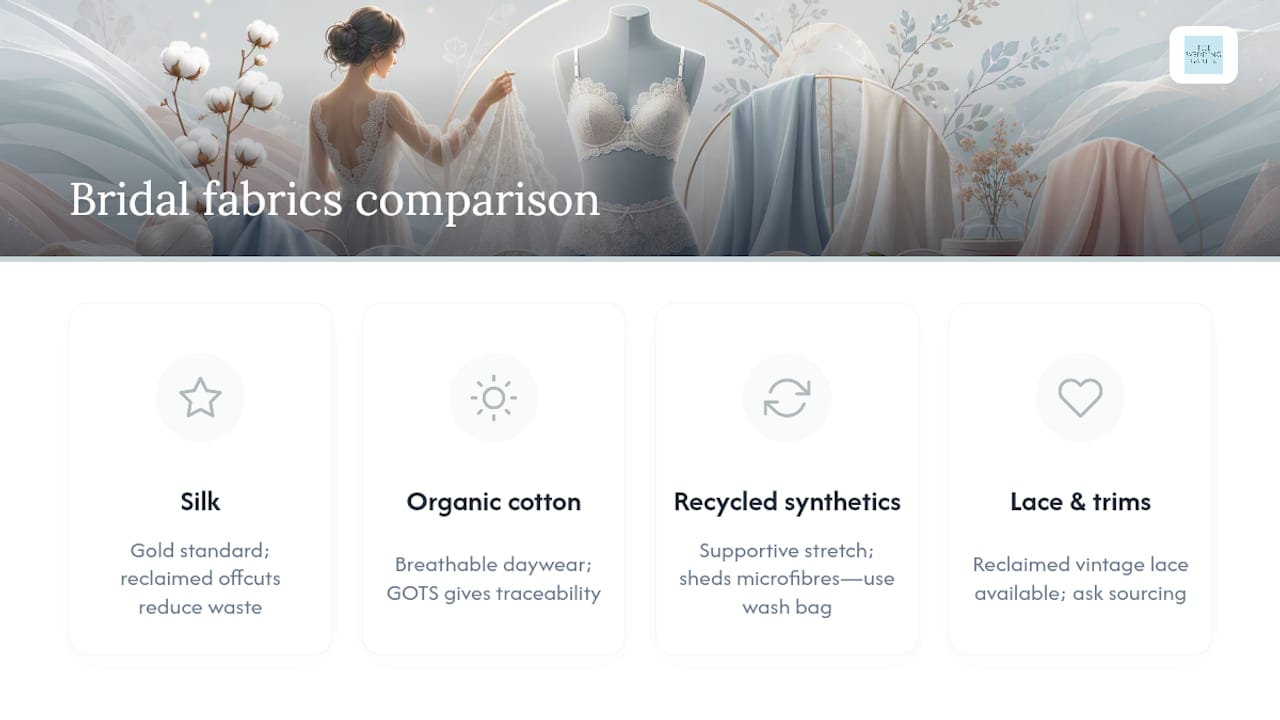
Silk remains the gold standard for bridal lingerie, both for its drape against skin and for how well it photographs. The catch is that virgin silk production is resource-intensive. The better play is reclaimed or offcut silk. Designer Kate Beaumont has built an entire honeymoon lingerie line from leftover silk offcuts generated during bridal gown production, turning fabric that would otherwise be binned into made-to-order pieces. That’s not a marketing angle, it’s a genuine waste-reduction method, and it’s worth asking any silk-lingerie maker whether they do something similar.
Organic cotton and other plant-based fibres suit brides who want breathability over slink. They’re a strong match for daywear-adjacent pieces like slips and chemises, and GOTS certification gives you a checkable paper trail on how the fibre was grown and processed.
Recycled synthetics, usually recycled nylon or polyester blends, show up in structured pieces like bustiers where stretch and support matter. They cut down on virgin plastic production, but they do shed microfibres in the wash, so pair them with a wash bag if longevity and lower environmental impact both matter to you.
Lace, trims, and hardware are the details most brides overlook entirely. Underwires, hooks, and boning rarely get a second thought, but reclaimed vintage lace and transparently sourced trims exist, and designers such as Ayten Gasson build entire collections around handcrafted use of responsibly sourced vintage lace and organic silk. Ask your maker where the lace and hardware came from, not just the base fabric. Our own breakdown of bridal lingerie fabrics by dress type covers how each material behaves under a gown, which is worth reading before you commit to a style.
Which bridal lingerie styles are worth buying for rewear?
Not every bridal lingerie style is built to survive the wedding night, and that’s the real sustainability question hiding under all the fabric talk. A piece you wear once and never touch again carries a far heavier environmental cost per wear than one that earns its place in your regular wardrobe.
- Bodysuits offer the best rewear value of any bridal style. Slip on jeans over one for a night out, or wear it under a blazer, and it stops being “wedding lingerie” entirely.
- Robes double as loungewear or a dressing gown for years afterward, and they’re one of the easiest pieces to justify spending more on for better fabric.
- Chemises sit somewhere in between, elegant enough for the wedding night, simple enough to wear again as summer nightwear or even a slip dress under a jacket.
- Structured bustiers and corsetry deliver the most dramatic silhouette but the least rewear value unless they’re tailored to double as eveningwear, since heavy boning and specific fit points make them harder to style outside a bridal context.
Sustainability guides on bridal lingerie consistently point to versatile pieces like robes, bodysuits, and rompers as the smarter buy precisely because they extend past a single night of wear.
Construction details affect longevity more than most brides expect going in. Detachable straps let a bustier convert to a strapless silhouette for later wear. French seams and bound edges wear better in the wash than raw overlocked seams. And an underwire in a proper cup size will outlast a soft-cup equivalent by years, provided the fit is right from the start.
If you’re packing for the honeymoon, lean into pieces doing double duty: a chemise that works as beachside cover-up, a robe that survives resort mornings and years of home use afterward. Our honeymoon lingerie buying guide has more on styling pieces for both the wedding night and the week after.
How do you choose and buy ethically made bridal lingerie?
Buying ethical bridal lingerie takes a bit more legwork than adding a set to cart on a fast-fashion site, but the process is straightforward once you know what to ask.
Run through this checklist before you commit to anything:
- Fibre origin: where was the fabric grown, milled, or reclaimed from?
- Production method: handmade individually, small-batch, or mass-produced overseas?
- Certification: GOTS, recycled content standards, or none, and if none, why?
- Lead time: is this a stock item shipping this week, or made-to-order with a wait?
- Alteration and repair policy: can they adjust fit after the fact, and will they mend it later?
Email or message the seller with these exact questions:
- “Is this piece made-to-order or held as stock?”
- “Can you share the fibre origin and where it was manufactured?”
- “What’s your recommended care process for this fabric?”
- “What’s the lead time if I order today, and does that change closer to peak wedding season?”
- “Do you offer repairs or alterations after purchase?”
Expect ethical and bespoke bridal lingerie to run higher than fast-fashion equivalents, and expect to wait longer for it. Made-to-order pieces built from offcut silk have reported turnaround times of around three weeks, which is manageable if you order early but tight if you leave it until the final fortnight before the wedding. Build lingerie into your planning timeline the same way you’d plan gown fittings, not as an afterthought two weeks out. For a fuller breakdown of sizing and timing, see our bridal lingerie buying guide.
How do you care for bridal lingerie so it lasts?
The most sustainable piece of lingerie you can own is the one you already have and keep wearing. Care matters just as much as the original purchase decision.
Hand wash silk and lace in cool water with a gentle detergent, and skip the dryer entirely, air drying flat preserves both the fabric structure and any boning or underwire shaping. Store delicate pieces flat or on padded hangers rather than folded in a drawer, where lace trims can crush and lose shape over months.
When something goes wrong, don’t reach straight for the bin.
- A snapped underwire can usually be replaced by a local seamstress for a fraction of the cost of a new bustier.
- Loose lace trim is a simple hand-stitch fix if you catch it early.
- Stretched elastic in a bodysuit or garter is a common, cheap alteration.
- Discoloured satin sometimes responds to a professional dry-clean rather than a home wash attempt.
Pro Tip: Keep a small sewing kit with matching thread from the original purchase. Minor repairs done within the first year are far easier than trying to colour-match a replacement thread five years on.
Once a piece no longer fits or suits you, pass it on rather than discarding it. Bridal-specific consignment groups, close friends getting married, or simple donation all keep the garment in circulation. This is exactly the thinking behind Australian recommendations to design for longevity and multi-use as a way to cut textile waste, rather than treating every wedding purchase as disposable by default.
Why choose The Wedding Garter for ethically minded bridal pieces?
The Wedding Garter Australia is based on the Gold Coast, and our catalogue was built around a simple idea: every bride’s accessories should reflect her own style, not a one-size-fits-all template pulled off a factory line. That philosophy naturally lines up with the ethical priorities covered above, design for longevity, materials that hold up, and options that don’t force you into a single-use purchase.
Across our lingerie and accessory range, you’ll find pieces designed with rewear and durability in mind rather than a wear-once-and-discard mindset. Lace bustiers and chemises built with proper underwire support and finished seams are made to survive more than one outing, and our garters are designed as keepsakes as much as wedding-day accessories, not disposable novelty items.
Getting started is simple. Check the sizing guide on each product page before ordering, since fit matters enormously for structured pieces like bustiers. If you need something adjusted or have a specific request, reach out through our customer support before you order rather than after, it’s far easier to get a piece right the first time than to alter it later. Our guide to bridal lingerie for the wedding night is a good starting point if you’re still narrowing down a style.
A note from The Wedding Garter on considered bridal lingerie
We think about bridal lingerie the way we think about every accessory we stock: it should earn its place in your wardrobe, not just your wedding album. A piece that gets worn once and shoved in the back of a drawer was never really designed with you in mind, it was designed to sell once and move on to the next customer.
That’s why we lean toward pieces with proper construction, seams that hold, underwire that supports, fabric that softens rather than degrades with washing. It’s a slower way to think about a wedding purchase, but it’s the one that actually respects both the occasion and the budget you’ve put into it.
If you’re after something specific, a particular colourway, a fit adjustment, or a request that doesn’t quite match anything in our current range, get in touch before you order. We’d rather spend an extra email working out the right fit than have you settle for something close enough.
— The Wedding Garter
Shop ethically minded bridal lingerie and accessories
The Wedding Garter Australia gives you a direct alternative to hunting through overseas fast-fashion listings for bridal lingerie: everything in our range is chosen for construction quality and rewear value, not just how it photographs for one night. That means you’re choosing from pieces built to last past the wedding, with sizing support and customer service if something needs adjusting.
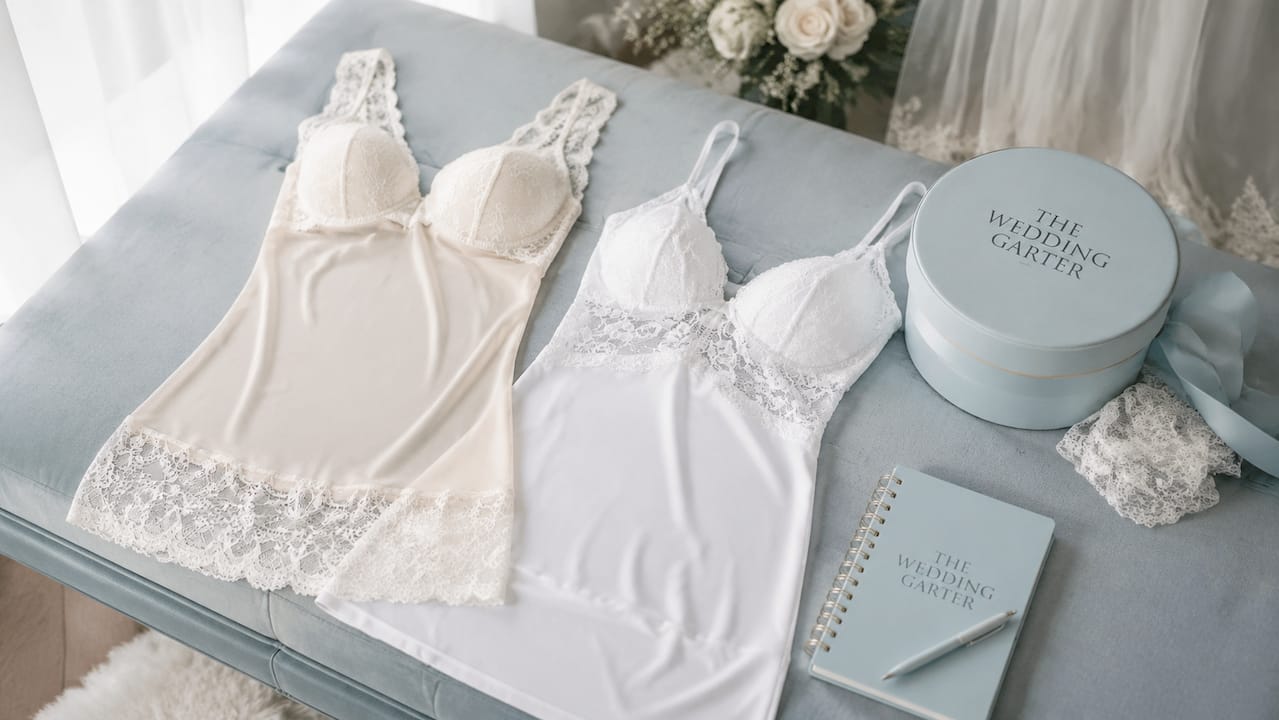
A few standout pieces worth starting with: the Luxury White Lace Lingerie Chemise For Brides suits brides after a versatile piece that works as nightwear long after the wedding. The Romantic Lace Underwire Bridal Bustier and Delicate Sheer Lace Bridal Bustier Lingerie both offer structured support with proper underwire, built to outlast a single wear. For accessories, the Satin Bridal Garter With Floral Design and Vintage Ivory Lace & Satin Bridal Garter are designed as keepsakes rather than disposable novelties, and the Vintage Art Deco Style Bridal Jewellery Set and Sterling Silver Cubic Zirconia Pendant Bridal Jewellery Set pair well as durable finishing pieces.
Check the size chart on each product page before ordering, since fit affects both comfort and how long a structured piece stays wearable. Most items ship promptly, though bespoke requests may need extra lead time, so reach out early if your wedding date is close. Browse the full lingerie and accessories range to find the piece that fits your day and your wardrobe long after it.
Sources
- Kate Beaumont Ethical Silk Honeymoon & Bridal Lingerie | Love My Dress
- The 7 types of sustainable wedding lingerie a conscious bride needs - Ecocult
- Textiles: a transitions report for Australia - Monash University
FAQ
Is ethically made bridal lingerie more expensive?
Generally yes, since small-batch and made-to-order production costs more than mass manufacturing, but you’re paying for better construction and materials that last well beyond the wedding night.
What certifications should I look for on bridal lingerie labels?
GOTS is the most meaningful certification to check for on cotton and organic-fibre pieces, since it covers the entire textile lifecycle from processing through to distribution.
How long does made-to-order bridal lingerie take?
Made-to-order pieces, including those made from reclaimed silk offcuts, typically take around three weeks, so order well ahead of your wedding date rather than in the final fortnight.
Which bridal lingerie style gives the best value for rewear?
Bodysuits and robes offer the strongest rewear value, since both work easily as everyday loungewear or under regular clothing long after the wedding.
Does The Wedding Garter offer ethically minded bridal lingerie options?
Yes, The Wedding Garter Australia’s lingerie and accessory range is chosen with construction quality and longevity in mind, including underwire bustiers and lace chemises designed to be worn well beyond the wedding day.
Recommended
- The best fabrics for bridal lingerie, explained by dress type – The Wedding Garter
- Bridal Lingerie Styles: Your Complete 2026 Guide – The Wedding Garter
- Key Points Before Buying White Lingerie for Your Special Day - The Wedding Garter
- Bridal boudoir lingerie: your complete styling guide – The Wedding Garter


