

Rehearsal Tested: 3 Ways to Secure Rings on a Pillow for Weddings
Secure rings to a ring bearer pillow with a two-stage ribbon tie for most weddings. Use a hidden security stitch for very young ring bearers or restless flower girls, and switch to decoy rings when you want zero risk to the real bands. Whichever method you choose, rehearse it once with the actual pillow and pack a small release kit for the day.
TL;DR:
- Using a decoy ring set is safest for very young carriers or delicate settings, as the real rings stay with the escort until the moment of exchange.
- Grosgrain or wired ribbons secure rings better than satin, and a firm anchor knot plus an easy-release bow ensure a reliable, photogenic tie.
- Hidden security stitches provide the strongest hold for boys and fragile rings, but require rehearsal and careful snipping to avoid damage.
- A small, organized contingency kit with scissors, spare ribbon, and decoy rings is crucial for a smooth handover and to address unexpected issues.
- The pillow’s construction and fill should match the tying method used; firmer fills and sewn loops boost security, especially when using stitches or heavy embellishments.
Table of Contents
- Which method suits your wedding?
- How do you tie rings to a pillow step by step?
- How do you sew rings onto a pillow securely?
- Should you use decoy rings instead?
- Choosing ribbon, cord, or thread without damaging the setting
- Rehearsal and day-of contingency checklist
- What The Wedding Garter has learned from ring pillows
- Ring pillows built for secure tying and stitching
- Sources
- FAQ
Which method suits your wedding?
The right method depends on who’s carrying the pillow and what’s sitting on it. A confident ten-year-old with plain wedding bands has very different needs to a toddler wobbling down the aisle with an heirloom ring set with loose pavé stones.
- Improved two-stage ribbon tie: fast to learn, looks elegant, and releases in seconds. Best for older ring bearers and simple band settings.
- Hidden security stitch: the most secure mechanical option, since nothing can shake loose. Best for toddlers, uneven ground, or long ceremonies. Requires a steady hand from the Best Man to cut it cleanly.
- Decoy rings: removes the risk altogether because the real rings never touch the pillow. Best for very young bearers, pets carrying pillows, or antique and fragile settings you don’t want anywhere near a knot.
As a decision rule: if your ring bearer is under seven, or the rings involve delicate or antique settings, go with a decoy. For everyone else, the two-stage ribbon tie is the reliable, photogenic default, and testing the knot under motion before the day is what separates a smooth handover from a stressful one.
How do you tie rings to a pillow step by step?
Grosgrain or wired ribbon holds a knot far better than satin, which looks lovely but tends to slip once it’s been handled. Cut two lengths of ribbon of sufficient length to tie a full bow with a bit to spare.
- Thread the first ring onto the ribbon and slide it down to the base, near the pillow’s centre point.
- Tie a firm anchor knot directly under that ring so it can’t slide back up the ribbon.
- Slide the second ring onto the same ribbon, positioning it just above the first.
- Tie an easy-release bow over both rings, using a slightly looser loop than you would for a gift.
- Test the tension by tugging gently. It should hold under normal handling but pull free with one confident motion.
Keep the ribbon routed under or beside the band, never across a raised stone. Fishing line (monofilament) is another option here. It’s nearly invisible in photos and strong, but reserve it for plain bands rather than tying it across delicate settings.
Pro Tip: Make one loop of the final bow noticeably smaller than the other. Whoever unties it, whether that’s you, the celebrant, or the groom, will instinctively know which loop to pull, which cuts out fumbling in front of a hundred guests.
How do you sew rings onto a pillow securely?
A hidden security stitch is the toughest method to beat for pure hold, because there’s no knot for small fingers to loosen and no bow that a car ride or a windy garden aisle can shake apart. It takes a few extra minutes to prepare, but it’s worth it for nervous parents of very young ring bearers.
You’ll need matching thread, a needle, and a small pair of scissors or a seam ripper for the release, adjusting length as needed.
- Work from the underside or back of the pillow so the stitching stays hidden from the front.
- Push the needle through near the ring’s base, loop the thread through the band, and pull it snug without crushing the ribbon underneath.
- Repeat two or three passes through the same point to lock the ring in place.
- Tie off the thread with a small knot on the underside, then trim the tail short.
- Rehearse the release with the Best Man beforehand: he should know exactly where to snip, close to the pillow surface, without any risk of nicking the band.
A hidden stitch, held by the Best Man releasing it with a small seam ripper or scissors, is the closest thing to a guaranteed hold. For rings that will be worn again the same day, a sewn snap or a small sewn loop is worth considering over a single stitch, since it can be reopened without cutting anything at all.
Should you use decoy rings instead?
A decoy ring set removes the single point of failure entirely, because whatever’s tied to the pillow never has to be the real thing. The actual rings travel separately with the Best Man or Maid of Honour, often in a small locked box, until the exact moment of exchange.
- Cheap costume rings or curtain rings work as decoys and cost next to nothing to replace if lost.
- Wooden slot holders built into some pillow designs hold decoy rings upright for photos without any tying at all.
- Small drawstring pouches hide the real rings out of sight until they’re needed, which suits couples who don’t want them visible during the procession.
- Ring boxes carried by a second attendant offer a formal, secure alternative if you’d rather skip the pillow tradition for the real rings altogether.
Keeping the actual rings with the Best Man or Maid of Honour while decoys sit on the pillow is the recommended default whenever the ring bearer is very young, easily distracted, or simply prone to dropping things.
Choosing ribbon, cord, or thread without damaging the setting
Satin ribbon photographs beautifully but slips loose faster than most brides expect. Grosgrain and wired ribbons hold their knots far better, which makes them the safer pick whenever a bow is doing the actual securing work. Braided cord sits between the two, offering more grip than satin with a slightly less formal look.
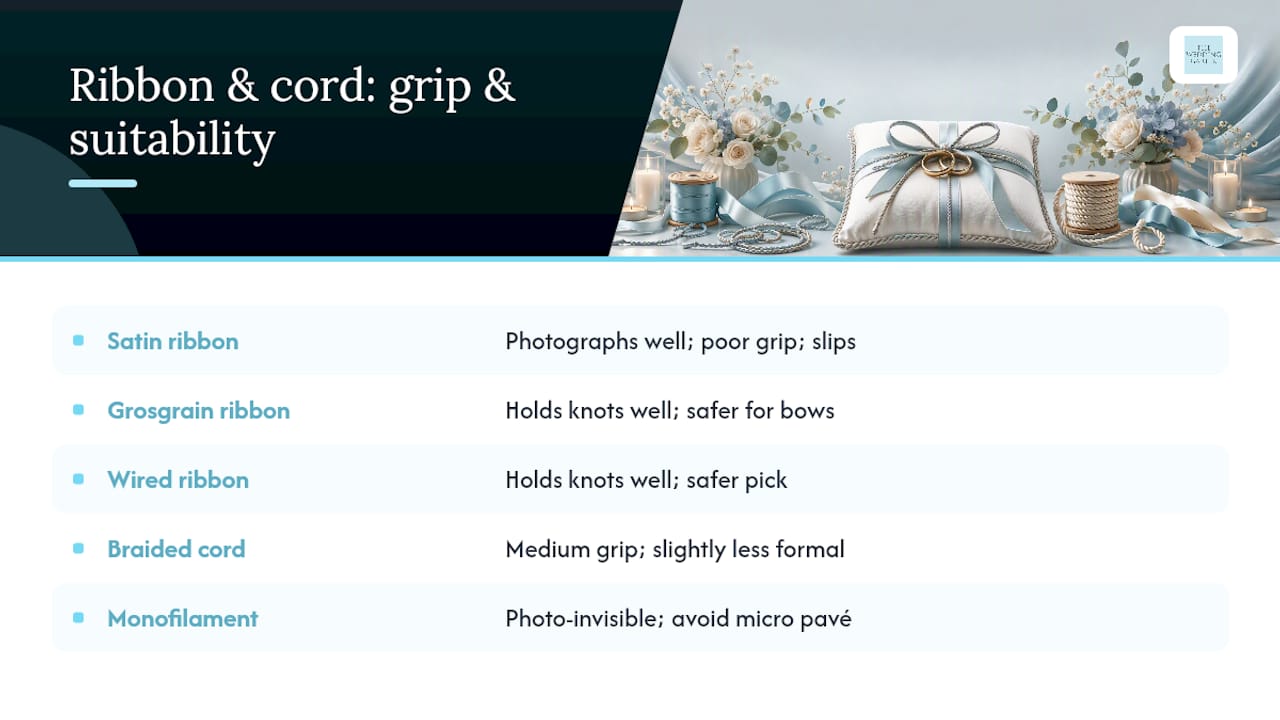
Monofilament earns its place for plain bands where invisibility in photos matters more than anything else, but it isn’t the right tool for micro pavé or cluster settings. A thin line dragged across tiny stones can catch and loosen them over the course of a long ceremony.
For delicate or antique rings, tuck a small soft pad or fabric pocket under the setting before you tie anything, and route ribbon or cord along the band rather than over the stones. Over-tight knots cause more damage than loose ones. A knot pulled too hard against a claw setting can bend the metal, so test tension by tugging gently rather than yanking. Velcro and snaps work well on fabric loops sewn into the pillow itself, but skip adhesives entirely. Glue has no place near a ring you plan on wearing.
Rehearsal and day-of contingency checklist
Practise the actual release motion, not just the tying. Whoever unties the bow or cuts the stitch should do it at least twice before the ceremony, ideally with the real pillow and the same ribbon.
- Rehearse the untie or cut-release action with the person who’ll perform it on the day.
- Walk through the handover choreography: who takes the rings, and in what order.
- Pack a small kit: scissors or a seam ripper, spare ribbon, a needle with matching thread, a couple of safety pins, decoy rings if you’re using them, and a small zip-lock bag to hold everything.
- Decide who carries the kit. The wedding coordinator or celebrant is usually a safer bet than the Best Man, who already has enough to remember.
Pro Tip: Slip a tiny handwritten note into the kit reminding whoever’s on release duty which loop to pull or where exactly to snip. Nerves make people forget simple instructions, and a two-second glance at a note beats a fumbled ten seconds at the altar.
What The Wedding Garter has learned from ring pillows
Years spent designing and supplying ring bearer pillows have taught us that the pillow’s construction matters as much as the knot. A firm fill and a sewn-in loop give a stitch or ribbon something solid to anchor against, which is exactly why we cover the technique in more depth on our step-by-step ring pillow guide. We build every pillow in our range with that anchor stability in mind.
— The Wedding Garter
Ring pillows built for secure tying and stitching
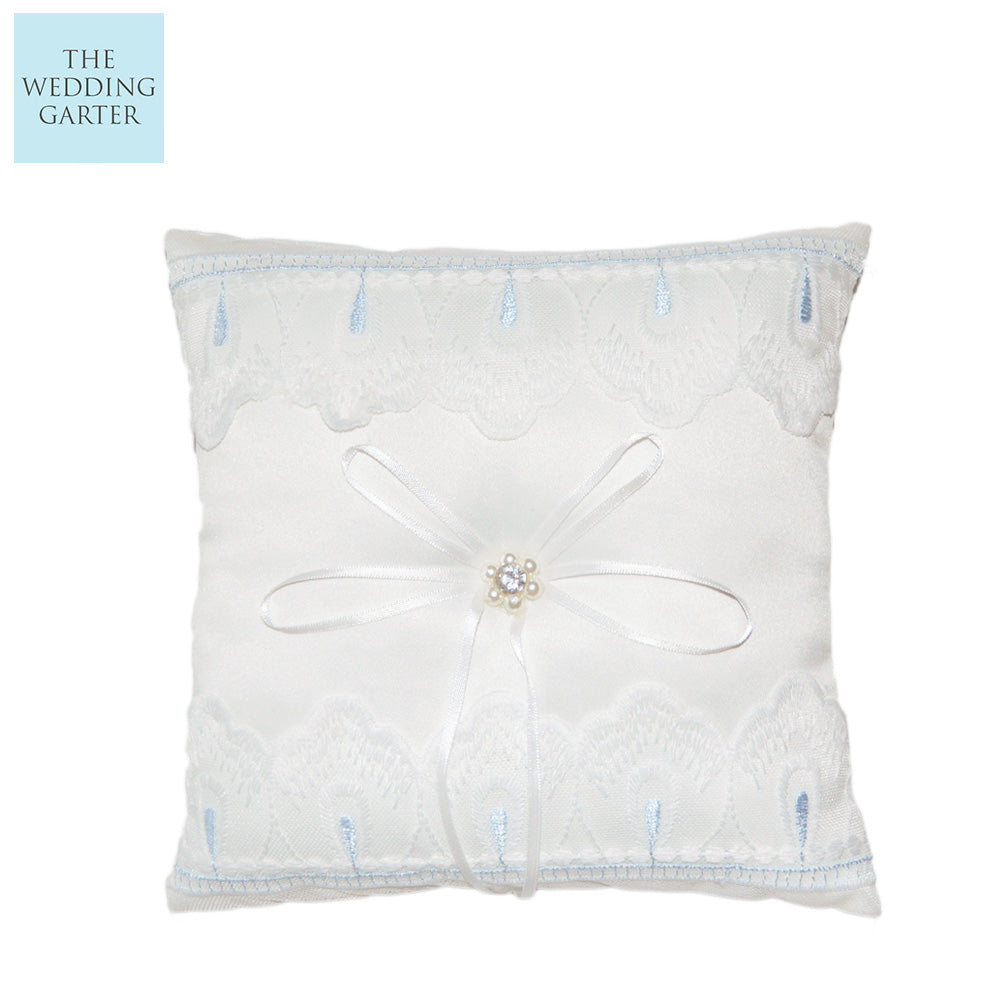
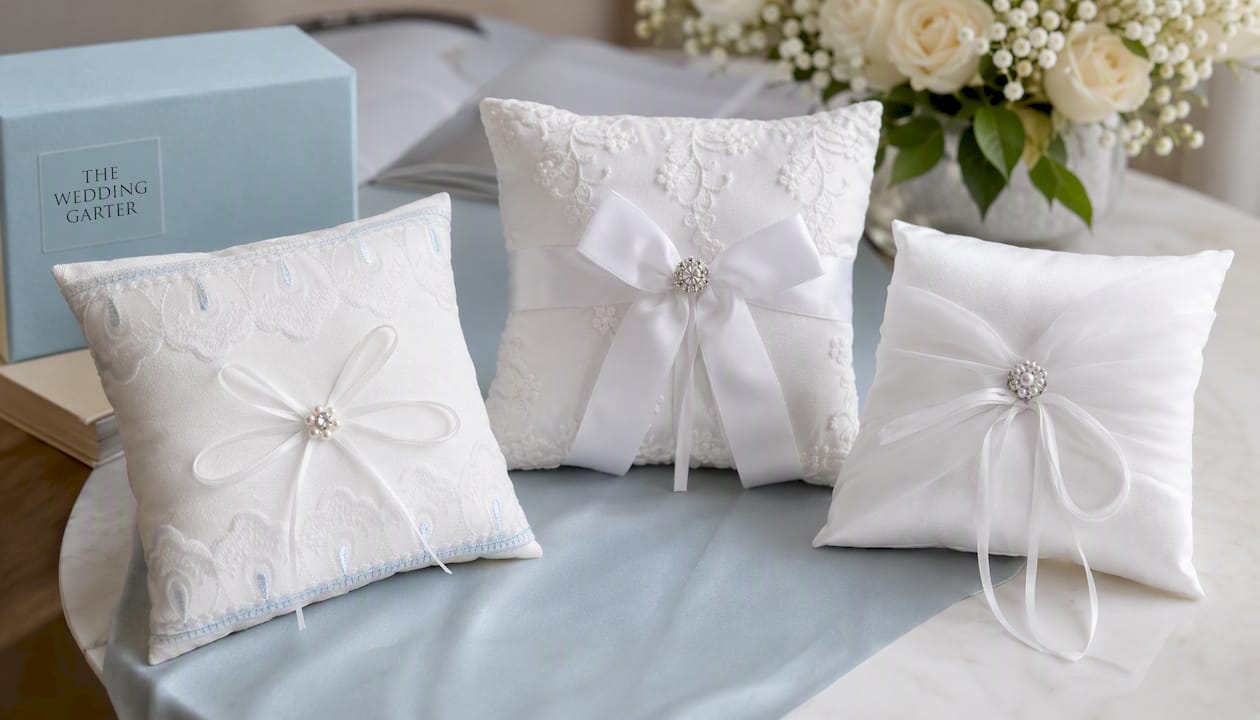
Not every pillow holds a knot or a stitch equally well, and the fill and fabric you choose should match the method you’re planning to use. The Ivory Lace & Satin Pearl Ring Bearer Pillow has a firmer fill and pearl detailing that gives a sewn loop or hidden stitch something solid to grip, making it a strong pick if you’re going the security stitch route. The White Lace Bridal Pillow For Rings is a classic satin surface built for straightforward ribbon tying, and its simple lace trim won’t compete with a grosgrain bow. For couples leaning towards decoy rings or a lightweight decorative bow, the White Satin & Organza Wedding Ring Pillow carries less bulk and photographs beautifully without needing a firm anchor point. If you’re coordinating ribbon colours with the ceremony’s florals, a quick chat with your florist about seasonal boutonnière ties can help match tones across the whole bridal party. Whichever pillow you choose, check the size guide on our ring bearer pillow size guide to make sure your ribbon lengths and knot style will actually fit, then browse the full ring bearer pillow range to find the one that matches your ceremony.
Sources
These techniques draw on wedding craft guides covering wedding pillow tying methods, ribbon and monofilament choices, and general ring pillow construction.
- How to Tie Rings on a Wedding Pillow | diamondsbyuk
- How to Properly Attach Wedding Rings to the Pillow
FAQ
How do you attach wedding rings to a pillow?
Thread each ring onto a length of grosgrain or wired ribbon, tie a firm anchor knot under the first ring, then finish with an easy-release bow over both. For extra security, a hidden stitch from the underside of the pillow holds rings without any knot at all.
Where can you find fake rings for a ring bearer pillow?
Inexpensive costume rings, curtain rings, or even old rings you no longer wear all work well as decoys, since the real rings stay safely with the Best Man or Maid of Honour until the exchange.
How does a ring pillow actually work?
A ring pillow gives the ring bearer something secure to carry down the aisle, with the rings tied, stitched, or displayed on top so they’re visible for the ceremony without falling off. Certain ring pillows use a firm fill and sewn loop specifically to give ribbon or stitch methods a stable anchor point.
Where do you put your ring if you’re not wearing it during the ceremony?
Most couples hand their rings to the Best Man or Maid of Honour before the ceremony begins, who then places or ties them onto the pillow at the right moment, or keeps them in a small pouch until the exchange itself.


Leave a comment