

Protect Your Keepsake: Two Wedding Garters for a Consent Friendly Toss
Two garters are usually worn when a bride wants to keep one as a memento and use the other for the garter toss. It is entirely optional, driven mostly by comfort, sentiment, and how you want the reception ritual to play out. The rest of this guide covers placement, buying tips, and the alternatives if the toss isn’t for you.
TL;DR:
- Brides should choose separate garters for keepsake and toss to prevent damage to the sentimental item and ensure it lasts for years.
- Positioning one garter on each leg or stacking them on the same leg offers different convenience and concealment advantages based on dress fit and personal preference.
- Selecting lace for the keepsake garter and satin for the toss piece aligns material durability with aesthetic and functional needs, respectively.
- Customization options like embroidery and color coordination are available but may extend production time and cost more than standard sets.
- Buying from reputable outlets requires careful measurement, thorough photo reviews, and checking return policies due to the intimate nature of the items.
Table of Contents
- Why brides wear two garters: history and modern meaning
- Keepsake vs toss: placement, timing and etiquette when you have two garters
- How to choose two garters: materials, fit, style and budget
- Where to buy sets and what to expect from sellers
- Author perspective: the case for a decorative keeper and a simple tosser
- Publisher picks: sets and gift options from The Wedding Garter
- Sources
- FAQ
Why brides wear two garters: history and modern meaning
A wedding garter started as a practical item. Centuries ago, it held up stockings, nothing more. Somewhere along the way it picked up superstition and symbolism, and today it functions as a decorative accessory tied to “something blue,” transition, and keepsake value.
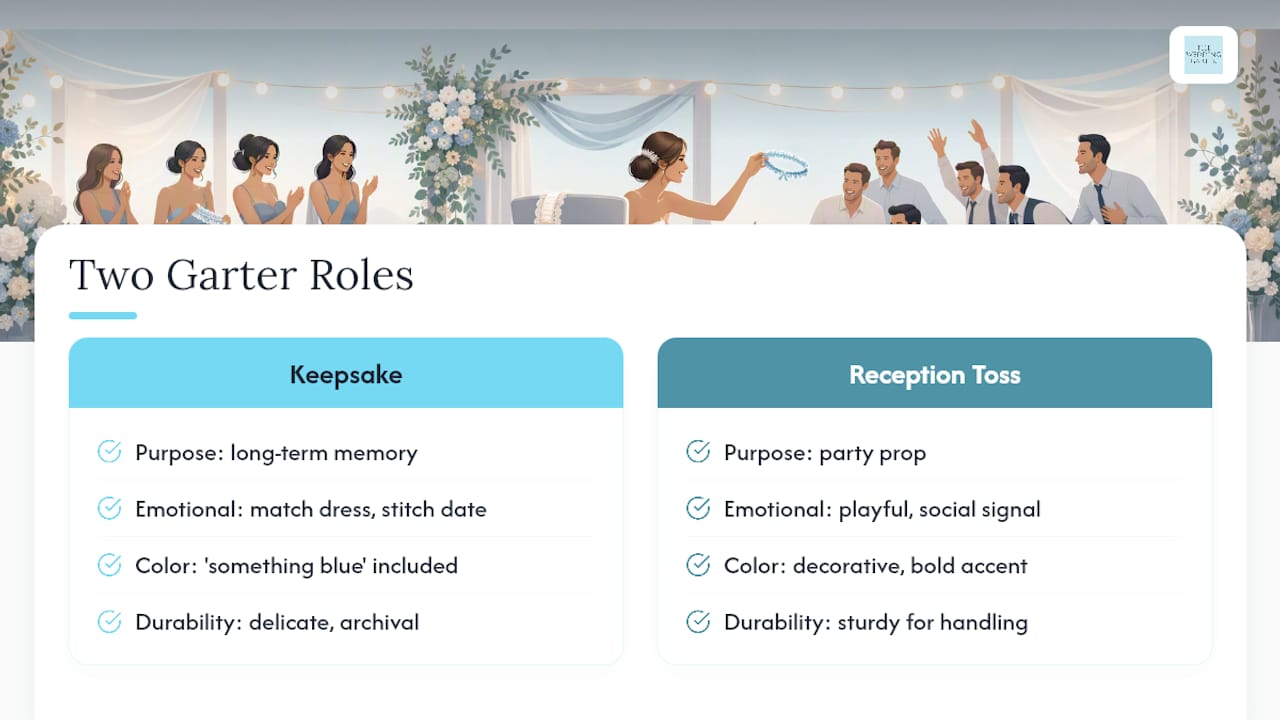
That shift from function to sentiment is exactly why so many brides now buy two. One garter carries the emotional weight: a colour that matches the dress, a date stitched inside, maybe a scrap of a grandmother’s veil. The other exists purely for the reception moment, tossed to the crowd, danced with, occasionally lost under a chair. Splitting the job between two pieces means neither has to compromise.
There’s a practical logic here too. A garter designed to survive a toss, a bouquet of hands, and a sweaty dance floor is not the piece you want sitting in your memory box for the next fifty years. The Wedding Garter’s collections reflect this split directly, treating the garter as both tradition and personalised accessory rather than a single generic item pulled off a rack. Buying two garters isn’t extravagance. It’s closer to buying two winter coats, one for the good, one for the weather.
Keepsake vs toss: placement, timing and etiquette when you have two garters
Most brides handle placement one of two ways. Either both garters sit on the same leg, keepsake higher up and toss garter lower, or each garter goes on a separate leg entirely.
- Same leg, stacked: keeps both accessible without adjusting your dress twice, and the toss garter slides off easily during the ritual.
- Separate legs: better if either garter feels tight or if you’re worried about visible lines under a fitted gown.
Timing matters more than most brides expect. Slip both garters on before you get dressed, not after, so you’re not wrestling with fabric mid-ceremony. If your dress has a slim silhouette, test the fit while wearing your undergarments and shoes, since heels change your posture and can shift how a garter sits against your thigh.
Consent and comfort deserve equal attention. Not every guest wants to watch a public removal, and not every bride wants to perform one. Bridal experts generally treat the toss as optional, suggesting a replica toss garter, a quieter version of the moment, or skipping it altogether. If you do keep the tradition, clear etiquette around timing and consent makes it feel like fun rather than spectacle.
Pro Tip: Keep the toss garter looser than you think you need. A garter that’s slightly too snug will leave marks after hours of dancing, and it’s harder to remove gracefully in front of a crowd.
How to choose two garters: materials, fit, style and budget
Buying two garters means thinking about two different jobs, so the checklist looks a little different for each piece.
- Pick the material for the job it needs to do. Lace suits the keepsake garter because it photographs well and feels bridal against skin that won’t be dancing all night. Satin with a wide elastic band suits the toss garter better, since it holds shape and slides off cleanly.
- Measure properly, twice. Measure mid-thigh both seated and standing to account for muscle flex and dress compression, then choose elastic with slightly more give than feels necessary rather than a snug fit that leaves red marks.
- Decide on colour early. If you’re leaning into “something blue,” a pairing of white and blue in one of the two garters covers the tradition without needing a third accessory.
- Budget realistically. Garter sets vary widely in price depending on materials and customisation, and handmade or personalised pieces cost more because they’re made to order rather than mass-produced.
A few extra things worth weighing before you check out include ideas for unique wedding cocktails to complement your bridal accessories, as suggested in the Cocktails gin et miel : recettes et astuces pour mariages – Gin de Chimay – Blog.
- Charms, embroidered dates, or a scrap of fabric from a family dress add sentimental weight to the keepsake piece without adding bulk.
- Elastic quality matters more than lace density. Cheap elastic loosens by the reception, expensive elastic holds shape through the whole night.
- Coordinating sets save you from guessing whether two separately bought garters will actually match in tone or trim.
Where to buy sets and what to expect from sellers
You’ve got a few paths here: specialist bridal shops, small boutique makers, handmade marketplaces, and dedicated online stores like The Wedding Garter. Each has a slightly different rhythm.
- Check the size guide before ordering, not after. Garters that run small are the most common complaint in bridal accessory reviews.
- Look for real product photos, not just styled mockups, so you can judge lace texture and elastic width.
- Ask about customisation lead times. A monogram or embroidered date can add a week or two to production.
- Confirm shipping windows against your wedding date, with buffer room for exchanges.
- Read the return policy carefully, since garters are intimate apparel and some sellers restrict returns on worn items.
Gift wrapping and keepsake boxes are worth asking about too. Many sellers, including The Wedding Garter, offer a presentation box option that turns the keepsake garter into something you’d actually display rather than shove in a drawer.
Author perspective: the case for a decorative keeper and a simple tosser
Buy the keepsake garter first, and let it be a little extravagant. Lace, a hidden charm, a colour that means something. Then buy the toss garter separately, and let it be plain, comfortable, and disposable in spirit if not in fact.
This isn’t about spending less on the second piece. It’s about not asking one accessory to be sentimental and durable and photogenic and crowd-ready all at once. Brides who try to make one garter do both jobs usually end up either over-babying a $100 lace piece through a rowdy toss, or wearing something so simple for the ceremony that it doesn’t feel special in photos. Two garters solve a problem that one garter creates.
— The Wedding Garter
Publisher picks: sets and gift options from The Wedding Garter
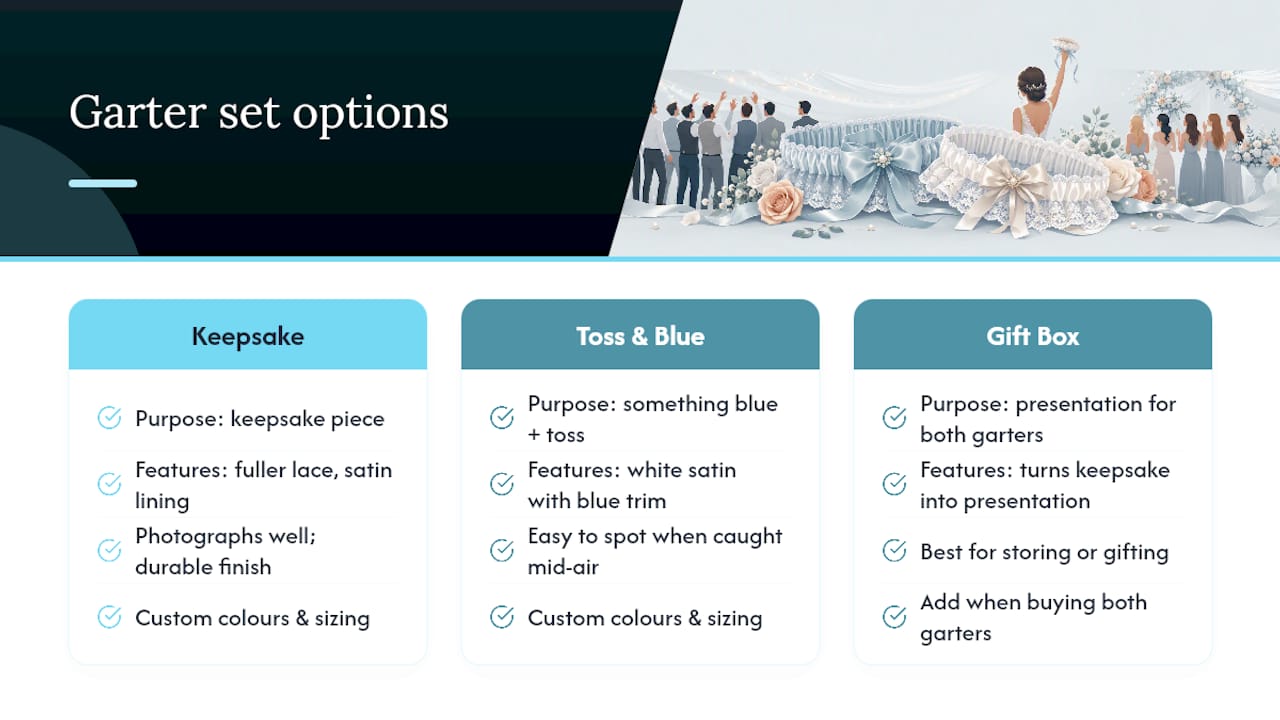
If you’re shopping for two garters right now, three options from our own catalogue map directly onto everything above. The Vintage Ivory Lace & Satin Bridal Garter is built as the keepsake piece: fuller lace detail, a softer satin lining, and the kind of finish that photographs well and holds up as a keepsake for decades.
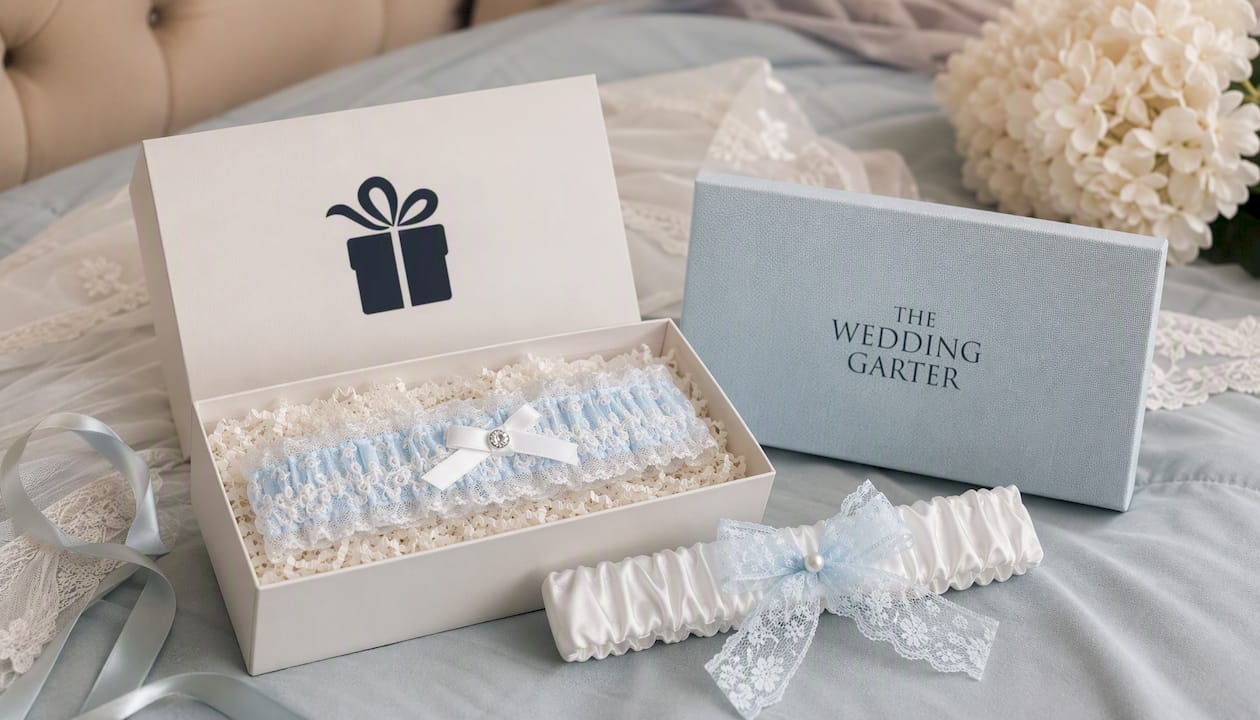
The Belle White & Blue Satin Wedding Garter covers “something blue” and the toss ritual in one piece, pairing white satin with a blue trim that’s easy to spot when it’s caught mid air. And if you’re buying both, The Wedding Garter Gift Box turns the keepsake garter into a proper presentation piece, worth adding if you’re planning to store it rather than just tuck it in a drawer after the reception.
Custom colours, sizing, and embroidery are available across the garter range, with the same 30-day return policy and free shipping over $100 that applies to the rest of the store. Browse the bridal accessories collection alongside your garter order if you’re also after a hair piece or clutch, or check the bridal jewellery and honeymoon lingerie ranges while you’re finalising the rest of your bridal wardrobe. Head to the garter collection now to compare sets side by side before your dress fitting.
Sources
For more on garter symbolism and etiquette, see The Knot’s history of the garter toss and MasterClass’s explainer on wedding garters. For deeper buying guidance, read The Wedding Garter’s full buying guide and its garter meaning explainer.
- What is a wedding garter? (MasterClass)
- Wedding garter tradition: history of the garter toss (The Knot)
- 15 best bridal garters and sets for your wedding night (Zola)
FAQ
Why do brides have two garters at a wedding?
Two garters let a bride keep one as a sentimental keepsake while using the other purely for the garter toss, so the meaningful piece never has to survive a crowd of reaching hands.
Why do brides remove their garters at weddings?
The removal is traditionally part of the reception entertainment, where the groom or bride removes the toss garter for the ritual throw. Many couples now treat this as optional and adjust it, or skip it, for guest comfort.
Why do brides wear wedding garters at all?
Garters began as a practical way to hold up stockings and evolved into a symbolic accessory, often used to fulfil “something blue,” mark the transition into married life, or serve as a lasting keepsake.
Are garters still a thing for weddings?
Yes. Garters remain a common bridal accessory, sold as coordinated sets by retailers including The Wedding Garter, with brides increasingly choosing two pieces rather than one.
How much should I expect to pay for a garter set?
Prices vary by material and customisation, and handmade or personalised sets generally cost more than simple mass produced pairs. Current pricing for The Wedding Garter’s range is listed on the product pages themselves.


Leave a comment