

Aisle Safe: The Wedding Garter Flower Girl Basket Fillers Australia
For most weddings, high-quality silk or freeze-dried petals are the safest, most photo-friendly flower girl basket fillers, since they don’t stain floors and hold up in transit. Fresh petals work beautifully but only if you prep them close to the ceremony and your venue allows them. Dried lavender and small keepsakes suit indoor or reception-adjacent settings. Whatever you choose, confirm venue rules first and keep the basket light enough for small hands.
TL;DR:
- Freeze-dried petals offer a low-stain, durable, and photographically excellent alternative to fresh petals, making them suitable for warm weather and outdoor ceremonies.
- Using a hybrid approach with fresh focal stems and silk or dried filler creates a visually appealing and weather-resistant arrangement that can be reused for rehearsals or future events.
- When assembling the basket, keep the filler volume to one-third to one-half of the basket’s depth to ensure the child can control it without spilling or handles feeling heavy.
- Confirm venue policies on petal throwing and material restrictions beforehand, opting for low-risk fillers like biodegradable paper petals, dried lavender, or pressed leaves if throwing is prohibited.
- Choosing a lightweight, versatile basket like the simple white satin style allows for flexible filler arrangements and easier testing during rehearsals, reducing the risk of tipping or discomfort.
Table of Contents
- Which flower girl basket fillers should you consider?
- Fresh vs freeze-dried vs silk vs dried: what actually holds up?
- How do you assemble a basket that survives the aisle walk?
- What venue rules should you check before choosing fillers?
- What weight and basket size suit each age group?
- What theme-led filler ideas suit different wedding styles?
- How do The Wedding Garter’s basket styles fit these fillers?
- Prioritise comfort over novelty
- Ready-to-order baskets that match this advice
- Sources
- FAQ
Which flower girl basket fillers should you consider?
Choosing between filler types comes down to timing, venue rules, and how much fuss you want on the morning of the wedding. Here’s a quick scan of the main categories and when each one earns its place in the basket.
- Fresh petals — chosen for genuine fragrance and a natural, romantic look, but they bruise easily and need to go in the basket close to ceremony time.
- Freeze-dried petals — low stain risk, long shelf life, and they photograph beautifully because the colour holds without the wilting fresh petals show under lights. Preserved and freeze-dried options are particularly useful when travel or heat make fresh flowers risky.
- Silk petals — reusable, venue-friendly, and forgiving if the flower girl drops the basket or scatters a handful early.
- Dried flowers and herbs — lavender, rose buds, and native foliage give a keepsake quality and a soft scent without any staining concern.
- Non-petal alternatives — bubble wands, mini pomanders, or ribbon streamers work well for venues that ban throwing anything, or for children too young to manage a full basket confidently.
Most couples land on a mix. A basket doesn’t need to commit to one category. Freeze-dried petals as the bulk filler with a scattering of dried lavender for scent is a common, low-risk combination that still looks considered rather than sparse.
Fresh vs freeze-dried vs silk vs dried: what actually holds up?
Each material behaves differently once it’s moving down an aisle in a child’s hands, and the differences matter more than they look on a mood board.
Fresh petals from spray roses or ranunculus hold their shape well in cool conditions, but heat and handling bruise them fast, and they’re the material most likely to stain a pale aisle runner or timber floor. Silk and dried flowers are far more durable and reusable, which makes them the practical pick when a wedding involves an outdoor ceremony followed by hours of photos before the reception. Preserved and freeze-dried petals sit in the middle: they photograph almost identically to fresh petals up close but carry none of the wilting risk, which is why they’re increasingly recommended when long transport or warm weather is a factor.
Cost tells a similar story. Fresh petals are cheap per gram but often need same-week purchasing and careful storage. Silk and dried materials cost more upfront but can be reused for rehearsals, styled shoots, or even a sibling’s wedding years later.
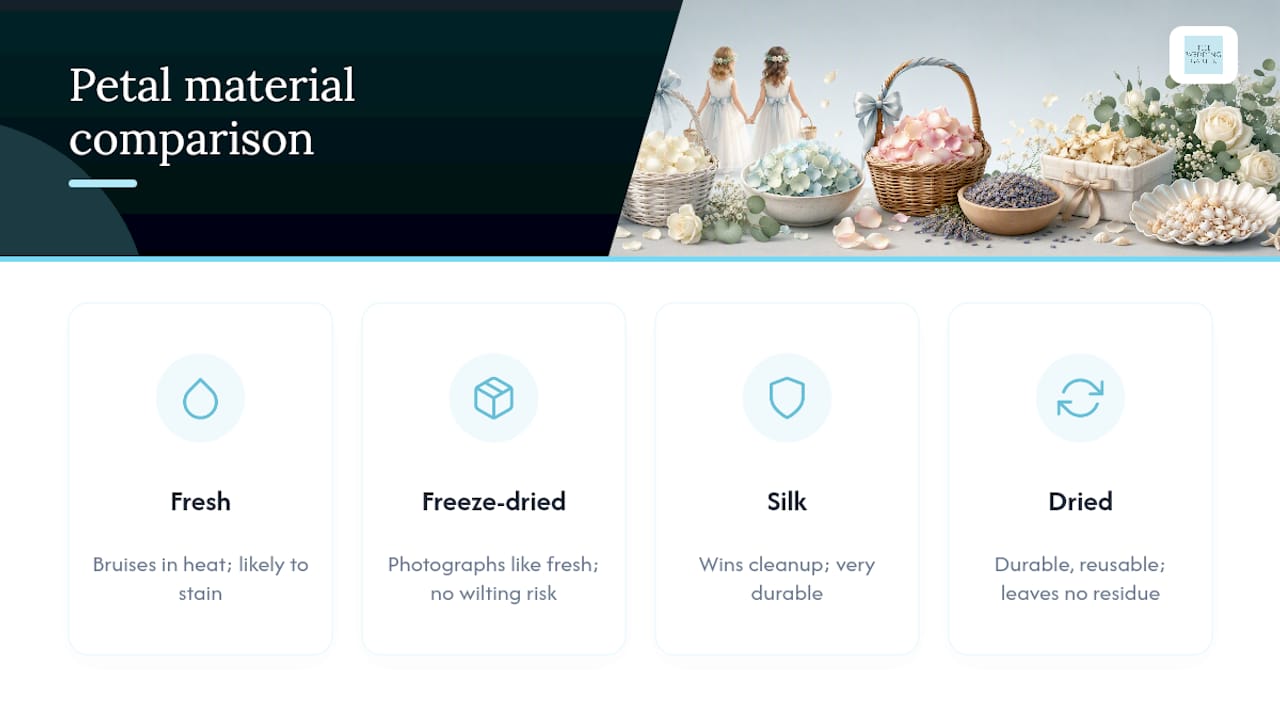
On cleanup, silk wins outright. Dried petals and lavender leave no residue. Fresh petals, especially anything dark red or purple, can mark a white aisle runner within seconds of contact.
The smartest middle ground is often a hybrid arrangement: fresh focal stems positioned where cameras will actually see them, with silk or dried material doing the bulk of the fill underneath and around the edges. It gives the visual richness of real flowers without betting the whole basket on how they’ll hold up over a two-hour ceremony and photo session.
How do you assemble a basket that survives the aisle walk?
A basket that looks gorgeous on the table but tips over halfway down the aisle isn’t doing its job. Follow this sequence and test it before the day arrives.
- Choose and line the basket. Pick a size proportionate to the flower girl, then line it with fabric, moss, or tissue paper so loose filler doesn’t fall through gaps in a woven base.
- Calculate your fill volume. Keep the actual filler to about one-third to one-half of the basket’s depth. A heavier fill is harder for small hands to control and more likely to spill in one go rather than scatter gradually. For quantity, Poppy Flowers’ guidance suggests a moderate volume of petals per flower girl for a standard aisle length, adjusted up or down depending on how liberally she’s expected to scatter.
- Secure everything that isn’t loose filler. Use hot glue, small pins, or twist ties for ribbon, decorative flowers, or handle wraps, and hide the mechanics under fabric or foliage so nothing shows in photos.
- Wrap the handle for grip and comfort. A narrow wire handle digs into small fingers over a few minutes; ribbon wrapping or a touch of padding fixes this cheaply.
- Test with a practice walk. Have the flower girl carry the finished basket across a room. If it tips, tilts, or feels heavy after thirty seconds, lighten the fill or adjust the balance before the day.
- Finish fresh elements last. If you’re using any fresh flowers or petals, assemble and finish that part of the basket close to the ceremony rather than the night before, so nothing has time to bruise or wilt.
Pro Tip: Do the practice walk on the same type of surface as the venue, not your living room carpet. A basket that behaves perfectly on carpet can swing differently on polished timber or gravel, and that’s exactly where a flower girl is most likely to stumble.
What venue rules should you check before choosing fillers?
Venue policy decides more of this than most couples expect, and it’s worth confirming before you buy a single stem. Reception centres, churches, and heritage sites frequently restrict fresh petal throwing because of staining risk and the cost of cleanup, and some charge a fee if petals end up ground into an aisle runner or timber floor.
Ask your venue directly:
- Is throwing petals or confetti permitted at all, indoors and outdoors?
- Are there restrictions on colour (dark petals staining pale floors) or material type?
- Who’s responsible for cleanup, and is there a fee if petals mark the surface?
- Does the aisle runner policy change what’s allowed on top of it?
If fresh or coloured petals are off the table, freeze-dried petals, dried lavender, biodegradable paper petals, and pressed leaf confetti are all low-risk substitutes that satisfy most venue policies. For hard indoor floors specifically, avoid anything dark or moisture-retaining. If throwing anything is banned outright, a pre-scattered aisle, a ribbon-decorated hoop, bubble wands, or simply a beautifully styled empty basket all keep the visual moment without the compliance risk.
What weight and basket size suit each age group?
A three-year-old and an eight-year-old need genuinely different setups, and matching the basket to the child matters more than matching it to the theme.
Children under three do best with the lightest possible load: a small basket, minimal filler, or a non-petal option like a soft pomanel or bubble wand they can hold without concentrating on balance. Four to six year olds can usually manage a small basket with a light petal fill, provided the handle is wrapped for grip and there are no long trailing ribbons that could catch underfoot or on a dress hem. Seven to ten year olds handle a standard-size basket confidently, including a slightly fuller fill and more elaborate decoration. Older flower girls can take on a fuller, heavier arrangement without much guidance.
Across every age, weight and balance matter more than decoration. Keep the basket low and test it under motion before committing to a final fill. A couple of short rehearsals, paired with one simple instruction (“scatter a little, not all at once”), does more for a smooth walk than any amount of styling.
What theme-led filler ideas suit different wedding styles?
Matching fillers to your wedding’s aesthetic doesn’t have to mean sacrificing practicality. A few directions to consider:
- Rustic and country: oat sprays, dried rose buds, small pinecones, and jute ribbon give a low-weight, photogenic look that suits an outdoor or barn ceremony.
- Boho and festival: preserved hydrangea heads and neutral dried palettes paired with macramé ribbon accents work well against natural textures like timber and linen.
- Beach and seaside: tiny shells mixed with biodegradable petals give a coastal feel without introducing anything that stains sand or timber decking.
- Modern and minimal: one or two sculptural blooms sitting on a low bed of tissue or silk petals reads as considered rather than sparse, and photographs cleanly against plain backdrops.
- Child-centred keepsakes: bubble wands, a small soft toy, or ribbons personalised with the flower girl’s name turn the basket into something she’ll actually want to keep.
Whichever direction you pick, limiting the palette to two or three elements keeps the basket cohesive rather than cluttered, and stops it competing visually with the bridal bouquet.
How do The Wedding Garter’s basket styles fit these fillers?
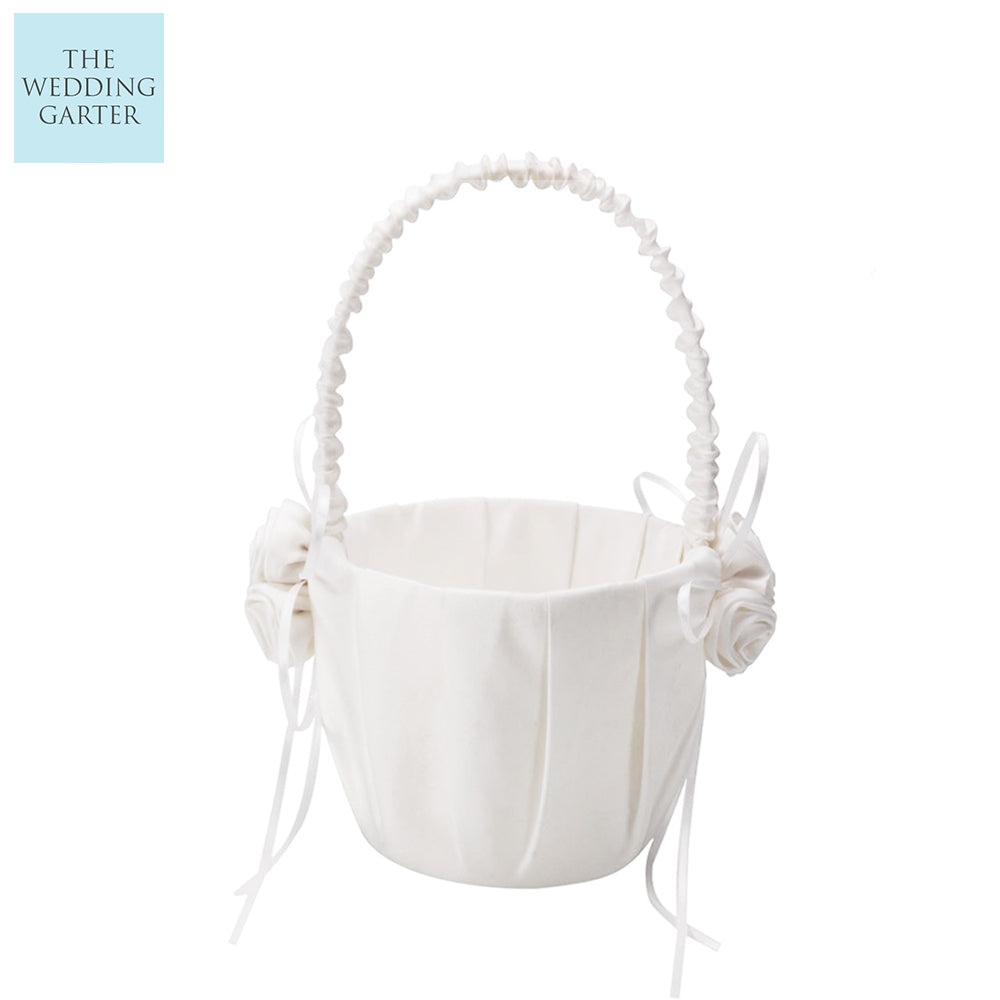
Basket construction and filler choice work together, and The Wedding Garter Australia’s range covers the main scenarios most weddings need. The ivory satin flower girl basket suits silk or freeze-dried petals well, since its structured shape holds a light-to-medium fill without collapsing. The ivory satin and organza style leans toward keepsakes and delicate decorative fillers, where the organza detail adds texture without adding weight. The simple white satin basket is the most versatile of the three, easy to line and fill, and a sensible choice for rehearsal testing before you commit to a final look.
Order with a buffer. Custom and made-to-order bridal accessories generally need more lead time than off-the-shelf items, so check ordering windows early rather than a few weeks out. The store operates online from the Gold Coast, offering a curated range of bridal accessories designed to suit various bridal styles.
Prioritise comfort over novelty
The most common mistake in basket styling is chasing a Pinterest-perfect look before checking whether a five-year-old can actually carry it. Comfort and simplicity beat novelty every time on the day itself. A hybrid material approach, sturdy fresh stems up top with silk or dried filler doing the bulk of the work underneath, tends to prevent the surprises that come with an all-fresh basket wilting under ceremony lights.
Always have a quick back-up plan. A spare handful of silk petals in your kit bag solves more wedding-day panics than people expect.
— The Wedding Garter
Ready-to-order baskets that match this advice
Rather than building a filler plan around a basket that might not hold up, start with a basket already built for the job. There are three styles of flower girl baskets available that cover most scenarios outlined in this guide, ready to order and sourced from a single store.
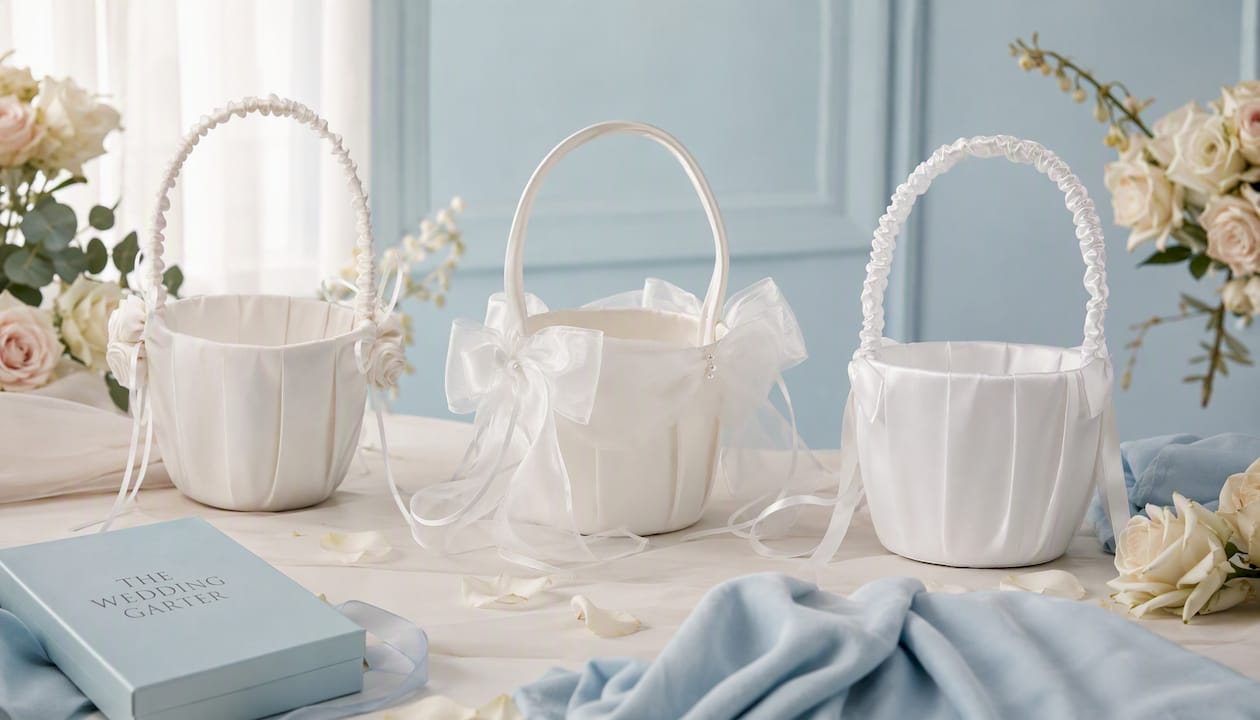
The ivory satin floral basket is built for silk or freeze-dried petals and holds a classic, structured shape through a full ceremony. The ivory satin and organza basket suits keepsakes and lightweight decorative fillers, with organza detailing that adds visual texture without adding grams to what the flower girl carries. The simple white satin basket is the most adaptable of the three, easy to line, fill, and test during a rehearsal walk before you finalise anything.
Beyond baskets, the same store carries bridal accessories, bridal jewellery, and handmade garters for the rest of the bridal party’s needs, plus free shipping over $100 and 30-day returns if a style doesn’t suit once it arrives. Browse the current range and order with enough lead time to line, fill, and rehearse before the big day.
Sources
Quantity charts and cup-per-aisle-length figures come from Poppy Flowers’ petal guide. Assembly steps and timing advice draw on Zola’s basket-making guide. For venue-specific throwing restrictions, always check with your own venue directly, using a reference like the Woollahra Council weddings FAQ as a guide to the kind of questions to ask.
- Flower girl basket & petal ideas: complete guide | Poppy Flowers
- How to make a flower girl basket | Zola
- Woollahra Council — weddings and ceremonies FAQ
- Wedding flower girl basket ideas (WeddingVenture)
FAQ
What should you put inside a flower girl basket?
Most baskets use petals (fresh, silk, or freeze-dried), dried flowers like lavender, or non-petal fillers such as ribbon and small keepsakes, chosen based on venue rules and the child’s age.
What are good basket fillers if the venue restricts fresh flowers?
Freeze-dried petals, dried lavender, biodegradable paper petals, and pressed leaf confetti are all low-stain, venue-friendly substitutes that satisfy most cleanup policies.
What are some DIY flower girl basket ideas?
A simple DIY approach lines a basket with tissue or fabric, fills it to about one-third to one-half depth with silk or dried petals, and secures ribbon or decorative touches with hot glue or pins, following the assembly guidance from Zola.
How many petals do you need for a flower girl basket?
Plan on roughly a moderate volume of petals per flower girl for a standard aisle length, adjusting based on how heavily she’s expected to scatter, per Poppy Flowers’ quantity guide.
Which basket style works best for a first-time flower girl?
The simple white satin basket from The Wedding Garter Australia is a practical starting point, since its versatile shape makes it easy to test different fillers during a rehearsal before the ceremony.


Leave a comment